

People want to trade because they think they can make quick profits, especially with stock and forex trading. A trader can certainly make profits by just watching the price movements, but doing it without a strategy and excitement will lead to blowing profits in a short time. Traders who can build a “long” career in trading are the ones who build their portfolios with the same discipline a business owner applies to their business. They understand the difference between a hobby and professional trading, and between a game of chance and gambling.
They know there are plans to be made, risks to be managed, the market moves to be analyzed, decisions to be made, actions to be taken, performance to be evaluated, and emotions to be tamed. All of this seems to get lost in the excitement of the trading profits, but actions are the same in any business. The market may be unpredictable, but it’s structured enough to be navigated profitably and consistently by a trader who has the game plan to manage losses and capture opportunities.
A Good Trader Looks Beyond the Myths
In business, guesswork can result in heavy losses. There is always a rational basis for investing, launching a new product, or implementing cost-cutting measures. This also holds for trading. Serious traders figure out a trading strategy with a blueprint for when they open and close their positions. This is the result of a combination of market analysis, historical testing, and actual trading performance.
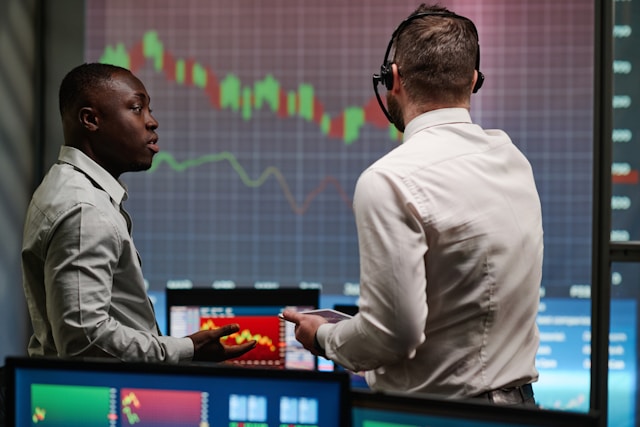
A trend trader, for example, needs to figure out when the market goes up or down, then wait for a retracement, and wait for the go signal to enter the trade. The market sessions also have traders. An example is the price action traders focusing on the London or New York sessions. Each trader picks a system that matches their understanding and emotional temperament. The important thing is that the decisions are consistent and rule-based.
When traders lack a strategy, they start making trades based on their emotions. They may jump into trades. They think they might miss out, close them too soon because they panic, or even let losing trades run in the hope the price will bounce back. This is certainly not behaving like a business, and it is going to fail. With a strategy, the business will gain the order it needs to function, and that will allow it to trade.
The Most Important Aspect of Trading is Risk Management
In every business, a lack of control over costs will ensure that the business will not run out of resources, and this will end in the business going under. As a trader, you will need to control your costs too. Risk management will ensure no single trade will wipe out your trading account. This is where a lot of beginners fail, as they are willing to jump with both feet on a trade for a smaller return. Proper traders will understand that the main target in trading is not to let large losses happen, not to focus on large profits.
Here are a few principles of risk management followed by traders
- Setting a maximum amount to trade with
- Setting loss limits based on analysis rather than driven by emotions
- Avoiding over-leverage to a broker
- Setting loss limits on a daily/weekly basis to avoid emotional trading
- Lowering position during high volatility of the underlying
These principles are designed to let traders remain active during the inevitable periods of losing money. All trading systems experience losses. The important part is how a trader protects themselves during those periods.
Choosing Brokers Is a Strategic Business Decision
The same goes for businesses and their suppliers. Traders rely on brokers to gain access to markets. When it comes to brokers, all issues like execution speed, spreads and commissions, reliable withdrawals, platform stability, and all general conditions for trading matter. This is even more so the case for the US due to its particularly stringent financial regulations. Fortunately, traders only have to research and compare forex brokers that accept US clients to operate legally. This ensures they are in a transparent trading environment that protects their funds. When it comes to serious trading businesses, operational convenience is the least of their concerns.
Reasons Why Serious Traders Manage Their Portfolios Like a Business
In the beginning, some market participants believe success is a product of chance or timing. For those who endure in the market, profitability is a product of professional treatment. This involves meticulous business-like planning with a solid framework of discipline, accountability, and a long-term point of view. Serious traders do not take on gambling personas. Like business executives, they manage, analyze, and continually refine their methods.
1. They Start with a Plan
Every business has a strategy. So do professional traders. They know their trading markets, the setups they want, and the goals they need to achieve. With a concrete plan, emotional reactions are reduced.
2. They Analyze Their Trades
Winning traders will analyze the outcome of each of their trades and determine their mistakes. Like businesses that analyze their performance, traders will analyze their trading history.
3. They Separate Their Money
Professional traders avoid the emotional stress that comes with personal money and trading money.
4. They Consistently Manage Risk
Just like businesses do not take reckless financial risks, pro traders will set stop losses, manage position sizes, and defend their capital. Their order of importance is to survive and then make a profit.
5. They Utilize Technology and Data
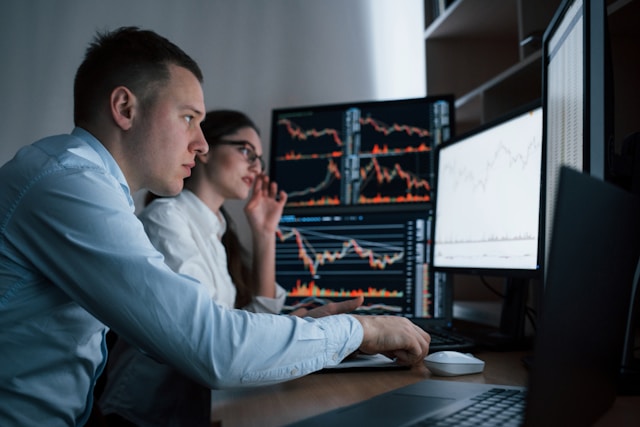
Using charting tech, indicators, and market research is key. They trade based on solid evidence, not just on hearsay.
6. They Partner with Trusted Financial Services
Choosing reliable regulated services is essential for the safety and seamless execution of trades for long-term trading.
7. They Exercise Patience
Just like a business, a trading account grows over time. Professional traders wait for quality setups, while others tend to jump into a trade.
8. They Understand Losing is Part of the Game
Each business has running costs, and trading is no different. Losses should not create a negative emotional spiral; instead, they should be a teaching moment.
9. Other Practices of Professional Traders
- Keep a trading journal
- Analyze the market constantly
- Do not trade while under emotional distress
- Set achievable targets
- Constantly revise and improve your plan
- These practices foster maturity and self-restraint.
10. They Think About Growth over a Long Time
Serious traders do not try to make a fortune within a few days. Rather, they prioritize consistent performance over a prolonged period. Stable growth is their ultimate goal.
Record Keeping and Trade Journals Lead to Improvement
Every business evaluates its performance to understand its strengths and weaknesses, and for players in the business of trading, this involves the use of trade journals. While keeping a trade journal, serious traders note down the details for every trade, including the rationale for taking the trade, the prevailing market conditions, their feelings when the trade was being executed, and the result of the trade.

This allows the traders to see patterns that are otherwise difficult to see in the moment. For example, a trader may identify that he/she is able to trade better during certain market sessions and that certain emotional states lead to mistakes. Not fixing performance documentation for a trader means stagnant growth and repeating the same mistakes without learning. The positive approach to documentation helps a trader to adopt, adjust, and improve their strategy. This is the same as a business improving its processes over time.
Emotional Discipline Is a Major Competitive Advantage
A trader must keep in mind that the market will never be predictable and will often work against them. If a market condition turns against the player, it is not a good idea for them to get emotional about it. The player must be well-trained to keep their emotions in check during times of overpowering excitement. If a player allows themselves to become emotional, it will cause them to deviate from their main strategy.
Traders were found to lose money more than any other group of persons while trading in financial markets. Each financial market’s trading strategy needs to incorporate a defensible risk management strategy to be in a profitable position. This is not the only problem to be solved. A rational and logical risk position strategy needs to incorporate and execute a full trading strategy to close a position in a risk-adjusted manner. Failure to do this will lead the trader to lose a position and lose money. This is the main contributor to the loss-making strategy in people trading in the financial markets. All other people lack the emotion to lose money, unlike them.
Scaling a Portfolio Requires Patience and Development
A trading strategy is the only way to lose control of a position. This is a loss-making strategy and will only lead to the loss of a position in the accounts, and the loss will need to be compensated in the values of the account. This will only lose the values in the account. For a loss-making strategy to go wrong in a trading strategy, and a loss-making position, the trading strategy will simply not work. This will only lead to the account being scaled down or the values in the account being reduced.
Conclusion
Only by treating it as a serious professional activity will one become profitable. The most successful traders are not necessarily the most frequent traders or the ones who take the most risks. They are the traders who exhibit discipline, patience, understanding, and a professional attitude. When trading becomes a disciplined business, it moves beyond just a source of income and becomes a skill and profession for the long term.

