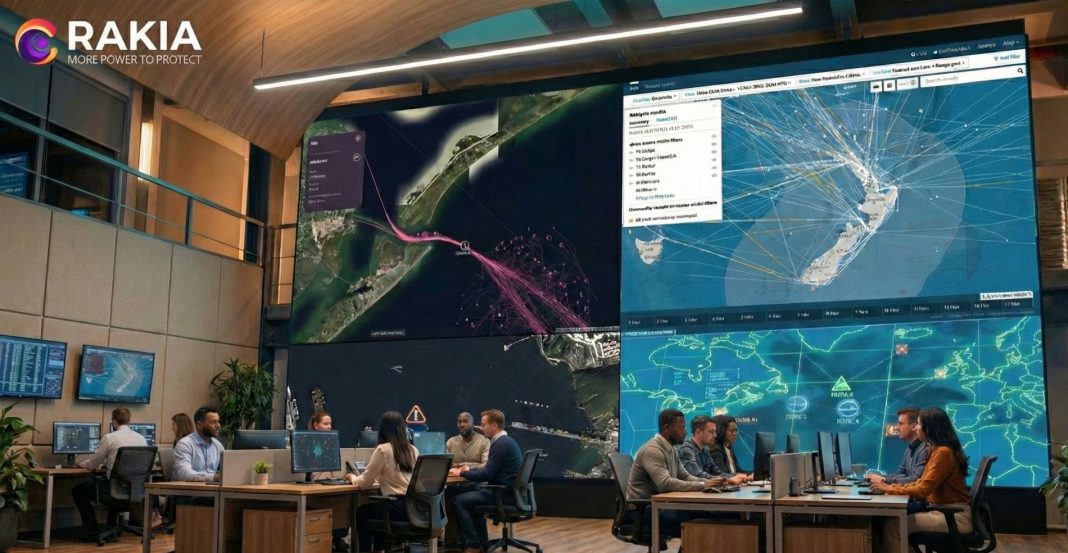

The next generation of organized crime is no longer confined to a single city, border, or trafficking route. It operates across domains, blending physical harm with digital coordination, and it is learning quickly how to use modern technology as camouflage. What once appeared as isolated criminal activity has evolved into interconnected systems that move fluidly through the same infrastructures that sustain ordinary life.
This reality has shaped the work of Omri Raiter, founder and CEO of RAKIA Group, whose career spans more than twenty years across cyber defense, cybersecurity, and intelligence, including fifteen years dedicated specifically to intelligence systems and operational environments. His experience inside government and national security contexts exposed a consistent problem: institutions were collecting vast amounts of data, yet struggling to connect it fast enough to act.
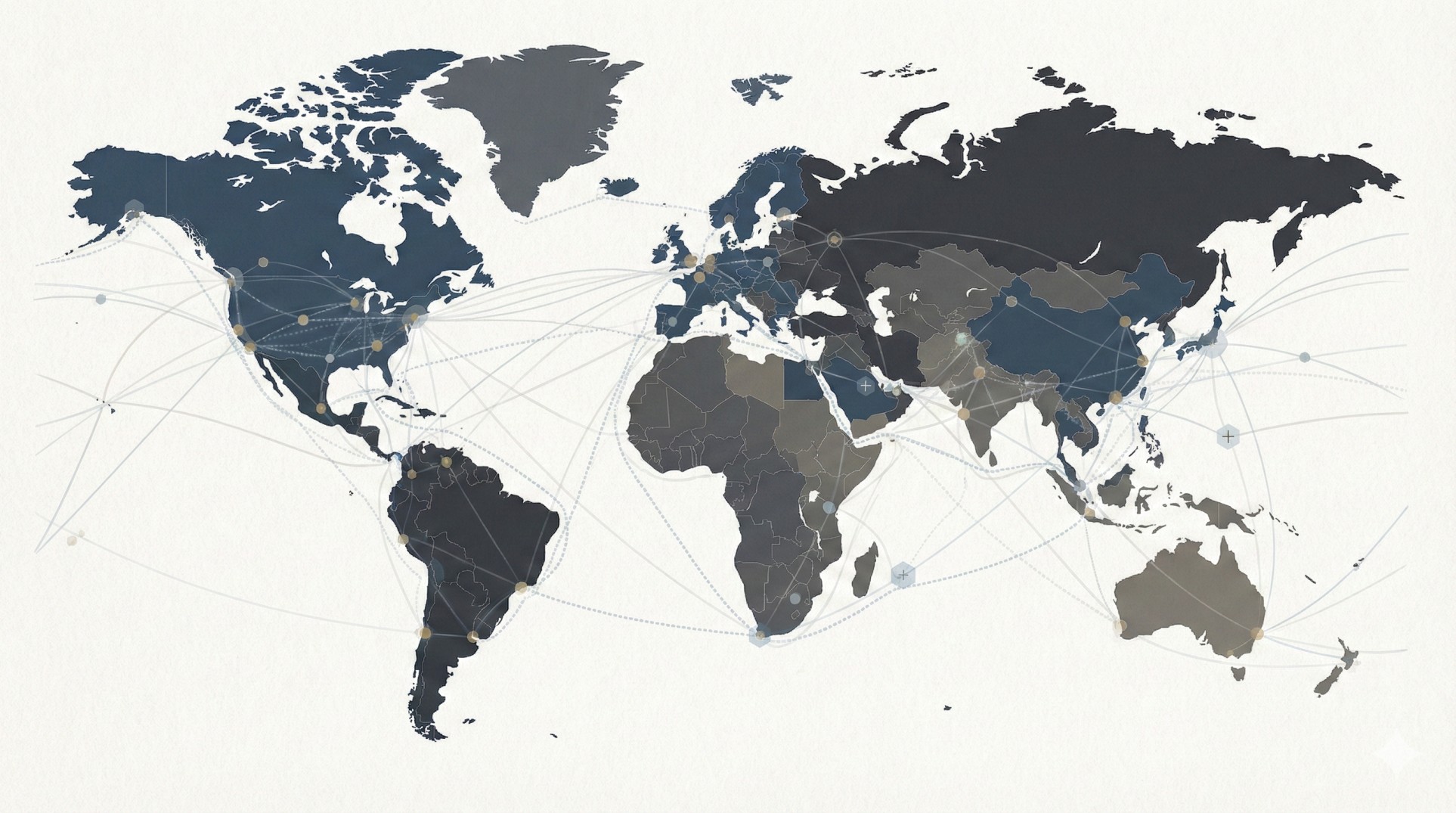
For years, public discussion framed transnational crime as a logistical challenge. Attention focused on shipments, routes, couriers, and cash. Those mechanics still matter, but they no longer define the threat. Criminal organizations now function like distributed enterprises. They recruit, coordinate, finance, and adapt within mainstream platforms. Encrypted messaging, public social channels, commercial shipping networks, and cross-border payment rails are not peripheral tools. They are the operating environment.
This shift explains why AI-enabled fusion technologies have moved from the margins of public safety into the center of operational strategy. At RAKIA, this evolution has been driven by necessity rather than novelty. The volume of signals now exceeds human capacity to process them in isolation. The challenge is no longer data acquisition, but interpretation. Most agencies already possess abundant information. The failure lies in fragmentation. Signals remain disconnected, reviewed too slowly, or stripped of context.
Raiter’s approach focuses on building real-time fusion environments that assemble fragmented particles of data into a live, evolving mosaic. Within such systems, disparate indicators across land, air, maritime, cyber, and open-source domains can be connected into patterns that reveal risk early enough to intervene.
Crime today is hybrid by design. Trafficking networks do not separate physical movement from digital coordination. Shipments move through maritime corridors or land routes while planning unfolds through encrypted applications. Recruitment occurs in public view. Financing travels through layered laundering structures across jurisdictions. False identities, forged documents, and manipulated logistics records turn physical movement into a data problem, and that data problem becomes the point of detection.
Traditional rules-based systems struggle in this environment. They work best when adversaries repeat known behaviors. They falter when activity is engineered to appear normal. Sophisticated criminals do not hide by becoming invisible. They hide by blending into legitimate flows of communication and commerce. Investigators are not short on leads. They are overwhelmed by them.
Fusion addresses this challenge by reducing time lost to fragmentation. It is not a marketing term, but an operational discipline. In practice, fusion aligns legally permitted data streams across domains and time into a coherent analytical environment. A single signal rarely proves anything. Patterns emerge only when weak indicators are correlated over time and context.
Artificial intelligence plays a precise role in this process. It does not replace investigators or automate decisions. Its value lies in prioritization. AI can surface anomalies, cluster related activity, and highlight correlations that human analysts can then validate or dismiss. Accountability remains human by design. Interpretation, escalation, and operational action cannot be delegated to machines.
RAKIA’s work reflects a deliberate emphasis on governance alongside capability. Systems are designed around legal authority, documented workflows, audit trails, and defined thresholds for action. Without these foundations, even technically effective platforms become unsustainable. Public trust erodes quickly, and once lost, it cannot be restored through performance metrics alone.
At scale, fusion is measured by outcomes rather than claims. By integrating dozens or hundreds of data sources across domains such as maritime activity, communications behavior, logistics flows, and open-source intelligence, fusion platforms have enabled authorities to identify trafficking routes and criminal patterns that were previously fragmented or invisible. These capabilities have supported operations disrupting narcotics networks, exposing human trafficking operations, and intercepting illegal weapons flows.
These threats rarely exist in isolation. The same corridors that move drugs often move people, weapons, and illicit finance. The same networks that facilitate one criminal activity can be repurposed for another. Treating them as separate problems creates blind spots. Fusion reduces those blind spots by revealing connectivity across cases that would otherwise remain siloed.
The next phase of public safety technology will be defined less by invention than by integration. Tools will continue to improve, but the more consequential shift lies in the ability to connect what already exists into operational clarity.
Public understanding remains a challenge. Popular narratives tend to simplify organized crime into dramatic events, masking its cumulative impact. These networks are not abstract. They generate violence, corruption, and institutional damage across entire supply chains. Financial flows linked to trafficking intersect with extremist actors and violent networks through shared infrastructure and laundering channels.
If the public is expected to support serious policy, sustained investment, and responsible oversight, it must see both the reality of the threat and the discipline behind the response. Transparency and accountability are not obstacles to security. They are prerequisites for its legitimacy.
The future of counter-trafficking and public safety will not be defined by who collects the most data. It will be defined by who can connect signals into clarity, keep humans accountable, and reduce harm without compromising the principles democratic societies claim to protect.

