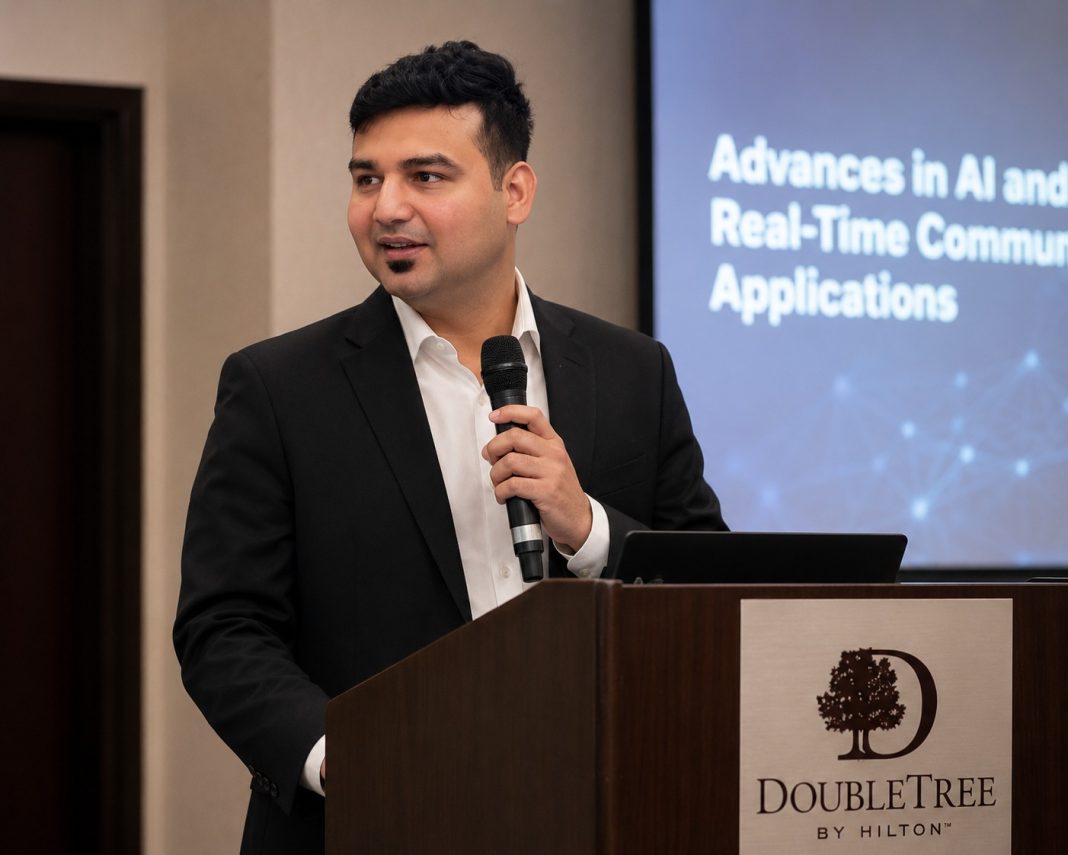

Imran Ali Mohammed began his professional journey in civil engineering, working on residential and commercial construction projects involving site execution, structural and finishing work, quantity estimation, quality control, and coordination among contractors, engineers, and other stakeholders.
That experience shaped the way Mohammed approaches technical problems today. Civil engineering requires careful planning, attention to detail, risk management, and an understanding of how individual components affect a larger structure. Those same principles later became useful as his career moved into software engineering.
Over time, Mohammed developed a growing interest in software, automation, and data. He was drawn to technology’s ability to solve complex problems at scale. That interest led him to pursue graduate study in information systems at Trine University and to build a career in enterprise software engineering.
His move into technology did not mean leaving engineering thinking behind. Mohammed carried the same structured approach into software development. In his view, civil engineering and software engineering share important principles: both depend on design, quality control, reliability, coordination, and an understanding of how multiple parts work together within a larger system.
That perspective became increasingly relevant as Mohammed moved into enterprise software. His professional experience has included .NET technologies, cloud platforms, microservices, REST and GraphQL APIs, databases, CI/CD pipelines, containerization, and distributed systems. His work has spanned healthcare, finance, manufacturing, e-commerce, and other enterprise environments.
Enterprise applications often involve concerns similar to those found in large engineering projects. A change to one component can affect performance, security, reliability, or connected systems. Mohammed therefore evaluates more than whether a feature simply works. He also considers how it will scale, how securely it operates, how easily it can be maintained, and how it fits into the wider technical environment.
Alongside his industry work, Mohammed has developed a research and professional-service profile focused on artificial intelligence, machine learning, cybersecurity, cloud computing, and intelligent enterprise systems. He has authored eight IEEE research publications, and his scholarly work has received more than 200 citations on Google Scholar. He has also served as a peer reviewer for multiple IEEE conferences and a Springer conference.
Mohammed is an IEEE Senior Member and has continued pursuing opportunities for professional and volunteer service within IEEE. He has submitted applications for consideration for IEEE committee and leadership-service opportunities, which he distinguishes from appointments or elected positions unless formally confirmed.
Today, Mohammed combines hands-on engineering with broader technology leadership as Founder and President of ApexCore Technology Services Inc. His work includes enterprise software development, cloud solutions, AI/ML integration, application modernization, technology consulting, technical strategy, and business operations.
The path from construction sites to enterprise software may have changed the tools Mohammed uses, but the underlying approach remains consistent: understand the system, identify the risks, and build with reliability in mind.
Research profile: Google Scholar

