Home Blog Page 62

Stone Age Media Solutions: A Trusted Haven for Authors, Backed by Decades of Literary Expertise

Leading Literary Agents Transforming Publishing, Marketing, and Media Landscape

Stone Age Media Solutions emerges as the beacon of trust and innovation in the publishing, marketing, and media industry, boasting a powerhouse team of literary agents with a collective experience that spans decades. Renowned for their unwavering commitment to excellence, Stone Age Media Solutions is rapidly becoming the go-to destination for authors seeking not just representation but a true partner in their literary journey.

Unparalleled Literary Expertise

At the helm of Stone Age Media Solutions is a distinguished group of literary agents, each with an impressive track record of identifying, nurturing, and propelling literary talent to new heights. Their extensive experience forms the bedrock of the company’s commitment to delivering unparalleled literary expertise to every author under their wing.

A Legacy of Success

Stone Age Media Solutions stands as a testament to a legacy built on success stories. The literary agents leading the charge have been instrumental in shepherding numerous authors to literary acclaim and commercial success. From debut novels to established bestsellers, the company’s portfolio reflects a commitment to quality that transcends trends.

Tailored Support for Every Author

Stone Age Media Solutions

What sets Stone Age Media Solutions apart is its dedication to providing personalized support for every author. The literary agents understand that each manuscript is a unique work of art, and they employ their industry insight to tailor strategies that align with the author’s vision, ensuring their stories resonate with the intended audience.

Innovative Marketing Strategies

While rooted in literary tradition, Stone Age Media Solutions is not bound by antiquated practices. The company embraces cutting-edge marketing strategies to amplify the reach of each work. From targeted online campaigns to leveraging social media influencers, Stone Age Media Solutions employs a dynamic approach to ensure its authors’ stories reach a global audience.

Building Lasting Partnerships

Beyond representation, Stone Age Media Solutions is focused on building lasting partnerships with its authors. The literary agents guide authors through the entire publishing process, offering insights on market trends, negotiating advantageous deals, and establishing connections that extend far beyond the publication of a single work.

Client Testimonials Speak Volumes

The success stories of authors who have partnered with Stone Age Media Solutions serve as a testament to the company’s commitment and effectiveness. Positive client testimonials underscore the impact of the literary agents’ expertise in shaping narratives and transforming authors into household names.

Join the Literary Renaissance with Stone Age Media Solutions

Authors seeking a trusted partner in their literary endeavors need look no further than Stone Age Media Solutions. With a history steeped in literary success and a vision set on the future, the company invites aspiring and established authors alike to join the literary renaissance it is spearheading.

Stone Age Media Solutions

In an industry flooded with choices, Stone Age Media Solutions stands as a beacon of trust, credibility, and innovation, poised to guide authors to new heights in the ever-evolving landscape of publishing, marketing, and media.


Rick Inatome Discusses Technological Evolution, Generational Impact, and Implications for the Workplace

(In this article, Rick Inatome examines the risks of leading without understanding how generational differences impact the workplace.)

A recent AARP shows that 83% of global executives see a multigenerational work force as key to business success, yet fewer than half of the surveyed companies address age diversity in their policies.

Generation gaps are nothing new, but technology has exacerbated the divide. The good news is that recent research indicates actual differences among generations may not be as significant as some stereotypes would indicate.  This finding would indicate that sensitivity to and responsiveness to generational differences can ensure an organizational culture that is a healthy sum of its cross-generational parts.

Leaders who view their employees in “one size fits all” generation terms do so at their own and their organization’s risk.  Consider the situation of a Baby Boomer CEO who issued a post-Covid return to the office mandate to a workforce dominated by Millennials (Generation Y) and Zoomers (Generation Z), groups that have a strong preference for remote meetings anyway.  Especially in the absence of any consultation, it should not be surprising that organizational culture took a beating, and the critical value of trust was compromised.

Baby Boomers today still dominate leadership positions in business, with Generation X close behind.  For these groups, email tends to be a default communication preference.  If failing to recognize and account for the communication utilizations of younger generations, a significant disconnect is inevitable as are the consequences for team and performance dynamics.  The unspoken message of rigidness is but one way of indicating marginalization – a precursor for   diminished engagement, decreased productivity, and cultural decline.

Technology has impacted nearly every aspect of life, but the impact is not the same across generations.  Differentiated exposures to technology have had differentiated impacts on Boomers, Gen X, Gen Y (Millennials) and Gen Z with respect to their preferred sources of information and their career, social connectivity, and communication styles.

It is not always possible for effective communication to take place via a particular medium.  In a business context, for instance, texting and instant messaging do not facilitate the flow of complex communications or documents with attachments.  Choosing to communicate via a group’s preferred medium when possible, however, is an effective exemplification of respect and empathy that  reinforces core cultural values.

Fifty years ago, the dominant business communication methodologies were ground and air mail and the telephone.  For the youngest generations today, these modes seem antiquated or at least of limited utility.  Boomers tend to favor voice calls, email, printed materials, and in person meetings. Millennials and Generation Z, coming of age with multiple digital platforms, lean toward texting, video calls, instant messaging, apps and social networking.  Generation X, as a “bridge” generation, is inclined toward a mix of email and digital methodologies.

Against this backdrop, wise leadership establishes clear and effective communication strategies that reach their employees with the same awareness and sensitivity that characterize marketing to a diverse customer or client base.  By recognizing and proactively accommodating differences, leaders communicate by their actions that a diverse and inclusive environment matters.

Age diversity is a significant organizational asset, insofar as it brings a spectrum of perspectives, experiences, and skills to key processes and decisions.  Where inter-generational dysfunction exists (or to guard against its infiltration), leaders must lead.

Toward this end, it is important to recognize that the most critical factor in team functionality is trust.  Age-based stereotypes are a primary enemy of trust, insofar as they breed misguided assumptions that deny rather than ratify commonality.  It is up to leaders to counter these tendencies by fostering a culture of open and effective communication, empathy, and continuous learning.

In pursuit of these objectives, it is helpful to understand the potential for teams to be defined not just by the generational differences of its members but by what they have in common and thus can unite them.  In this regard, a leader’s willingness to be vulnerable can be a powerful tool in overcoming generational differences that otherwise may undermine organizational culture and performance.  Vulnerability and authenticity are qualities that resonate across generations in their capacity to foster trust, empathy, and understanding.

There are no magic formulas when it comes to building a culture of multigenerational synergy.  With a foundation of vulnerability-based trust, however, an organization is well-positioned to capture the unique strengths and perspectives of each generation.  By so doing, “strength in diversity” becomes more than a cliché in an employment policy manual.

About Rick Inatome

Rick Inatome is a transformative business leader and mentor, entrepreneur, and investor whose legacy includes being one of the architects of the digital age. Working with the founders of companies such as Apple and Microsoft in the computer industry’s early days, he established a disruptive technology distribution channel that introduced the personal computer first to the general public and then to corporate America. It grew into a NYSE Fortune 500 company.

Ms. Hongling Yin Joins Vigorous W Development to Revolutionize ADU Solutions for California’s Housing Challenges

Vigorous W Development, LLC, an innovative company specializing in real estate development and ADU designs, has recently welcomed a distinguished architectural designer, Ms. Hongling Yin, to its team. The company is based in Diamond Bar, California, and is focused on addressing the state’s homelessness and affordable housing crisis. Ms. Yin’s expertise in architectural design and rural revitalization will play a pivotal role in developing highly cost-effective and time-efficient Accessory Dwelling Units (ADUs). These compact and efficient residential units are poised to offer a groundbreaking solution to the state’s housing shortages and urban density issues.

Ms. Yin is a highly accomplished architect who has dedicated her career to rural revitalization and standalone residential unit design. With over 20 years of experience in architectural design, Ms. Yin currently serves as the General Manager of CCI Architectural Design, Co., Ltd. in Beijing. She is known for her forward-thinking approach, incorporating AI and robotics in her designs to reduce costs and increase efficiency. Her contributions to the architectural landscape have earned her immense respect in China, as evidenced by her leadership positions in national associations such as the China Building Decoration Association and the Architecture and Culture Society of China. Ms. Yin is now bringing her expertise in sustainable design and efficient construction practices to the United States, hoping to continue making a significant impact.

Recognizing the urgent need for affordable housing solutions and determined to make a significant impact, Vigorous W Development has hired Ms. Yin to lead the charge in developing the most cost-effective and timesaving ADUs. Leveraging her technical proficiency and creative vision, Ms. Yin will work closely with the company’s team to revolutionize the construction process and streamline the development of ADUs.

Steve Han, the CEO of Vigorous W Development, believes that Ms. Yin’s expertise in integrating advanced technology and eco-friendly practices will enable homeowners to take advantage of California’s $40,000 per unit ADU assistance program. Mr. Han’s objective is to drastically reduce the cost per ADU unit for homeowners compared to existing ADU offerings by major competitors.

Mr. Han believes that Ms. Yin’s unique expertise will keep his ADUs competitive and sustainable. Han notes that under Ms. Yin’s plan, construction waste will be reduced by 90%, construction time cut by 60%, and costs lowered by at least 30%.  Han intends to pass on the benefits to the community.  By bringing Hongling Yin to join his team, Steve Han aims to set new benchmarks in the ADU space, offering creative and sustainable solutions for California’s housing challenges.

Vigorous W Development’s emphasis on community engagement perfectly aligns with Ms. Yin’s values of developing affordable housing for everyone. Her involvement with the company feels natural since the company embraces the local community in the metropolitan Los Angeles area. This approach ensures that the company’s developments not only address market demands but also improve the overall wellness of the community. Ms. Yin’s experience in architectural design and rural revitalization, along with her vision, will further strengthen Vigorous W Development’s commitment to serving the community’s needs.

Hongling Yin, an expert architectural designer from Beijing, China
Ms. Yin’s vision of building cost-effective, time efficient ADUs using AI driven robots

Ms. Yin’s involvement with Vigorous W Development fits naturally since the company emphasizes community engagement. Their approach ensures that ADU developments address market demands while addressing California’s current housing affordability challenges.

Dubai’s Dynamic Rental Landscape: A Guide by Grand Regal Real Estate’s Founder, Mr. Alex Ekpe

With its finger on the pulse of Dubai’s thriving tourism industry, Grand Regal Real Estate has become a cornerstone in the city’s short-term rental market—a sector that has taken Dubai by storm. In this comprehensive guide, Alex Ekpe and Etiese,Ekene-Udo of Grand Regal Vacation Homes and Grand Regal Real Estate shed light on the nuances of short-term and long-term apartment rentals, offering invaluable insights into why one may be preferred over the other.

Short-Term Rentals & Flexibility:

Dubai’s flourishing tourism industry has paved the way for a robust short-term rental market, designed to cater to the influx of visitors seeking temporary accommodation. Ideal for those craving flexibility, whether for a weekend escapade or an extended stay, short-term rentals, such as serviced apartments and vacation homes, blend the comforts of home with the convenience of hotel-like amenities. This option allows for the freedom to explore different neighborhoods and lifestyles without the commitment of a long-term lease—a boon for tourists and business travelers alike. While the daily costs of short-term rentals may be higher, the advantages of hassle-free experiences and fully furnished spaces often outweigh the downside.

Long-Term Rentals:

For those contemplating a more extended sojourn in Dubai or seeking stability, long-term rentals emerge as the go-to option. The realm of annual leases offers a sense of permanence and community integration. This option is not only often more cost-efficient but also allows residents to establish roots in a neighborhood, fostering a genuine sense of community. Unlike many short-term rentals, long-term leases permit greater personalization and customization of living spaces, providing a true sense of home. However, it is crucial to note that long-term leases involve legal and financial commitments, including contracts and the requirement for tenants to provide post-dated cheques for the entire lease duration. Understanding and fulfilling these commitments are paramount for a smooth and satisfying rental experience.

Factors To Consider Before Making A Decision:

Grand Regal Real Estate encourages potential renters to consider factors such as the duration of stay, budget constraints, lifestyle preferences, and legal awareness. The intended duration of stay becomes the primary determinant between short-term and long-term rentals, with short-term options suiting tourists and those with shorter commitments, while long-term leases appeal to individuals planning more extended residencies. Budget considerations play a crucial role, with short-term rentals potentially seeming more expensive per night, while long-term leases often require a significant upfront financial commitment. Lifestyle preferences, including the need for flexibility, stability, and customization, should be carefully assessed. Legal awareness is also emphasized, with understanding Dubai’s rental regulations being crucial, especially when considering short-term rentals.

Whether opting for the flexibility of short-term stays or the stability of long-term leases, a thoughtful consideration of lifestyle, budget, and legal implications is key to a fulfilling and seamless experience. Grand Regal Real Estate, a trusted real estate brokerage, stands ready to guide individuals through the rental landscape—from finding a suitable home tailored to their budget to negotiating contracts and their signing.

6 Ways to Protect Your Products on Amazon

There are few things more exciting than releasing a new product on Amazon and watching as it takes off. But if you’re not careful, that excitement can turn into frustration and even anger. That’s because there are people out there who want to take advantage of your hard work by counterfeiting your products on Amazon. The good news is that there are ways to protect your products from counterfeiters and other scammers. Here are five simple steps you can take to protect your brand.

1. Buyer beware

One of the most important things you can do to protect your products is to educate yourself about online shopping. The phrase “buyer beware” is an old adage that means that buyers are responsible for their own actions. In other words, if you buy something and it breaks after a week and you return it, there’s nothing anyone else can do about it except give you something else in exchange (if they’re generous).

This rule applies especially well on Amazon because there are so many sellers offering products at very low prices compared with other sites like eBay or Walmart’s online store–but these companies don’t have nearly as much oversight over what’s being sold through those services as Amazon does. As such, there will always be some risk involved when purchasing through any third-party marketplace such as this one; however small or large that risk may be depended largely upon how much effort has been put into researching beforehand which seller seems best suited towards meeting your needs based on factors like price/quality ratio etc.”

2. Secure your product listings

As we’ve discussed, it’s important to protect your products on Amazon. In order to do this, you need to make sure that your listings are secure. Let’s talk about how you can do this!

  • Keep an eye out for suspicious activity in the “Customers Who Viewed This Also Viewed” section of each product page. If you see something unusual or unexpected there, report it immediately and have Amazon investigate further.
  • Use strong passwords and keep them updated at all times so no one else can access your account without permission (even if they have access to other accounts). If possible, use two-factor authentication as well – this will require anyone logging in from an unfamiliar device (like a new laptop) or location (like home vs work) to enter both their password AND another piece of information before gaining entry into their account

3. Get Amazon brand registry

Amazon brand registry is a service that protects your brand by preventing other sellers from using your name. It’s free to register and can be done in a few minutes, so there’s no reason not to do it!

If you’re an Amazon seller who has registered their trademark with the US Patent and Trademark Office (USPTO), then you’re already covered by Amazon Brand Registry too. But if not, don’t worry–you can still get protection for your products on Amazon through this program.

The Amazon Brand Registry has a lot of benefits! It can help you prevent other sellers from using your brand on Amazon, and it gives you access to exclusive tools that will help protect your brand. For example, when you register your products with the Amazon Brand Registry, they’ll be listed as “verified” on Amazon’s product pages. This means customers can easily see which brands are verified by Amazon and which aren’t.

4. Keep an eye on the competition

It’s important to keep an eye on the competition. You don’t want to be caught off guard by a new product that is doing better than yours, or see a negative review that could hurt sales.

  • Monitor your competition: Check out what other sellers are doing, and see if there are any new products or strategies they’re using that may be helpful for you.
  • Identify threats: Keep track of which products pose a threat in terms of pricing, quality and customer satisfaction based on reviews from previous buyers–and take action accordingly! For example, if you notice one seller has been selling at an extremely low price for some time now with no sign of increasing their price anytime soon (or ever), then this could mean they’re going out of business soon; so it might not be worth investing too much time into trying to compete with them unless there’s something else about their listing which would make them stand out from others within the same category (ease-of-use features).

5. Monitor your online store

There are many ways to monitor your online store and the market, but here’s the lowdown on a few key areas:

  • Monitor your brand by using Google Alerts. This will alert you when new content is published about your business or products. It’s important because people are always talking about brands in social media, forums and blogs–and if they’re saying something negative about your brand, then it could impact how customers perceive it.
  • Keep an eye on reviews by setting up monitoring tools like ReviewMeta or Reviewable for Amazon sellers (which we’ll discuss later in this post). These tools will send alerts when new reviews are posted so that sellers can respond immediately with helpful answers if necessary or ask questions directly from their inboxes instead of waiting until they see them in their Seller Central dashboard one day later when they’re checking something else out entirely!
  • Monitor listings so that competitors aren’t selling counterfeit versions under different names like “fake” or “knockoff” versions which can cause confusion among customers looking for authentic goods only available through authorized retailers such as yourself!

6. Use Amazon brand protection service for your products

You can also use Amazon brand protection service for your products. This will help protect your brand, increase sales and prevent counterfeiting. It also prevents unauthorized sellers and unauthorized listings by providing a system that checks if any third party sellers are using the same or similar product names as you do on their listing page.

The Amazon brand protection service also helps you recover lost revenue from unauthorized sellers, as well as provides you with the necessary information to take legal action against those parties.

Conclusion

As you can see, there are a lot of ways to protect your products on Amazon. Hopefully this post has been helpful in showing you some of the options available so that you can make an informed decision about what kind of protection best suits your needs. If there’s anything else we missed or if you have any questions about how to protect yourself from counterfeiters, please leave us a comment below!

Memorial Stories: Preserving Legacies with QR Code Memorial Plaques

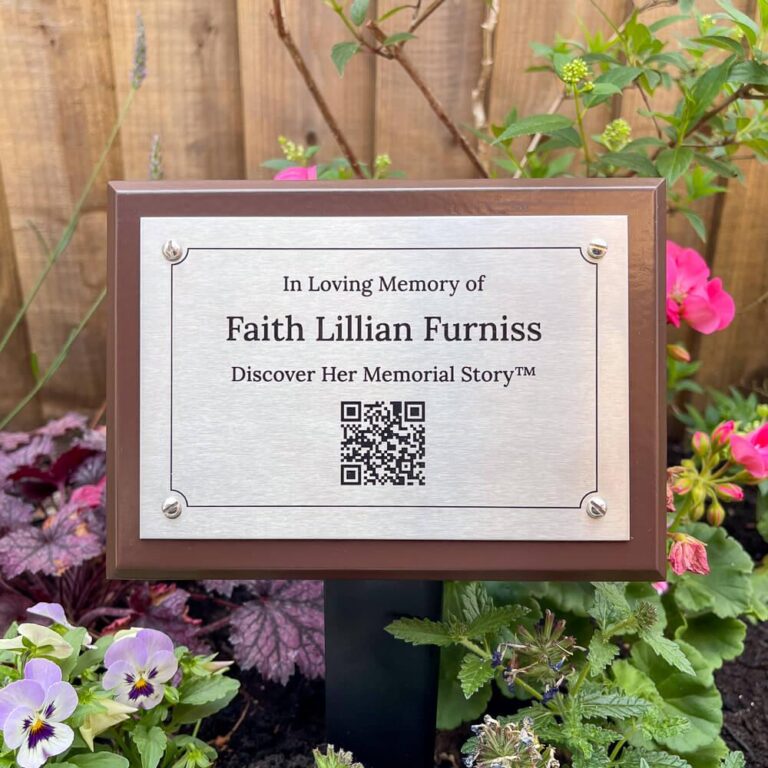
In an era where technology intertwines with our most personal experiences, Memorial Stories emerges as a beacon of innovation in the realm of remembrance. This pioneering platform has introduced QR Code Memorial Plaques, a concept that seamlessly blends the timeless tradition of memorial plaques with the dynamic capabilities of digital technology. This innovative approach is transforming the way we honor and keep alive the memories of those who have left an indelible impact on our lives.

A New Approach to Preserving Memories

Memorial Stories transcends the limitations of traditional memorials. Where once the story of a loved one might be constrained to a few lines on a headstone or a fleeting eulogy, QR Code Memorial Plaques open the door to a world of rich narratives and cherished memories. Each plaque serves as a portal to a personalized remembrance page, allowing the full tapestry of a person’s life to be shared and celebrated. These digital memorials ensure that the essence of the departed is vividly preserved and accessible for generations to come.

The Journey of Creating Lasting Tributes

The process of creating a memorial at Memorial Stories is both simple and deeply personal. It begins with the selection of a plaque, available in various materials like brass, stainless steel, and acrylic, each offering a unique canvas for tribute. The personalization of these plaques is a thoughtful process, allowing families to reflect the personality and spirit of their loved one.

The heart of the memorial lies in the creation of the online tribute page, a “Memorial Story”. This digital space becomes a living memorial, a place where stories, photographs, and memories converge to paint a complete picture of the departed. Here, the nuances of a life well-lived are captured – the laughter, the wisdom, the love.

Beyond Traditional Boundaries: A Digital and Physical Legacy

Placing the QR Code Memorial Plaque in a meaningful location marks the final step in this journey of remembrance. Whether it’s set in the sanctity of a family home, or amidst the tranquility of a public memorial site, these plaques offer a physical anchor to the memories that now reside in the digital realm. They stand as a testament to the enduring nature of love and memory, bridging the physical and digital worlds in a harmonious tribute.

Fostering a Community of Shared Memories and Healing

Memorial Stories is more than a platform for creating digital memorials; it’s a community rooted in shared experiences of loss and love. The platform encourages users to engage with each other’s stories, creating a tapestry of collective memory and shared healing. In sharing these stories, users find solace in the realization that while their loved ones are gone, the impact they had on the world remains tangible and cherished.

Empathy at the Core: Inspired by Personal Experience

The inception of Memorial Stories is deeply rooted in empathy and personal experience. The founders, having faced the profound pain of personal loss, understood the immense value of keeping the memories of loved ones vibrant and accessible. This personal connection is evident in every facet of Memorial Stories, from the compassionate design of the platform to the respectful handling of each tribute. It’s a service born not just out of innovation but out of a deep understanding of the emotional significance of remembrance.

The Role of Technology in Modern Mourning

As we navigate through the digital age, the ways we express grief and commemorate the deceased are evolving. Memorial Stories sits at the forefront of this change, leveraging technology to enrich the experience of remembrance. The use of QR codes is particularly significant; it symbolizes the marriage of tradition with modernity, offering a new dimension to the act of memorializing. This technology does not replace the traditional modes of mourning but rather enhances them, providing a platform for stories and memories to live on in a digital format.

The Importance of Remembering and Sharing

One of the core beliefs that drive Memorial Stories is the power of remembrance and sharing. By keeping the stories of our loved ones alive, we not only honor their legacy but also offer insights and values to future generations. The shared narratives found on the platform often resonate with universal themes of love, resilience, and humanity, providing comfort and connection to those who engage with them.

Looking to the Future

As Memorial Stories continues to grow and evolve, it remains committed to its mission of providing a meaningful space for remembrance and connection. The potential for this platform extends beyond individual memorials; it has the power to transform how we view and interact with the concept of legacy and memory in the digital age.

Memorial Stories represents a new chapter in the story of how we remember our loved ones, offering a space where memories are not only preserved but are celebrated and shared, continuing to touch lives long after the physical presence has faded.

For more information and to experience this unique approach to remembrance, visit www.memorialstories.com.

ARC Church Planters Offer Insight into Finding the Right Place to Launch

For many church planters, deciding to start a church of their own is the easy part. Deciding where that new church should be located is an entirely different story. Networks such as ARC (Association of Related Churches) offer support in finding the right place to launch.

Earl and Oneka McClellan, the founders and lead pastors of Shoreline City Church in Dallas, Texas, know that experience first-hand. The idea for launching their new church in January 2012 came from a dream that Earl had on his birthday in October three years earlier.

After having the dream that he needed to start and lead a new church, he woke Oneka to tell her everything. In what was a surprise to Earl, his wife said she had known all along that this was his calling from God. But where was that church supposed to be located?

The McClellans say they advised and trusted in the leadership at their church at the time to find the right place to launch their church.

A Random Trip

In 2010, the McClellans were in Dallas on a random trip when Earl said he felt called to the city.

“I felt like God put a jacket on me and said, ‘This is where you’re supposed to be.’”

One of the main things that both Earl and Oneka loved about the idea of starting their new church in East Dallas was that it was an unchurched area. In addition, it was a very diverse area with rich, poor, black, white, Latino, married, and single people.

This was a place that was in need of all that churches had to offer, the McClellans felt. And it’s a lesson the couple says that anyone who launches a future church should heed.

Serve Those Who Aren’t Served

As Earl McClellan points out, the Bible doesn’t paint a clear picture of all the rules. Unlike many other things in life, the Bible gives a lot of guidance but no strict ways that things have to be done.

In many ways, that freedom can be scary. But, at the same time, there are unwritten rules that church planters can rely upon.

One of those unwritten rules is to serve with honor. You want to serve people in a way that adds to their lives, helps them, lifts them up, and supports them.

Oneka points out that so many church leaders worldwide are so passionate about what they do that they often forget about those who are lost. She says she’s seen so many pastors who try to find people who are already found instead of going after the lost.

That’s important insight the McClellans say is important for church planters to know. Their goal at Shoreline City Church was to find the people who were lost and those who were unserved by a church that could share the word of God with them.

By doing that, by serving an unserved area, the McClellans and Shoreline City Church has been able to have a bigger impact than it possibly could have otherwise.

Leave Room to Grow

As the motto of ARC (Association of Related Churches) says, “Don’t do ministry alone.” Networks such as ARC offer valuable expertise to identify unchurched areas, provide resources, and support church planters.

Pastor Dino Rizzo, Executive Director of ARC Churches, explains: “You want to find a place where you can have just a little bit of room. You don’t plant a tree up under another tree. Get out a little bit, get your little yard, where you can grow and produce some fruit. And it seems like where you’re now in this part of the city, it’s like you have a little room.”

About ARC (Association of Related Churches)

ARC (Association of Related Churches) represents a collaborative network comprising independent congregations from various denominations, networks, and backgrounds. Its primary mission is to provide essential support and resources to church planters and pastors, enabling them to effectively share the teachings of Jesus. ARC’s operational approach revolves around empowering and equipping church leaders, fostering the widespread dissemination of the life-changing message of Jesus. Established in 2000, ARC has evolved into a worldwide entity and has played a pivotal role in facilitating the establishment of over 1,000 new churches.

Pioneering Traditional Art in the Digital Age

Funktronic Labs, an innovative VR studio based in Pasadena, California, is revolutionizing the integration of traditional Chinese art into digital technology. The project is spearheaded by Katrina Tan Kit, a Chinese Filipino artist who draws her inspiration from her ancestral roots in Taiwan and Hong Kong.

Katrina’s talent in traditional watercolor painting was discovered when she attended middle school in the Philippines.  She showcased her artistic talent through local Chinese festivals and conducted workshops on traditional arts and culture. Her community efforts were formally acknowledged in 2014 with a Resolution of Congratulations from the city of Bacolod in the Philippines.  Her watercolor paintings of the Chinese Zodiac have been adopted by the city of Bacolod organizing committee for the Chinese New Year celebration.

Funktronic Labs Pasadena, California

At Funktronic Labs, Katrina is positioned at the forefront of developing a virtual reality (VR) game that encapsulates the essence of traditional Chinese ink paintings. This game is a visual treat and a narrative odyssey steeped in Chinese mythology, the “Memories of Azure.” The Memories of Azure app is designed to be a multi-sensory VR adventure that pushes the limits of traditional gaming. Through Funktronic Labs, Katrina’s ambition is to create an immersive experience, allowing players to engage deeply with ancient Chinese visual art and stories. Since its founding in 2013, Funktronic Labs has developed a reputation for stimulating visual and audio senses through innovative digital platforms, making “Memories of Azure” a highly anticipated fusion of cultural heritage and modern technology.  The “Memories of Azure” will use Katrina’s watercolor painting art to create a vivid, open world.

A winner of the 2014 Google Cloud Platform competition, Katrina Tan Kit is devoted to preserving traditional paintings and calligraphy through technology. She has created an app called the “Chinese Ink Brush Effect,” which uses the Unity Game Engine to produce beautiful, free-flowing brushwork that mimics the effects of a traditional ink brush. (See https://kattk.itch.io/ink-brush-effect)  Funktronic Labs intends to build upon Katrina’s existing work to present a compelling story to a global audience. In the past, Katrina has created traditional painting interpretations of Funktronic Labs’ popular characters for community events and industry exhibitions with robust feedback from fans. The “Memories of Azure” project, set to be launched on Steam and Meta’s VR store in 2024, will be the studio’s first title to fully implement traditional Chinese watercolor art created by Katrina throughout the entire virtual reality environment. The “Memories of Azure” is a sensory feast for connoisseurs of traditional Chinese watercolor art.


Prescribing Success: Dr. Gregory Duhon Discusses How Entrepreneurs Can Integrate Medical Principles into Effective Business Leadership

Medical practitioners are often revered for what they do in operating rooms and research facilities. But, it’s also essential for these same professionals to build their leadership skills to effectively run a medical practice, according to Internist Gregory Duhon.

Developing entrepreneurial skills that result in effective business leadership might seem outside the wheelhouse of medical practitioners. However, they can apply clinical expertise they’ve built over the years to enhance their business leadership skills.

Here are some ways that can be done to foster collaboration, effective decision-making and employee well-being.

Diagnosis

One of the most crucial aspects of clinical expertise is diagnosis. Practitioners need to gain medical knowledge to be able to correctly identify issues so they can build proper care plans. The effectiveness of medical diagnosis ultimately has the biggest impact on patient outcomes, since it’s where all care plans start.

Healthcare professionals can use the same approaches they take in medical diagnosis in the day-to-day operations of their practice.

Medical businesses experience issues from time to time that need to be correctly diagnosed so they can be fixed. While these problems may not be medically related, the same investigative approach to identification and discovery can be used so that a corrective plan of action can be created to ensure the practice is able to continue operating smoothly.

Empathy

Healthcare professionals need to consistently display empathy to their patients. By doing so, they’re able to more effectively connect with them, which helps to foster a collaborative and transparent relationship.

Doctors are able to do their jobs more effectively when their patients feel more comfortable sharing information with them, and when patients are more receptive to information and suggestions doctors give to them.

The same goes for the office environment at the medical practice.

Medical practitioners need to be true leaders at the practice so that all employees who work underneath them feel like valued members of the team. By displaying empathy throughout the day, medical leaders can foster a sense of belonging among employees, which leads to a happier and healthier work culture that ultimately trickles down to how all patients are treated — both inside and outside of medical environments.

Communication

Clear and effective communication is an essential trait that healthcare professionals need to develop if they want to become successful in their discipline. Dr. Gregory Duhon, MD, says that doctors who aren’t able to able to establish clear, open and understandable lines of communication with their patients will have a hard time getting anything done — or creating healthy outcomes for their patients.

Similarly, medical leaders who aren’t able to create similar clear and effective lines of communication among their employees are likely to have a difficult time running a well-oiled medical practice.

Effective practices involve more than just clinical work. They also involve patient communication in setting up and changing appointments, following up on care plans, and dealing with billing.

By establishing clear communication channels from the top down, medical leaders are more likely to create an office environment in which every employee communicates in an effective and amenable way to all patients as well, every time there is a touchpoint with a patient or family member of a patient.

About Dr. Gregory Duhon, MD

In the domains of healthcare and business, Dr. Gregory Duhon, MD, is a notable figure. As an Internal Medicine Physician and Hospitalist, he excels in high-pressure environments like the ICU and emergency room, known for his compassionate care and volunteer work aiding flood victims and those facing opioid addiction.

Dr. Duhon’s pursuits extend beyond medicine – he’s a dedicated Ironman trainee, an avid traveler, a skilled gourmet chef, and a passionate cultivator of exotic passion fruit. His journey is a tapestry of expertise and diverse interests, making him a dynamic professional in every sense.

Unstructured Data Management and Governance: A New Architecture for Intelligent Cataloging, Discovery, and Secure Access

Enterprises across industries are generating unstructured data at a staggering pace—scanned contracts, design blueprints, call-center audio, clinical imaging, compliance documents, product manuals, surveillance video, and high-resolution media assets. For many organizations, this category represents the majority of new data generated each year, yet it remains the least accessible. Senior data and technology leaders frequently surface a common challenge in strategic discussions: How do we manage, govern, and extract value from unstructured data when we don’t even know what is inside these files? This question appears repeatedly in customer conversations, and several enterprises have already taken guidance from a reference architecture designed to address it.

The core difficulty begins with cataloging. While structured datasets come with schemas, columns, and well-understood metadata, unstructured files—especially media formats—arrive as opaque binaries. A storage system has no inherent ability to understand whether a document contains sensitive customer identifiers, whether a video shows a safety compliance incident, or whether a scanned PDF includes handwritten notes that alter legal interpretation. Without visibility into the contents, it is impossible to build an effective data catalog, enforce retention rules, or apply access controls. The lack of semantic context prevents classification, analytics, lineage mapping, and policy enforcement. In effect, organizations are storing massive volumes of data that they can neither govern nor use confidently.

To solve this, Sakti Mishra, Principal Solutions Architect at AWS, introduced a cloud-native architecture that applies AI-driven enrichment as a prerequisite step before cataloging. The approach was published in the AWS Big Data Blog titled Unstructured data management and governance using AWS AI/ML and analytics services.” The design begins by storing media and document files in their raw form on Amazon S3, preserving original content as the source of truth. Instead of attempting to define metadata upfront, the system triggers AI workflows after ingestion. Services such as Amazon Textract, Amazon Comprehend, Amazon Rekognition, and Amazon Transcribe extract interpretable signals from documents, images, and audio, while custom models on Amazon SageMaker and foundation models on Amazon Bedrock add domain-specific interpretation. These outputs are stored as structured data—JSON artifacts, tabular metadata, embeddings, or processed derivatives—linked back to the original assets.

This sequencing is a key innovation: enrichment precedes cataloging. Once structured metadata exists, organizations can finally apply mature data-lake governance patterns—business glossaries, search layers, lineage graphs, and query engines—just as they would for relational datasets. The catalog becomes dynamic, capable of evolving as new AI models extract deeper or more accurate information, ensuring historical content remains useful without re-ingesting or retrofitting storage systems.

Governance is equally central to the design. Instead of allowing users direct access to raw content, the architecture introduces a layered interaction model. Users begin by exploring the catalog, which provides descriptive context without revealing sensitive underlying assets. If permitted, they can interact with AI-extracted data, gaining analytical insight without direct exposure to raw files. Access to original media objects is granted only when required by role or entitlement, enforced through fine-grained access controls using AWS services such as Lake Formation, DataZone, and S3 Access Points. This structure enables secure collaboration across compliance teams, analysts, machine learning practitioners, and business units, allowing each to work at the appropriate level of abstraction.

In the heart of this reference architecture, it proposes a refined, three-tier system that elegantly bridges raw unstructured content, AI-driven semantic enrichment, and governed metadata discovery. As detailed in his post, this design underpins a practical, scalable, and secure way to manage unstructured data at enterprise scale.

High-Level Architecture: A Layered Flow from Raw Data to Governed Insight

At a high level, the architecture diagram Sakti Mishra and his colleagues at AWS, presents a tiered flow that carefully separates raw content, AI-extracted output, and a metadata catalog.

The diagram represents the following layers.

  • Raw Ingestion Layer
    The process begins with raw unstructured objects—images, video files, scanned documents, audio, and more—landing in an S3 bucket (often called the “raw input object store”). These files are preserved in their native form, providing a source-of-truth repository that retains full fidelity.
  • AI Enrichment Layer
    Once ingested, the architecture invokes multiple AI and ML services to analyze the content. Depending on the file type, services like Amazon Textract (for scanned documents), Amazon Comprehend (for natural language), Amazon Rekognition (for images and video), and Amazon Transcribe (for audio) are used. Custom or domain-specific models running on Amazon SageMaker or via foundation models from Amazon Bedrock can also be integrated to extract richer metadata or embeddings. The output—structured JSON, embeddings, labels, and other ML artifacts—is written back to S3 in a separate “extracted JSON” bucket.
  • Metadata / Catalog Layer
    Once enriched, a metadata layer is created to maintain relationships between the raw objects and their derived interpretations. This layer stores mappings between original S3 paths, the enriched JSON or structured outputs, and any additional enrichment transformations. According to the diagram, this metadata layer is the foundation for discovery: it enables cataloging systems to expose what is inside media assets without compromising the raw content.
  • Query and Governance Layer
    On top of the metadata catalog, flexible query engines are leveraged for discovery and analysis. The architecture calls out Amazon Athena and Amazon Redshift Spectrum to query the structured AI outputs. The AWS Glue Data Catalog is used to register and organize schema metadata. Governance is enforced at multiple levels: AWS Lake Formation and Amazon DataZone manage fine-grained access controls to both the extracted data and the raw objects.
  • Controlled Access to Raw Assets
    Finally, when users actually need to access the original media—for example, a compliance team needing to review a video file or legal requiring a scanned contract—the system uses Amazon S3 Access Points. These access points enforce restrictive policies, controlling access by prefix or tag, ensuring only appropriately privileged roles can retrieve the raw binaries.

Why This Architecture Stands Out

This design offers the following two unique approaches that addresses the complex requirement around unstructured data management.

  • AI-First Metadata Strategy: Rather than cataloging based on limited or manually assigned tags, the architecture leverages AI to discover what’s inside It effectively builds a structured layer on top of unstructured content. Once in structured form, traditional cataloging and governance patterns become applicable.
  • Multi-Level Access Control: By separating metadata, AI outputs, and raw assets, the architecture enables granular access. Users gain insight and perform analysis without automatically gaining access to potentially sensitive raw files, unless explicitly authorized. This staged flow provides powerful control, auditability, and security.

Importantly, the architecture is technology-agnostic. Although the AWS blog demonstrated it using AWS-native services, the same pattern can be implemented using other cloud or on-prem platforms, AI frameworks, storage systems, and metadata/catalog tools. As long as a system can capture raw data, perform enrichment, store derived artifacts, and maintain a catalog, it fits within this paradigm.

Early adopters of this approach have already applied the model to real-world domains such as regulatory document management, digital media archives, contact-center analytics, and healthcare information retrieval. They view this architecture not as a storage strategy, but as a knowledge-extraction framework—one that retains the fidelity of original files while enabling structured insight and controlled access. It creates a continuity between traditional relational governance and the rapidly expanding world of multimedia-driven datasets.

The model naturally extends into semantic search, where vector embeddings produced during enrichment allow indexing based on meaning rather than keywords. By integrating services such as Amazon OpenSearch Service or open-source Elasticsearch, enterprises can retrieve similar documents, correlate investigative media assets, or identify patterns across diverse formats—even when terminology differs across files. This shifts the enterprise from file storage to contextual knowledge retrieval, creating new value streams across operations, risk assessment, and innovation pipelines.

Ultimately, this pattern reframes the industry’s approach to unstructured data. Rather than forcing media files into rigid schemas or leaving them idle in object stores, the architecture layers AI-driven understanding, structured cataloging, and policy-aligned access control in a cohesive system. By enabling unstructured datasets to behave like governed analytical assets, organizations can finally unlock value that was previously invisible—turning raw archives into actionable intelligence.

By applying this layered, AI-led, catalog-driven approach, organizations can finally address the common-but-difficult questions: What unstructured content do we have? What’s inside those files? Who should see them? And how do we make sense of them without sacrificing security or scalability?