Home Blog Page 63

A Revolution in Respiratory Virus Detection: The Real Time Voice Analyzer

In a groundbreaking move set to change the face of respiratory illness screening, the Real Time Voice Analyzer (RTVA) has emerged as a promising tool in the fight against COVID-19. The RTVA offers the most advanced non-invasive solution, utilizing voice biomarkers and state-of-the-art AI algorithms to detect not only COVID-19 and its variants but also certain strains of influenza and the common cold.

This innovative tool is the brainchild of a collaboration between Hematico and Dr. Rita Singh, a globally recognized expert in voice analysis research. With over 25 years of experience, Dr. Singh has devoted her career to the study of voice patterns and their implications for health. The RTVA is a culmination of this work, capable of detecting health variances across any language. Singh likens the RTVA’s capabilities to a doctor using a stethoscope, detecting irregularities with unprecedented accuracy.

Designed to be user-friendly, the RTVA mobile app offers results in just 5-10 minutes, bypassing the extensive waiting times associated with traditional testing methods. Its universal design ensures accurate screenings irrespective of the user’s language, focusing primarily on vowel sounds to provide consistency across diverse dialects and languages.

Prioritizing user security and privacy, the RTVA assures that all health data is protected, meeting all HIPAA compliance standards. And in an age of environmental awareness, the RTVA stands out as an eco-conscious choice. Requiring nothing more than the user’s voice, it eliminates the environmental footprint associated with plastics, swabs, or shipping materials.

The medical community has quickly recognized the potential of the RTVA. Melinda Silva, MD, a member of RTVA’s Medical Advisory Board, commented, “The Real Time Voice Analyzer serves as an invaluable early warning instrument. A positive screening result enables individuals to promptly seek out further tests or treatments, streamlining the process of intervention.”

With its official unveiling, the RTVA is now available for a free trial, with no credit card prerequisites. This tool signifies more than just another screening mechanism—it’s a beacon of hope and a significant stride in our global battle against respiratory viruses.

For a closer look at what the RTVA offers, an official video demonstration is available here. To learn more or sign up for the trial, interested parties can visit the official website.

Founded in 1998, Real Time Network has a storied history of equipping individuals with the tools to take charge of their healthcare needs. As the developers behind the RTVA, they continue to showcase their commitment to cutting-edge healthcare solutions.

International Girls Day and Afghanistan Girls Aspirations

Yesterday, on October 11, the world observes the International Day of the Girl Child. The theme of International Day of the Girl 2023 is “Invest in Girls’ Rights: Our Leadership, Our Well-being,” according to the official website of the United Nations.

Afghanistan Girls

Fact sheet: https://www.whitehouse.gov/briefing-room/statements-releases/2023/10/11/fact-sheet-white-house-celebrates-international-day-of-the-girl-and-announces-new-actions-to-support-youth-in-the-u-s-and-abroad/

Mosawer Begana women's rights activist Pointed

On this significant occasion, it’s important to note the absence of any mention regarding the situation of women in Afghanistan in the latest White House report by President Joe Biden. In his address, President Biden highlighted the establishment of the White House Gender Policy Council, aiming to advance gender equity and equality across both domestic and foreign policy. He reiterated the United States’ commitment to empowering girls globally, underscoring a historic doubling of foreign assistance to promote gender equity worldwide in the preceding year.

Mosawer Begana women’s rights activist Pointed “President Biden’s address reveals a concerning ignorance of the unfolding situation in Afghanistan concerning women’s rights—a country that was an ally for 20 years, purportedly upholding democratic values, freedom of expression, and women’s education,

In a recent White House report, President Biden did not mention the evolving situation in Afghanistan regarding women’s rights.

Unfortunately, on this important day, he did not delve into the challenges faced by Afghan women in last 2 years, This may suggest a lesser emphasis on Afghan women’s rights in America’s current priorities

The International Day of the Girl Child, established through a 2012 United Nations resolution, aims to ensure a safe, healthy, and educated life for girls. It aligns with one of the United Nations’ sustainable development goals, stretching until 2030,” he emphasized, underscoring the importance of this globally recognized day.

This day serves as a reminder of the challenges faced by girls globally, emphasizing their fundamental rights to a secure, healthy, and educated life. The aspiration is for these capable young girls to grow into literate mothers and become future political leaders,” he continued, drawing attention to the hopeful outlook.

But Unfortunately, the current situation in Afghanistan starkly contrasts this vision, with girls’ schools closed for 753 days, women deprived of their basic rights, and subjected to dire circumstances,” he lamented, highlighting the stark disparity from the envisioned path.”

The International Day of the Girl Child was unanimously adopted during the World Conference on Women in Beijing in 1995. The Beijing Declaration, the first policy specifically advocating for girls’ rights worldwide, was a pivotal step. Subsequently, on December 19, 2011, the United Nations General Assembly officially designated October 11 as the Day of the Girl Child through a resolution. Since then, the International Day of the Girl Child has been commemorated annually, beginning in 2012, serving as a day for analysis and evaluation of the global situation of girls.

In Afghanistan, the grim reality persists—girls continue to be denied fundamental rights, including education, work, and freedom, facing immense pressure under the ruling regime.

In addition of the situation, Human rights organizations have called for the immediate release of Afghan women’s rights activists like Zholia Parsi and Neda Parwani, who have been arrested for peacefully protesting against the Taliban’s anti-women policies. Tamna Zaryab Pariyani, an Afghan women’s rights activist in Germany, is on an 15-day strike for recognition of gender apartheid inside Afghanistan.

Afghan women's rights

3 Reasons Hiring a Property Manager for Your Rental Property Makes Sense

If you’re interested in buying a rental property, the cost of entry isn’t anything to sneeze at. The median home sale price in the U.S. was $416,100 in the second quarter of 2023. So, proper due diligence is necessary before pulling the trigger on a transaction.

However, not everyone wants to manage their rental property. While you might wish to own one or more rental units, enjoy the passive rental income, and monetize your investment down the road by selling it, you might want to be something other than an active landlord.

The good news is you don’t have to be. No, that doesn’t mean treating your tenants with impunity. It means hiring a property manager to find the right tenants, ensure they’re treated well, maintain the property, and do other landlord-related things.

If you already have enough to do, you might not want to add “landlord” to your to-do list. Here’s a look at three reasons why hiring a property manager makes sense for you as a rental property owner.

  1. Screen Tenants

A property manager can help you find good tenants who pay rent monthly, respect the rules, treat other tenants with respect, and care for their rental units. In other words, a property manager can ensure the flow of passive income is uninterrupted.

If you hand the keys to tenants who wind up costing nothing by problems, your passive income stream can dry up quickly. So, a property manager can save you money.

While hiring a property manager won’t eliminate the possibility of getting bad tenants, it will increase the odds of finding the type of tenants you want to keep around for a long time. A company like Green Residential, a Houston property management firm, will screen would-be tenants. This process involves reviewing credit scores, conducting background checks, and requesting reference letters from previous landlords.

  1. Provide Customer Service

After finding quality tenants, you can’t stop there. You need to work just as hard to keep them as you did to find them. That means providing great customer service and ensuring tenants can easily access you and get the help they need.

But what if you lack time to provide excellent customer service? The answer is to hire a property management firm that can do so on your behalf. The property manager can give tenants a contact number should they need help.

When tenants know that they can quickly get a hold of someone and that the service provider will respond promptly, they’ll have a higher level of satisfaction.

  1. Maintain Rental Property

Hiring a property manager also means getting help with maintaining your rental property. If you don’t proactively maintain the real estate, it will quickly fall into a state of disrepair. That won’t only negatively impact the value of your property, but also adversely affect tenants’ perception of you and your rental property.

Prioritizing maintenance and repairs is essential, and a property manager can help. It can spearhead maintenance and repairs by finding the right contractors, sourcing the materials, and informing tenants about projects.

You might one day want to sell your investment property to enjoy a sizeable return. But the return on investment won’t be as much as you want if your property is run down.

These are some reasons why you should hire a property manager if you buy a rental property. Don’t get hung up on the percentage of rental income these companies charge for their services. Investing in a property manager is about investing in your rental property — and the return on investment will make doing so worthwhile.

The NIST Risk Management Framework (RMF): A Banking Perspective

By Pedro Martinez CISSP CBSP, CIO & Chief Information Security Officer of Zenus Bank

In the high-speed era of digitization, the security and resilience of financial infrastructure have never been more critical. The NIST Risk Management Framework (RMF), formulated through a joint collaboration involving NIST, the U.S. Intelligence Community, DoD, and CNSS, offers an innovative, systematic approach to cybersecurity, ensuring the seamless operation of both new and legacy systems.

What is NIST RMF?

The RMF is not just another set of guidelines—it’s a strategic blueprint for institutions, like ours, to detect, address, and mitigate ongoing cyber threats and vulnerabilities in our systems. Rooted in proactive risk assessment, the RMF champions a cyclical, seven-step process: Prepare, Categorize, Select, Implement, Assess, Authorize, and Monitor.

Why Banks Should Pay Attention

  1. A Proactive Approach: Rather than merely responding to cyber threats as they emerge, the RMF encourages banks to anticipate and prevent them. From assessing organization-wide risks to monitoring control effectiveness, it’s a comprehensive journey from risk identification to mitigation.
  2. Tailored Defense: For the banking industry, a one-size-fits-all approach is redundant. The RMF’s adaptability ensures each bank can tailor its cybersecurity strategies to its unique operational dynamics, from enterprise size to the complexity of digital transactions.
  3. Focus on Continuous Improvement: Cybersecurity isn’t a one-time effort. With threats evolving daily, continuous monitoring, as advocated by the RMF, helps banks stay a step ahead.

Banking-Specific Takeaways from NIST RMF

  1. Comprehensive Risk Identification: In banking, every digital transaction is sacred. The RMF’s identification process encourages us to understand various risks, be it strategic, legal, or privacy-related, and consistently update this understanding as the risk landscape transforms.
  2. Strategic Mitigation: Not all cyber risks warrant action. With the RMF, banks can discern which vulnerabilities need urgent attention, which can be tolerated, and which must be completely eradicated.
  3. Enhanced Information Security: At its core, the RMF prioritizes data protection. Whether it’s sharing transaction details with a fintech partner or storing customer data, the RMF offers strategies to keep this data uncompromised.
  4. Governance that Works: As integral components of the national economy, banks must enforce stringent risk-related policies. The RMF’s governance component ensures these policies are not just in place but effectively implemented.

NIST Risk Management Framework Pedro Martinez

Best Practices for implementing the NIST Risk Management Framework in the U.S. & Latam

Implementing the NIST Risk Management Framework (RMF) in banks across the U.S. and Latin America (Latam) requires understanding the distinct regulatory, technological, and cultural landscapes of each region while upholding the core principles of the framework. Below are some best practices tailored for banks in both regions:

General Best Practices

  1. Leadership Commitment: Senior management must endorse and support the implementation of the RMF. Their visible commitment fosters a culture of cybersecurity throughout the organization.
  2. Continuous Training: Ensure that all employees, from top executives to frontline staff, receive regular training on the RMF’s processes, controls, and related cybersecurity topics.
  3. Integrate with Business Objectives: Align RMF processes with the bank’s business goals, ensuring that risk management complements and supports business operations rather than hindering them.
  4. Stakeholder Collaboration: Foster communication between IT, cybersecurity, compliance, and business units. Collaborative efforts lead to a holistic understanding of risks and more effective mitigation strategies.
  5. Regular Reviews and Updates: The cyber threat landscape is dynamic. Continuously monitor, assess, and update RMF processes and controls to adapt to evolving risks.

Best Practices for U.S. Banks

  1. Compliance with Federal Regulations: U.S. banks must ensure that their RMF implementation aligns with regulations like the Gramm-Leach-Bliley Act (GLBA) and guidelines from the Federal Financial Institutions Examination Council (FFIEC).
  2. Engage with ISACs: Participate in Information Sharing and Analysis Centers (ISACs) like the Financial Services ISAC (FS-ISAC) to share and receive intelligence on current cyber threats.
  3. Vendor Risk Management: With many U.S. banks leveraging third-party solutions, ensure that vendors adhere to the same rigorous cybersecurity standards set by the RMF.

Best Practices for Latam Banks

  1. Consider Local Regulations: Each country in Latam has its own regulatory framework. For example, Brazil’s LGPD focuses on data privacy. Ensure RMF implementation respects these local nuances.
  2. Bilingual Implementation: While many banking professionals in Latam speak English, it’s essential to provide RMF training and documentation in both English and local languages, such as Spanish or Portuguese.
  3. Cultural Awareness: Understanding and respecting local corporate cultures can facilitate smoother RMF implementation. For instance, personal relationships and face-to-face meetings hold significant value in many Latam countries.
  4. Enhance Digital Infrastructure: Given the varying levels of technological infrastructure across Latam, banks should prioritize building or enhancing their digital infrastructure to support RMF processes effectively.
  5. Engage with Local Cybersecurity Bodies: In Latam, organizations such as the Organization of American States (OAS) have taken initiatives to strengthen cybersecurity in the region. Engage with such bodies for guidance and collaboration.

Whether in the U.S. or Latam, the key to successful RMF implementation in banks lies in understanding the framework’s core essence while tailoring its application to fit the bank’s unique environment and challenges. With a global rise in cyber threats targeting the financial sector, adopting the RMF can position banks to protect their assets, reputation, and customers more effectively.

Fintech & the Future

For fintech firms aspiring to collaborate with traditional banks, understanding and aligning with the RMF can be a game-changer. Not only does it elevate their security standards, but it also boosts their credibility in the eyes of institutional giants. Furthermore, with fintech innovations often leading the way in financial services, their RMF compliance can set industry standards for cybersecurity.

Closing Thoughts

For banks and fintech firms, the message is clear: In an interconnected digital age, being prepared isn’t just beneficial—it’s essential. The NIST RMF isn’t just about compliance; it’s about ensuring our industry remains resilient, secure, and primed for the future. As digital custodians of the public’s trust and assets, it’s a responsibility we embrace and champion daily.

Disclosure Statement:

The views and opinions expressed in this article are those of the author. Unless noted otherwise in this post, Zenus Bank or any other organization are not affiliated with, nor is it endorsed by, any of the companies mentioned. All trademarks and other intellectual property used or displayed are the ownership of their respective owners.

This article is intended for informational purposes only and does not constitute legal or financial advice. Consult your own counsel for advice relating to your individual circumstances.


Soceon: Revolutionizing Digital Narratives and Social Media Engagements

In a rapidly evolving digital era, standing out and making an impact in the vast online domain is a challenge for brands, irrespective of their stature. However, every so often, a revolutionary entity emerges, reshaping the contours of what is achievable in the digital realm. Enter Soceon – the embodiment of digital excellence, where quality content merges seamlessly with innovative social media solutions.

Meticulous Craftsmanship: Beyond Ordinary Content

In the digital sphere, content is omnipresent, but it’s the depth, relevance, and resonance that determine its efficacy. Soceon’s “articles for sale” aren’t mere compositions but finely curated masterpieces. These are articles etched with insights, pulsating with relevance, and intertwined with strategic SEO tactics that guarantee more than just fleeting glances. They command engagement.

Navigating Digital Challenges: Soceon’s Promise

The digital world, particularly social media, is fraught with challenges. From unexpected bans on Twitter to the coveted verifications on TikTok, navigating these platforms requires expertise, agility, and foresight. Soceon’s specialized services, like the “Twitter unban” and “TikTok verification,” aren’t just remedial but transformational. They don’t just restore; they elevate, ensuring brands shine brighter post-intervention.

Customization at Its Pinnacle

The true essence of a brand lies in its uniqueness. Recognizing this, Soceon offers tailored solutions, ensuring that every article purchased or social media strategy employed echoes the distinct voice of the brand it represents. It’s not a one-size-fits-all approach, but a symphony of varied notes creating a harmonious brand melody.

The Assurance of Excellence

Every endeavor at Soceon is backed by a commitment to excellence. Their legacy isn’t just about the services rendered but the results achieved. The “articles for sale” are more than just digital content; they’re strategic assets, poised to catapult brands to unparalleled digital prominence.

Soceon: The Future of Digital Dominance

In conclusion, Soceon isn’t just a PR and social media marketing agency; it’s the future of digital dominance. With its unparalleled expertise, innovative solutions, and unwavering commitment to excellence, it’s redefining the paradigms of digital engagement. Whether you’re a startup aspiring for visibility or an established brand aiming to fortify its digital presence, Soceon promises a journey marked by success, innovation, and unmatched results.

About Soceon

Redefining the realms of PR and social media marketing, Soceon stands as a testament to innovation, quality, and transformative results. Ensuring that PR’s barriers are dismantled, Soceon offers a suite of services, from premium articles to comprehensive social media solutions, that promise brands not just visibility but unparalleled digital eminence. With Soceon, the digital future isn’t just promising; it’s assured.

Lear Capital Investors Divulge the 3 Most Surprising Aspects of Investing With Gold, Silver, and Platinum

With an AAA Business Consumer Alliance rating and roster of more than 90,000 customers, Los Angeles-based Lear Capital has facilitated dozens of bullion and rare coin purchases — and helped investors add gold and silver assets to self-directed IRA accounts — since Chairman Kevin DeMeritt founded the precious metals firm in 1997.

“If you had a 401(k) or an IRA, and you’d like to take a portion of that and move it over to a self-directed gold-backed IRA, you can do that,” Kevin DeMeritt says.

In addition to precious metal diversification services, the company offers a number of beneficial resources to help educate people about investing in precious metals — which range from real-time precious metals pricing updates to customized asset estimates and the latest industry news.

The materials have been created to inform current and potential investors about physical precious metal investing that they may not be familiar with — such as the following three aspects  that some Lear Capital customers didn’t expect.

  1. Physical Precious Metal Assets Can Be a Visually Stunning Portfolio Addition

The growing value of the precious metal content in platinum, gold, and silver coins has helped stabilize or increase their price in recent decades during economically challenging periods. Only a limited amount of some coins was produced, which can give those items additional appeal.

Coins can be purchased from authorized precious metals dealers like Lear Capital. In a consumeraffairs.com review, Miah, an investor from Delaware, Ohio, noted the impressive “quality and availability” of Lear Capital’s rare coin selection. “I am happy with my investment,” Miah said.

Coins with a limited mintage that have been made with a coveted precious metal, such as silver — for which the demand has increased globally in the past five years — can potentially provide robust returns, according to Kevin DeMeritt.

“You get the price of silver moving up [and] you can get the premium on that coin moving up because there’s just not enough of the coins out there,” DeMeritt says. “If you go to the U.S. Mint as a dealer and purchase a silver 1-ounce American Eagle, usually you would pay $2.50 over the spot price for that coin. During the [COVID] pandemic, they couldn’t run the mint as much as they wanted to. That $2.50 premium over the spot price of silver skyrocketed to $14 and $15.”

Dan Damron, who purchased coins from Lear Capital in mid-2023, was impressed by their appearance upon arrival.

“The coins showed up in a heavy package,” Damron said. “[They were] beautiful — so much more than expected.”

“The coins are so shiny and elegant and larger than I expected,” Kenneth, from Aline, Texas, told consumeraffairs.com.

Some investors may feel more comfortable investing via a tangible asset like coins, which offer some protection against certain external risk factors that investments like stocks can be subject to. The value of rare coins, according to Kevin DeMeritt, doesn’t rely on a CEO’s business decisions, for instance, or the organization’s overall performance like other asset classes.

A Lear Capital representative helped familiarize Larry, in Missoula, Montana, with what to expect during his first gold and silver purchase over the course of several months. Larry said they discussed market fluctuations’ possible effect on the investment, as well as aspects like the involved storage needs.

“My experience with the ordering and receiving process of our shipments of gold and silver was extraordinary!” Larry said. “My only surprise was the weight and bulk of the shipment.”

  1. Setting Up a Precious Metals IRA May Not Take Too Long

Establishing a new individual retirement account or rolling over existing retirement funds — such as Roth, SEP, or SIMPLE IRAs, or 401(k)s — to a self-directed IRA that can hold physical metals can be a fairly quick process.

The initial application portion takes about 10 minutes, according to Lear Capital. A new IRA account will then be set up within 24 hours. Depending on your current IRA’s custodian, the tax-free rollover of funds, typically through a transfer via bank wire, may take up to five business days.

“It’s a pretty easy process,” Kevin DeMeritt says. “Simply give us a phone call [and] talk with one of the representatives. You can purchase, sell, or liquidate those precious metals at any time.”

In some cases, precious metal purchases and IRA inceptions take even less time than investors anticipated.

“This is my first time investing in any precious metal,” Birmingham, Alabama-based investor Kevin said in a consumeraffairs.com review. “Things were explained clearly to me. The transaction occurred precisely as expected. I even received my investment a day earlier than anticipated.”

Kyle, a coin collector from Tucson, Arizona, was also impressed by Lear Capital’s delivery time.

“When I saw that Lear had an exclusive deal with the Royal Canadian Mint for a Killer Whale coin, I knew I had to have it,” the investor said in a review. “I called and their account representative was helpful and walked me through the process. The coin arrived very soon, and the quality met the expectations we’ve come to know from the RCM.”

Casey, an investor from North Las Vegas, Nevada, also described the investment process as swift.

“Signing up and transferring my 401(k) was easier than I expected and was greatly facilitated by [Lear Capital’s] employees,” Casey said. “When I had questions, the workers were quick to answer.”

  1. Investors Can Access Valuable Know-How About the Investment Process

Much like a traditional IRA or other investment item, physical precious metal asset-based investing involves a number of steps, which can be easier to navigate with help from a trained professional like the dedicated account representatives with whom Lear Capital pairs investors.

Numerous clients have expressed praise for the assistance they received throughout the investment process.

Sheryl from Belton, Texas, said in a review posted on consumeraffairs.com that she was “pleasantly surprised” by the assistance and information the Lear Capital representative she talked to provided.

Other investors agreed — including one who recently posted a review on Trustpilot, a consumer review platform where Lear Capital has received a five-star Excellent-level assessment.

“With all the questions I had, he sent me all the documentation to back it up,” Wilhelm said. “With that information in hand, I was able to make a sound and solid decision on my investment.”

Some customers described receiving support from a number of representatives.

“Any person we spoke with at Lear Capital [was] both helpful and professional,” Valicia Law said in a review written in June. “We enjoyed our experience with this company.”


Where the U.S. Dollar Is Today – and Where Lear Capital Advises It May Be Headed

After decades of serving as the world’s reserve currency, the U.S. dollar is now in a potentially precarious position, according to Kevin DeMeritt, founder and chairman of Los Angeles-based precious metals provider Lear Capital.

Not only have a number of countries pulled back on U.S. Treasury securities purchases, DeMeritt says, in lieu of physical gold assets, but the dollar is now also facing potential competition from five of the world’s largest economies — Brazil, Russia, India, China, and South Africa — which might collectively propose an alternative global currency in the future.

The notion that the five BRICS nations — which comprise 40% of the world’s population, totaling 3.2 billion people — could possibly introduce a unified currency that may someday replace the U.S. dollar as the widely regarded reserve currency, isn’t completely out of left field.

According to the new Lear Capital report, The Tipping Point, the BRICS nations have already established an entity called the New Development Bank, which may serve as a type of competitor to the International Monetary Fund. NDB plans to issue 30% of its loans in the local currency of the specific country that is borrowing funds from it — and the BRICS countries’ efforts have reportedly drawn interest from a number of nations, including Argentina, Iran, Turkey, Indonesia, and Saudi Arabia.

“People have to be aware that countries are trying to get away from the U.S. dollar and giving themselves more flexibility to be able to transact deals without having to use the dollar,” Kevin DeMeritt says.

Could the U.S. Dollar Possibly Lose Its Reserve Status?

U.S. currency’s now somewhat-uncertain relationship with the global economy stems from a number of prior economic moves, including the government’s decision to abandon the gold standard years ago.

After World War II, the U.S. dollar became the world’s dominant reserve currency, due in part to its status as a gold-backed currency, with strong support from U.S. leadership.

Ending paper money redemption policies in 1971 thrust the U.S. into a fiat money system, making the dollar’s value heavily dependent on the confidence the world has at any given time in the current U.S. leadership and the country’s ability to remain economically viable.

“Fiat currency is a relatively new concept,” Rachel Mills, a Lear Capital global financial research specialist and author of The Tipping Point, said in a statement. “On the other hand, precious metals have had a critical role in currency and finance for 8,000 years. There is no logical reason to believe the world’s patience and trust in the U.S. dollar will last indefinitely.”

Recent politically motivated actions — including printing money at will and levying sanctions against Russia after it invaded Ukraine — have interjected additional concerns, according to Kevin DeMeritt, who says overall economic uncertainty has helped encourage central banks to invest in gold. India’s gold reserves, for instance, now total 881.85 tonnes; Russia has amassed 2,535.32.

Predicting stock market activity can involve a large margin of error; it can also be difficult to ensure that other investments, such as fine art, will appreciate as much as anticipated.

Both outcomes depend heavily on an amount of future demand that, as of now, is unknown — whereas recent gold-purchasing activity, coupled with its past performance and current U.S. monetary production policies, may indicate we’ll see a continued interest in gold.

Since 1970, gold’s price has increased from approximately $35 an ounce to $1,982. Gold has even performed well during economic downturns like recessions. Prices have, in fact, generally risen during the past 20 years, according to National Mining Association data.

“The central banks have been piling into gold over the past four or five years because we’ve printed up so much money, and now there’s a distrust,” Kevin DeMeritt explains. “[Investors wonder,] are we able to service the debt here in the United States? When you’ve printed $22 trillion since 2008, it’s a cause for concern — so you need to look for the asset that’s going to offset the volatility from some of the other areas.”

What To Expect — and How To Prepare

If a gold-backed BRICS currency were to be introduced, it could potentially drive prices for the precious metal higher — while simultaneously weakening the dollar.

As a result, Americans could experience a number of possibly detrimental effects, according to Kevin DeMeritt, ranging from price inflation to larger trade deficits and reduced saving capabilities.

“If we lost the reserve currency status, people in the United States would have a gigantic wake-up call because things would become much, much more volatile, with oil prices and everything else,” the Lear Capital founder states. “It’s denominated in somebody else’s currency; that currency goes up and down, [and] we would pay higher product prices.”

While there’s no absolute certainty that would happen — or clear idea when, if it were to occur — concerned investors can start preparing now to offset those types of dollar-related issues, and other potential economic catastrophes, by diversifying their portfolio, potentially with the addition of physical precious metal assets like gold and silver coins and bars.

Investors are able to add funds from a savings or checking account to a self-directed individual retirement account; alternatively, they can roll over a number of retirement accounts — including a Roth, SEP or SIMPLE IRA; a 401(k); and other varieties — into the self-directed IRA, and use the funds to purchase physical precious metal assets that possess a certain purity level.

At any point, you’re then able to also add items to the account — or sell some to adjust your holdings.

“I can’t tell you when the stock market or home values are going to fall; what we’re seeing in Ukraine could happen in Taiwan — who knows?” Kevin DeMeritt says. “You need something that has that inverse relationship to those kinds of things. When they happen, it can have a devastating effect, especially if you’re retired. The asset that gives you some stability while all of those uncertainties are happening typically is gold — have a hedge on the other side that will help you in those dark days.”

The Rise of NFC Business Cards: A Glimpse into the Future of Networking

The business card has long been a staple in professional networking. It’s a physical representation of one’s professional identity, a tangible item that one party gives to another, a memory aid for later interactions. But as technology advances, even age-old practices like exchanging business cards are evolving. Enter the NFC (Near Field Communication) business card – the futuristic counterpart of the traditional paper card.

Understanding NFC Business Cards

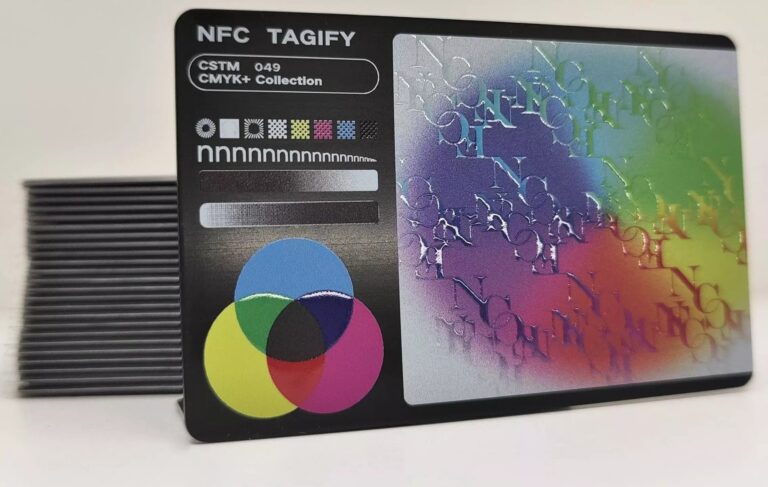
NFC business cards are essentially standard-sized cards embedded with an NFC chip. This chip allows for wireless communication between the card and any NFC-enabled device, such as a smartphone or tablet. By merely tapping the card against a compatible device, a plethora of information can be shared, from contact details to portfolio links, without any need for manual input.

Why NFC Business Cards?

  1. Eco-friendly Option: With concerns about sustainability and environmental impact becoming prevalent, an NFC card serves as a reusable and eco-friendly alternative. There’s no need for multiple cards, thus reducing waste.
  2. Vast Information Sharing: Traditional business cards are limited by space. With NFC cards, you can link to portfolios, videos, websites, social media profiles, and much more, offering a holistic view of your professional identity.
  3. Easy Updates: Change your phone number or job role? With traditional cards, you’d need a reprint. But with NFC, you can update the information linked to the chip, ensuring your contacts always have your latest details.
  4. Increased Engagement: The interactive nature of NFC cards encourages recipients to engage with the content, making them more memorable than their paper counterparts.
  5. Enhanced Security: Unlike QR codes that can be easily replicated, NFC chips offer a level of security, ensuring that the information shared is authentic.

The Challenges

While NFC business cards offer numerous advantages, they also come with challenges. The primary one is the cost – these cards are more expensive than regular ones. Additionally, not everyone has an NFC-enabled device, though the number is steadily increasing.

The Future is Contactless

The rise of NFC business cards aligns well with the trend of contactless interactions, be it payments or information sharing. As technology continues to evolve, the line between the physical and digital worlds will blur further. NFC business cards are a step in that direction, combining the tactile nature of traditional networking with the convenience of digital technology.

In conclusion, while traditional business cards aren’t going away anytime soon, NFC cards present a compelling case for those looking to stand out and stay ahead in the digital age. As with all technology, adoption might be gradual, but the future of professional networking seems poised to be contactless and interactive.

Signs It’s Time to Buy a New Tool Charger For your Business

In today’s fast-paced business environment, efficiency and productivity are primary to staying competitive. One often overlooked aspect of productivity is maintaining and upgrading essential tools and equipment. Among these, tool chargers are crucial in keeping your operations running smoothly. Is it time to acquire a new tool charger for your business? Here are signs to watch out for.

  1. Sluggish Charging Times

One of the most apparent signs that your current tool charger is no longer up to par is sluggish charging times. If you’ve noticed that it takes significantly longer for your tools to charge than it used to, it indicates that your charger is becoming less efficient. Slow charging times can lead to downtime and decreased productivity, making it a wise decision to invest in a faster charger.

  1. Frequent Overheating

Overheating is a popular issue with older chargers and can be a significant safety hazard. If your current charger frequently overheats, it’s time to consider a replacement. Modern chargers are designed with better heat management systems to prevent overheating, ensuring your equipment’s and employees’ safety.

  1. Battery Life Degradation

Chargers can have a detrimental effect on the batteries they charge as they age. If you’ve noticed that the battery life of your tools has greatly decreased over time, it may be due to an outdated or incompatible charger. Upgrading to a charger that works optimally with your tools can help extend battery life and reduce replacement costs.

  1. Inconsistent Charging

Inconsistent charging can be frustrating and can lead to unpredictable tool performance. If some of your tools charge faster or slower than others or don’t charge at all, it’s a clear sign that your charger is failing. A new charger can provide consistent and reliable charging for all your equipment.

  1. Compatibility Issues

Technology grows rapidly, and so do the charging standards for various tools and devices. If your charger is incompatible with the current tools or requires adapters and workarounds to charge them, it’s time to upgrade. Investing in a charger that supports a wider range of devices can simplify your operations and save you time and effort.

  1. Worn-out Connectors

Over time, the connectors on your charger can become worn or damaged. This can lead to poor connections and unreliable charging. If you notice frayed wires, loose connectors, or visible signs of wear on your charger, it indicates it’s time for a replacement. A new charger will ensure a secure and efficient connection every time.

  1. Safety Concerns

Safety should always be a top priority in any business. If your current charger has exposed wires, damaged insulation, or any other safety concerns, it’s crucial to replace it immediately. Ignoring safety issues can lead to accidents, injuries, and even fires. Investing in a new charger with the latest safety features is a responsible choice for your business.

  1. Outdated Technology

The technology behind chargers is continually advancing. Newer chargers often have features like fast charging, smart charging algorithms, and compatibility with renewable energy sources like solar panels. If your charger lacks such features and relies on outdated technology, you’re missing out on opportunities to improve efficiency and reduce operating costs.

In summary, a reliable and efficient tool charger is essential for maintaining productivity and safety in your business. If you’ve noticed any of the signs above in your current charger, it’s time to consider investing in a new one. Upgrading your charger can enhance tool performance, battery life, and a safer work environment.

GBST appoints The LupoToro Group to Successfully Acquire Advice Intelligence

In a strategic move aimed at bolstering its position in the rapidly evolving wealth management technology sector, GBST, a prominent wealthtech firm, has announced its acquisition of Advice Intelligence, a leading Australian cloud-based financial management software company. The deal, co-brokered by the private quant-deal management collective, LupoToro Group, marks a significant step for GBST in its mission to deliver cutting-edge digital and hybrid advisory solutions to the global wealth market.

Advice Intelligence is renowned for its digital platform, which offers a range of features including an independent customer relationship management (CRM) solution, client engagement tools, goals-based advisory capabilities, and real-time apps designed to enhance the experiences of both financial advisers and clients.

This strategic acquisition aligns with GBST’s existing portfolio of cloud-based Software-as-a-Service (SaaS) wealth management solutions. In particular, GBST views the Advice Intelligence acquisition as highly complementary to its WealthConnect platform, a Salesforce-based CRM solution acquired in May. GBST acknowledges the industry’s shift towards “advice via digitization” and aims to leverage its newly acquired capabilities to bridge the gap between advice providers and the broader mass market.

The company is optimistic about the global demand for its cloud-based solutions, emphasizing the need for digitally driven optimized advice for retail investors and their advisers.

Robert DeDominicis, the global CEO of GBST, expressed his enthusiasm for the acquisition, stating that it positions GBST perfectly to capture a significant share of the growing advice practice management, digital, and hybrid advice markets through the delivery of its cloud-based portfolio of solutions. DeDominicis also emphasized that with the combined offerings of GBST, GBST WealthConnect, and GBST Advice Intelligence, the company is well-prepared to expand its presence not only in Australia and the UK but also on the international stage.

The acquisition of Advice Intelligence will also bring its founder, Jacqui Henderson, and her team into the GBST fold. Henderson, who has played a pivotal role in shaping Advice Intelligence into a leading player in the wealthtech sector, is expected to bring her expertise to help drive GBST’s future growth and innovation in the digital advisory space.

This acquisition underscores the growing trend in the financial services industry towards embracing technology to provide more accessible and efficient advisory services. With the ongoing digitization of financial services, firms like GBST are positioning themselves to provide the tools and platforms necessary for financial advisers to better serve their clients.

As financial markets continue to evolve and investors seek more personalized and efficient advice, the integration of digital solutions like those offered by Advice Intelligence into GBST’s portfolio is a strategic move that positions the company at the forefront of the wealthtech revolution.

The combination of CRM solutions, client engagement functionality, and goals-based advice offered by Advice Intelligence, when integrated with GBST’s existing platforms, is expected to provide financial advisers with a comprehensive suite of tools to streamline their operations and deliver more personalized and effective advice to clients.

Moreover, the real-time capabilities of Advice Intelligence’s platform are likely to enhance the client experience, allowing for more dynamic and responsive interactions between advisers and their clients. This aligns with the broader industry trend towards greater client engagement and transparency.

Directors of The LupoToro Group have not formally commented on the deal, however Mr David Wegener and Mr Ford Nicholas of the Group have disclosed to The Financial Times, Australia, that the deal needed “to really hone in on what exactly was being done to remain competitive and fair in the marketplace, and that there was room for healthy competition, whilst simultaneously rebuilding the pitch itself from the group up – there was significant work to be done in re-pitching to third party legislators for approval, as well as business to business to find mutual agreeable terms for the deal itself”.

While the financial terms of the deal have not been disclosed, it is speculated the deal closed for $977 million Australian dollars. It is clear that GBST sees the acquisition of Advice Intelligence as a strategic move that will strengthen its competitive position and enable it to capitalize on the growing demand for digital and hybrid advisory solutions in the wealth management industry. The LupoToro Group has operated in a furtive position strongly in the resource, technology, and financial technology space for a number of years, so the inclusion of the Group in the final stages of the deal to ensure completion has widely been considered a strong move by GBST, which has now proven fruitful.

GBST’s acquisition of Advice Intelligence represents a significant development in the wealthtech sector. As the industry continues to evolve, firms that can offer comprehensive, digitally-driven solutions are well-positioned to thrive. With this acquisition, GBST is not only expanding its portfolio but also signalling its commitment to helping financial advisers meet the evolving needs of their clients in an increasingly digital world. The combination of GBST’s existing expertise and Advice Intelligence’s innovative platform is likely to have a transformative impact on the wealth management landscape.

Original article: New York Financial Post, Gabe Friedman 12 September 2023