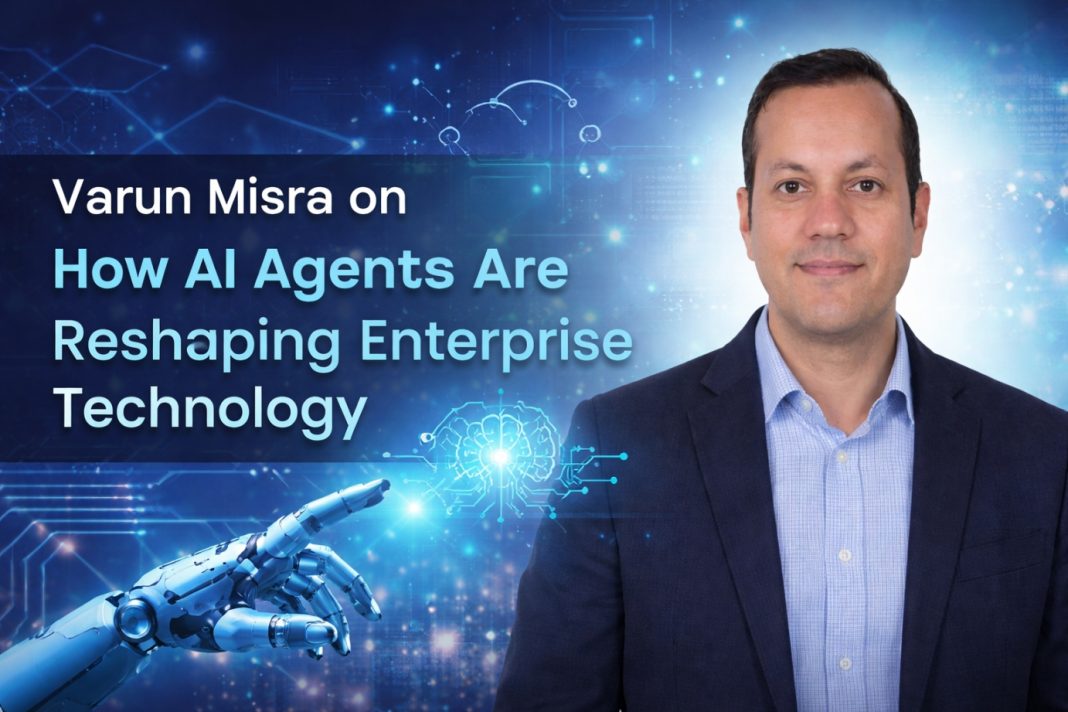

Artificial intelligence is rapidly moving from experimentation to core infrastructure inside large organizations. Across industries, companies are integrating AI into customer service, operations, and decision making. According to technology leader Varun Misra, the shift toward AI-driven enterprise systems is one of the most significant changes in modern business software.
Misra, a Director and Technical Architect at Salesforce, has spent more than 15 years designing large-scale CRM and cloud solutions for global organizations. During that time, he has watched enterprise platforms evolve from simple data management systems into intelligent environments capable of automating complex processes.
“Over the past 15 years, CRM has evolved from a system of record into a system of intelligence,” Misra explains. Early enterprise systems were primarily designed to store customer information and track interactions. Companies used CRM platforms mainly to manage sales pipelines and support basic service operations.
Today, the role of these platforms looks very different.
“We are entering the era of the Agentic Enterprise,” Misra says. “Organizations are no longer just storing customer data. They are building intelligent systems capable of automating complex interactions, handling thousands of customer inquiries, and scheduling services without human intervention.”
AI agents are increasingly becoming part of enterprise infrastructure. Instead of functioning as simple chatbots, these systems can process large volumes of data, analyze customer behavior, and guide users through multi-step service workflows. Many companies are integrating these capabilities directly into cloud platforms and CRM systems.
One of the most important developments behind this shift is the ability for AI systems to work with trusted enterprise data. Technologies such as retrieval-augmented generation allow AI models to ground their responses in real business information rather than relying solely on generative outputs. This helps organizations maintain accuracy, compliance, and consistency when deploying AI in customer-facing environments.
For enterprises, the implications are significant. Intelligent automation can reduce operational workload, improve response times, and allow human teams to focus on more complex and strategic tasks. Misra believes the most successful organizations will treat AI as a collaborative tool rather than a replacement for human expertise.
“As these systems mature, AI agents will increasingly function as intelligent collaborators within organizations,” he says. “They will augment productivity by handling repetitive tasks, analyzing large volumes of data, and providing contextual recommendations.”
At the same time, he emphasizes that strong governance and architectural planning are essential for responsible deployment. Organizations adopting AI at scale must establish frameworks that ensure transparency, reliability, and operational accountability.
The rapid integration of artificial intelligence into enterprise platforms signals a broader shift in how companies design digital systems. As automation, data platforms, and cloud architecture continue to converge, leaders like Varun Misra believe the next generation of enterprise technology will be defined by intelligent systems that actively support decision making rather than simply record it.

