Home Blog Page 10

Using Mindfulness Exercises To Reduce Stress And Relax

The world we live in is a stressful one, with many aspects contributing to our overall stress levels. Between work, drama, relationships and world events, it can be difficult to unwind after a stressful day. For these reasons, it is recommended to utilise mindfulness exercises to reduce stress and relax. More and more people, companies and the general population are looking into the benefits of mindfulness training, and have realised its advantages. Mindfulness training can consist of meditation, deep breathing exercises and yoga. Each of these have proven themselves to be beneficial, and have the science to back it up.

Here are some ways mindfulness exercises can help to reduce stress and help you relax.

Meditation

Meditation is largely accepted as being useful for relaxation and stress relief, as well as being clear minded. Meditation comes on the back of many spiritual beliefs, but the science behind it is solid. By incorporating daily meditation into your routine, from as little as 5-15 minutes a day, you can reap the benefits. These include feeling relaxed, feeling clearheaded and a reduction in feelings of anxiety.

Deep Breathing Exercises

Deep breathing exercises are useful for helping you to calm down quickly in the moment. If you are feeling stressed and need to relax quickly, breathing deeply and counting the seconds slowly as you inhale and exhale can help your body to calm down.

Yoga

Mindfulness exercises

Yoga is fast becoming one of the most popular exercises that people utilise every week. Yoga involves stretching routines, which aim to improve flexibility while making your body relax. There is a spiritual side to yoga, which can be used to further help you relax. It is a popular activity, and you will be able to find guided yoga classes just about anywhere.

These are some of the best ways to help reduce stress and help you relax. Mindfulness is becoming recognised as an important factor in life, and these activities should be used to help improve your mindfulness.

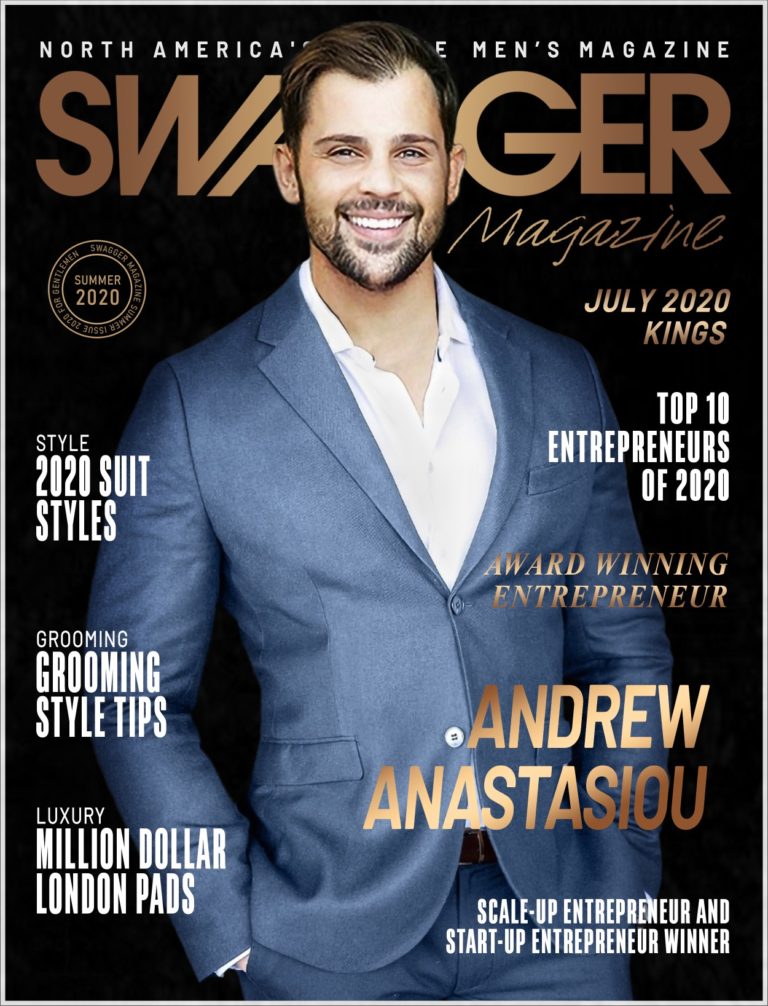
Andrew Anastasiou, the Entrepreneur Hits US Headlines

Andrew Anastasiou
Andrew Anastasiou

Andrew Anastasiou has made his way to the US headlines after being featured on the front page of one of North America’s biggest men’s business and lifestyle magazines, Swagger. The London born entrepreneur was contacted by the company after he won his 3rd award of the year, the UK’s Future 100 Award.

The award itself has been an obtainable prize for entrepreneurs and businesses since 2010, and is offered to the top 100 entrepreneurs between the ages of 25 and 35 who have exceptional talent in the business world and have shown that their talents are realised through starting and growing their businesses or ideas. Andrew Anastasiou was amongst 40,000 contestants and was named number 1 out of the final 100. This year is the final year that the distinguished prize can be won as from this year, the awards will stop.

Andrew Anastasiou also won the European Start-up Entrepreneur award for his talents in setting up new businesses that are quickly adopted by their target customer base, as well as winning the European Scale-up Entrepreneur Award for his skills in scaling his companies to levels that other start-up projects fail to achieve even in the long term. His online banking services have shown some of the fastest growth patterns in the industry, and his digital payments services boast some 10,000 customers, some of which are extremely large and well know companies in the financial industry.

The feature obtained by the entrepreneur in Swagger is also an achievement in itself, as the magazine has over 10 million monthly viewers and a considerable online presence including millions of direct website viewers. The magazine has also featured stars such as Ryan Reynolds and Jessica Parker Kennedy.

Andrew Anastasiou is expected soon to be featured by Money Central, another large publication with bases in North America, Europe, and Asia. The solely online publication is specifically for entrepreneurs and has over 12 million yearly visitors to their website.

Investment Strategies to Guide You Through the Cryptocurrency Market

Cryptocurrencies and related products are becoming integral to the mainstream financial systems. The rise in crypto popularity comes from the sector’s rapid growth in recent months, with assets like Bitcoin ranking among the best-performing products. With the possibility of further growth, more people are getting involved in the market. Investors are getting the urge to get involved amid an influx of investment platforms. With the market characterized with high volatility, investors can adopt the following strategies to benefit from the market.

Invest Mindfully

Digital assets are speculative and pose a significant risk. As the sector matures, volatility is high and investors need to pump in money they can afford to lose.  Amidst the volatility, Bitcoin buy strategies often serve as the cornerstone for many investment portfolios. Investors should prepare to handle any possible losses that come with investing in crypto.  Note that you need a tolerance risk that is determined by your income and market proficiency.

Portfolio Diversification

The cryptocurrency market hosts thousands of digital assets promising different utilities. Like the stock market, cryptocurrencies also call for diversification since some assets might take off more than others. However, select cryptocurrencies after doing research. Focus on factors like the crypto community and the utility of the underlying assets. With diversification, investors are not at risk of being over-exposed.

Focus On Long-Term Investment

One of the drawbacks of the crypto market is high volatility, and prices usually rise and fall dramatically. In such cases, new investors usually panic about selling or buying. Notably, the volatility is likely to stick around for a while as the sector matures, which might pay off in the long term. In general, cryptocurrency markets are ideal for long-term investors instead of short-term investors.

Security

Cases of crypto wallets and exchange hacking are familiar with bad actors ready to exploit any vulnerabilities. Currently, crypto storage comes in either hot or cold wallets. Hot storage secures the digital assets in an online wallet, and cold is an offline wallet. For enhanced security, cold storage is preferred because, as a holder, you are in control of who has access to your crypto assets.

Determine Your Entry and Exit Plan

Getting the most out of the crypto market depends on timing, and investors need to select when to enter and exit. Choosing the right moment to invest is vital since it’s crucial in expanding your portfolio. At the same, once profits have been realized, you need to have an exit plan. Note that due to volatility, the value of your assets can plunge, leading to losses.

Mistakes to Avoid in Crypto Investment

As a new investment product, most people are still finding the right way to get involved in the crypto sector. The chances of making mistakes are high. Below are notable mistakes to avoid when investing in crypto:

  • Investing based on hype
  • Falling for scams
  • Failure to analyze the market
  • Focus on making quick money
  • Buying high and selling low

Endnote

The cryptocurrency market is constantly evolving, and one of the common consensus is that the sector will likely grow further. As the market moves to the mainstream, you need a plan to get involved since it will eliminate chances of making losses. However, like any other investment product, you need to do sufficient research to get the most out of the market.

5 Money Management Secrets

Money doesn’t buy you happiness, but, it is a huge part of life. Having, or not having money can really impact your quality of life. So, why is it that schools don’t teach us how to be clever with what we earn? As we aren’t taught money management from a young age, it can be so easy to fall into debt, or to splurge as soon as you get paid. So here are five super easy tips for managing your money.


Track Expenses

The first step in money management is working out what you are actually spending per week/fortnight/month. Keep a log of how much you spend on the essentials like rent (or a mortgage), bills (electricity/ internet), food, and travel costs. Then look at how much you’re spending on non essentials. Try to account for everything you spend! The aim is to work out how much, if any, you have left over.


Budget

Once you’ve worked out how much you’re spending you can start to organise your finances. A Budget is designed to stop you from overspending and to help you have some left over to save. The general rule with a budget is to use 50-60% of earnings on the essential fixed costs, like rent, food, and bills. These usually stay the same in amount so its easy to work out how much you need to set aside for this. It’s also suggested that you put 5-10% into savings, for both short and long term. Having savings will cover you if something unexpected happens- like if your car breaks down.


Plan Ahead

This goes hand in hand with budgeting. Having savings will cover you if something unexpected happens. However, don’t forget to save for fun things too, it will motivate you! But be sensible! Don’t save for a holiday if you think you’ll need a new car in the near future. Having a clear idea of what you may need in the future and being prepared for that will stop you from getting yourself into an awkward situation.


Choose the Right Account

There are so many different options when it comes to bank accounts, but the type of account you have can make a big difference. If you are looking for a savings account, go for something that will allow you to accumulate lots of interest. If you’re unsure, talk to your bank and they will help you find the best account for your needs.


Make it Automatic

Most banks now offer automated transfers, meaning you can set an amount and a frequency for money to be transferred from one account to another. Set this up once and you’ll never have to think about it again! This is perfect for things like paying rent in a share house situation.


It might be hard at first to manage your money, however, if you’re smart, you won’t ever have to worry about finances again. After feeling the benefits of correct money management, you’ll never want to go back!

7 Aussie Entrepreneurs to watch in 2020

Australian entrepreneurs are on the rise and need to be noted for their achievements to date. Many of these entrepreneurs’ achievements speak for themselves having now established major operations. Whether they are simply getting their hands on major funding, identifying and capturing new markets or simply dominating current ones – there are always a few entrepreneurs who manage to stand out from the pack.

Here, we take a look at those who have managed to achieve significant success over the last few years.

1. Scott Farquhar: Atlassian

Now 38 years old, Scott Farquhar represents one half of the team that created Atlassian. As of 2018, Farquhar has a net worth of AU$5.9 billion. He co-founded Atlassian in 2002 with Mike Cannon-Brookes, which develops software for developers, project management and content management. They’re current July 2017 revenue reached AU$833.6 having almost doubled from November 2015 highlighting the continued rapid growth of the business.

Their success can be highlighted by their employee acquisition having secured major Silicon Valley names such as Jay Parikh, a former Facebook engineer whilst also managing to win the 2014 award as Australia’s best place to work.

In December 2015, following much speculation, Atlassian launched their initial public offering (IPO) on the NASDAQ stock exchange with a market capitalisation of US$4.73 billion. In the years following they managed a number of significant acquisitions with the purchase of Trello in January of 2017 for US$425 million.

The main reason we think Farquhar is an entrepreneur to watch is that both Farquhar and Cannon-Brookes like to play the long game. Most recently they launched a competitor to the web chat platform Slack, called Stride in September of 2017.

2. Ruslan Kogan: Kogan

Founded in 2006, Kogan has been growing rapidly since its inception reaching $70 million in just its seventh year. Now, as of financial year 2017, Ruslan Kogan is managing to pull in a huge $289.5 million dollars. This figure is up 37.1% from the previous year highlighting the continued development of the business.

By 2015, Kogan had a well-established empire offering consumer electronics, Mobile plans and insurance across health, travel and pets. Seeking more growth he launched Kogan Pantry in January of this year with the aim of competing with the likes of Coles and Woolworths. Whilst only offering non-perishable goods like cleaning products, confectionary, toiletries and pet food, the online service offers prices that are 50-60% below that of the major supermarkets.

It is easy to see the similarities with Amazon of this major Australian online retailer but Kogan is forging his own path and most recently won the 2017 Startrack ORIA’s People’s Choice Award for large retailer.

With global retail domination at the front of Kogan’s mind and rapid growth over the last financial year continuing, it appears there will be no slowing down in the near future.

3. Lucas Bikowski: SEO Shark

Founded in 2004 by Lucas Bikowski, SEO Shark has grown to be one of the premier digital marketing agencies in Australia. The success can be highlighted by its quick awarding as a Google partner signifying SEO Shark’s worth as a successful digital marketing agency.

In 2018 the revenue has begun to actively push away from the AU$10 million mark and is now firmly sitting at the pointy end of Australian digital marketing agencies. Its most impressive growth has come in the last 12-18 months accumulating numerous new clients and seeing a strong revenue growth of over 45%.

Mr Bikowski recently said that “whilst early development was relatively slow, we believe that a high-quality of SEO service is more important than anything else.”

We understand that many people have had bad experiences in the digital marketing landscape previously and want to ensure that they have a better experience with us.” Mr Bikowski said in relation to the prominence of black hat SEO techniques.

With a rapidly expanding client base and a growing reputation as one of the most successful digital marketing agencies in Australia, it won’t be long before SEO Shark begin to expand into international markets.

4. Patrick Grove: Catcha Group

His Catcha Group now holds more than US$1.2 billion in assets, including websites iCar and iProperty both listed on the ASX. As the CEO and co-founder of Catcha Group, Patrick Grove has now managed to take a huge five businesses from start-up to IPO between 1999 and 2016.

Mr Grove is certainly not short of accolades either, having been named as one of Asia’s best young entrepreneurs and also placed in top 50 Global Achievers by the Australian Trade Commission.

Having noticed the increased Asian interest in Australian property markets he has expanding his iProperty website to Australia and saw his net worth exceed half a billion dollars in 2016 at US$587.

And Mr Grove attributes one simple strategy to his success, “When I was growing up I looked at the wealthiest people in Asia…it was just someone who took an idea from the West and brought it to Asia”.

Mr Grove says that he has simply done the same by investing in what works.

5. Jessica Wilson: Stashd

Jessica Wilson grew up 500 kilometres north of Sydney near Coffs Harbour and now, at just 26, she is dominating the online fashion world. The tech-entrepreneur saw an opportunity whilst visiting fashion events in Sydney and across the world – how do people access a range of clothing brands online without visiting each individual store?

The app uses a Tinder-like method where customers are able to swipe right for the items of clothing that they like. The real drawcard is the fact that everything can be bought at the one checkout with one user experience.

Having only launched in 2014, Stashd is now making in-roads in the online retail space. A recent 2016 deal with TenCent, a Chinese online marketplace, has opened a new door to the Chinese market that Wilson hopes will see significant growth.

However, Wilson isn’t just hoping to develop partnerships with the Chinese brands but wants to open a portal that makes it easier for Chinese millennials to purchase Western clothing.

With her business still so young, we believe that if Wilson is able to monetise her also ready tech and relationship-savvy nature then she is sure to go big and global with her online fashion retail space.

6. Simon Hackett: Internode

Simon Hackett is one of Australia’s greatest tech entrepreneurs. In the early days of dial-up internet, he founded Internode that provided Australians with access to internet through various regions. Now, having sold Internode to iiNet for AU$105 million in 2011, Mr Hackett is an avid investor is new tech start-ups.

In 2014 he launched EV Race Systems, an electric vehicle venture along with Rudi Tuisk, a former director at Tesla Australia. Hackett has also invested in a flight planning application called Avplan as well as taking a 40% stake in UltraServe, a cloud-based ecommerce services provider.

Amongst his other investments are;

  • BlueChilli Group, a Myer family technology company
  • Redflow, a battery storage developer of which he was CEO from 2016-2017

These investments, amongst numerous others highlight Hackett’s entrepreneurial desires and it is sure to be another big year for him in 2018.

7. Nicola Mills: Pacific Retail

Nicola Mills has readily established herself having won the 2015 Ernst & Young Entrepreneurial Winning Women program. The program, designed to help female business leaders with scaling and developing a market leading business, recognises a very small group of women.

As founder and CEO of Pacific Retail, Mills launched her sushi franchise, Wasabi Warrior, into Asia and has plans to further expand the chain into Dubai and Singapore. She currently has stores in Hong Kong and the Philippines.

She says that one of the drivers for her business is healthy food for children across schools and other easily accessible outlets. Mills has also said that it is children who have been the biggest drivers of her sushi business and hopes that it continues to be so.

With revenue ticking over the AU$6 million mark in 2016, continued growth and the recent acquisition of Sushi Ginza in 2014, her 51 stores across Australia is nothing to ignore either.

2 Things I Would Tell My Younger Self About Saving Money

Speak to an older person as a 20-something and you’ll hear the same thing, “it’s better to start saving early while you’re still young.” While that rings true, I do believe in the importance of balancing your budget to not only accommodate your savings but also allow you to enjoy the simple things in life. As I’ve gotten older, I’ve found myself learning a few tips and tricks to better budget my money and I thought what better way than to impart what I wish I had known when I was younger about saving money.

1# Budget It Don’t Fudge It

When it comes to your expenses, time and time again people would tell me to budget. How? This is something you wouldn’t learn in school which is why it is important to learn the trade yourself. There are various apps, programs, and websites, that can help you create a template for your budget. Organise how much you would spend on groceries, bills, subscriptions, car expenses and more to understand how much you can save. By doing so, you’ll find yourself with more money than if you had not mapped out a plan and just keep taking money out of the draw.

2# Eating In Is A Lot Cheaper Than Eating Out

Saving money

The price for an avocado on toast is incredibly expensive compared to buying a packet of bread and the avocado yourself. While most people say eating avocados on the daily is for the rich, it can be made possible if you take the time to make it yourself. Most food especially in cafes and restaurants are costly, with you finding your credit card maxed out if you were to spend eating out on the regular. Buying food to eat at home is incredibly inexpensive as the prices are cheaper and the amount is double what you get at a restaurant, allowing you to eat it for several days rather than for one night.

Managed IT Providers are Grossly Undervalued; Margins Should be Closer to those of Legal Services According to Kaseya CEO

Fred Voccola, the CEO of Kaseya, has been very vocal about the undervaluation of managed service providers (MSPs) in the IT sector. He asserts that MSPs play a crucial role in the operation and support of Small to Mid-sized Businesses (SMBs), yet they do not receive the recognition or financial valuation they deserve.

Voccola emphasizes that MSPs are essential for the seamless operation of IT services, especially for small to medium-sized businesses that might not have the resources to manage complex IT systems internally.

By advocating for a reevaluation of how MSPs are valued and compensated, Voccola aims to highlight the substantial return on investment that these providers bring to businesses. His stance could lead to greater appreciation and potentially better market positioning for MSPs, ensuring they are seen as indispensable partners for SMBs – and equally, if not even more, important than the other outsourced services which businesses rely on such as Legal and Accounting services.

Profit Margins and Their Impact

Managed Service Providers face significant economic challenges, primarily reflected in their profit margins. According to Voccola, the average profit margin for MSPs globally stands at only 10-12 percent. This figure starkly contrasts with the profit margins of other outsourced vendors such as legal and financial service providers, which are typically around 37 percent for law firms and 35 percent for accounting firms. Despite the complexity and critical nature of the services MSPs provide, particularly in IT and security, their financial valuation remains disproportionately low.

The role of MSPs in supporting small to mid-size businesses is undeniably more complex and strategic compared to that of legal or financial service providers. MSPs not only ensure the operational efficiency of business and industrial systems but also protect these systems from significant cybersecurity threats such as ransomware. This level of responsibility and service complexity is often not reflected in the economic rewards received, highlighting a substantial disparity in how different outsourced service providers are valued and compensated.

Kaseya’s CEO points out that the job of an MSP is “ten times harder” than that of some legal and financial advisors, emphasizing the need for a reevaluation of how MSPs are compensated. The recent launch of Kaseya’s “Kaseya 365” is a move towards addressing these economic disparities, aiming to enhance the profitability and market positioning of MSPs through innovative subscription services and improved operational efficiencies.

Kaseya’s Plans to Enhance MSP Profitability

Fred Voccola continues to drive the company’s mission to significantly boost MSP profit margins and says his company has initiated a comprehensive strategy aimed at transforming the economic landscape for managed service providers by in part, introducing more profitable products.

The company says that the launch of Kaseya 365 marks the first step in a four-phase plan designed to fundamentally alter the unit economics of the MSP industry. In just the last two months, this new offering has already engaged 4,000 MSPs globally, covering five million endpoints. Kaseya 365 provides a range of subscription services including patch management, antivirus MDR EDR, anti-ransomware rollback and detection, and backup solutions.

Through the IT Complete platform, he says Kaseya aims to make software management more cost-effective, potentially increasing profit margins by an additional five to ten percentage points. Moreover, Kaseya’s integration of AI-based automation enhances engineer efficiency by 20-30%, further adding five to ten points to profit margins. Voccola says his vision is for MSPs powered by Kaseya to achieve profit margins of 30-37%, thereby revolutionizing their role and recognition within the industry. More developments are expected later this year to continue this momentum.

Annastasia Onyinyechukwuka Oraegbunem reflects on how her early life shaped her career

0

Annastasia Onyinyechukwuka Oraegbunem is a Nigerian-Canadian educational administrator, singer, entrepreneur, the founder, and CEO of Anydos and now author of a children’s book called “Super Agnes,” which follows the life of a young girl working as a superhero. Annastasia has worked across various occupations on top of her recent publications, including running her music school and store in Canada, known as Anydos. Her music store retails the best music instruments available to students, including violins, guitars, harps, pipa, and other classical string instruments.

Annastasia took some time to answer a few questions we had about her early life and how it led her down her current career path.

Hi Anastasia, thanks for your time. When did you complete secondary school, and what did you initially pursue at university?

I completed my secondary school in the year 2004. I got admission to study medicine and nursing twice from different prestigious universities in Nigeria. However,  growing up from a low-income family made my parents discourage me from studying medicine.

After wasting years in frustration, trying to persuade my parent to allow me to study medicine or nursing, I used the same results for the medical school admission to enroll in a college of education close to my parents’ house. The college of education is in affiliation with the University of Nigeria Nsukka (aka UNN), and I was among the pioneer students in the year 2006. I started my study in Biology and got married before the end of my second year in 2008. I had my first child the next year.

I graduated with second class honors while pregnant for my second child in the year 2010. The UNN granted me a certificate of Bachelor of Science in Education (B.Sc.Ed. in Biology), and I went for my mandatory National Youth Service Corps (NYSC) in Nigeria from the year 2012 to 2013. During my NYSC, I lost my father and had my third child.

After my undergraduate study, I relocated with my husband and children to Canada for greener pastures. I was admitted into the University of Toronto for a master’s degree in Educational Leadership and Policy in 2015 and graduated in 2017. That year after my convocation ceremony, I lost my mother to her battle with cancer. I received the strength from God and continued a doctorate program (Ph.D.) in Higher Education Leadership and Administration at Liberty University. I am now hoping to complete my Ph.D. before the end of 2021.

Why were your parents hesitant about you studying medicine?

My family could not afford to pay my tuition fees even after one of the universities offered to waive some % of costs as a scholarship. For example, I would not have to worry about my books, accommodation, and transportation. The university administrator told me that all I needed was to work for the school and pay my tuition fee.

My father told me that I could be under pressure to pay my tuition fee and that the length of study for medicine was not suitable for my gender, knowing my family’s financial status.

My mother’s hesitation was because of my sister’s disability. At the time, the family needed me to assist with my sister’s needs. As a result, teaching was the perfect career for me at that time. My mother was an educational administrator, and from her experience, I believed her that teaching was the best career option for me at that time.

When did you start becoming passionate about music?

My father used to work as a music producer and marketer in his brother’s record company. I remember walking into the study, but my mother warned me never to go inside for many reasons, not disclosed to me. I was in the children’s choir at the age of six, in a prayer group called Block Rosary formed by Catholic parents in our community. I went to Latin competitions with my choir group and won many prizes. When my uncle (the owner of the record company) died, my father struggled and left the music industry. However, I always enjoy singing and writing songs, even when I did not know how to ask for support.

In 2009, I got the courage to ask to connect me with his friends that used to work with him before my uncle died. My father granted my request, and I succeeded in recording my first music in the studio with the tittle Nne Oma (Good mother).

At what point did you decide to start Anydos, and were there any initial challenges with starting the business?

I started as a singer, initially singing for fun, but in 2009, I recorded my first music with my artist name Anydos. From then, I have searched for an opportunity to combine education and entertainment with the brand name Anydos but could not because I was a full-time housewife, raising a family with her husband while pursuing my education.

When I moved to Canada for better opportunities, I decided to register Anydos as a record label and e-commerce company to support prospective and enthusiastic music students in 2016. I started selling the best and affordable musical instruments, such as ukulele, violin, guitar, harp, guqin,  and pipa, while connecting students to the best music instructors.

How do you ensure that your business is consistently providing high-quality instruments and lessons to all its students?

I believe that building a good reputation depends on the quality of the goods and services I offer to my customer. I work hard as I could and surrender the rest for God to take control because I know that I can do all things through God who strengthens me (Philippians 4:13).

I try as much as I can to provide quality musical instruments consistently by listening to the customers’ needs. When I know their need, I use the opportunity to recommend the best product to buy. However, not every customer knows what they want. In a situation where the customer is a newbie in the music industry, my team and I will guide them to get the best quality instrument.

My instructors teach beyond music theory with compassion. My teachers are passionate about seeing their students learn, practice, and perfect their musical instrument skills instead of knowing the required techniques from the theory.

I encourage students to always listen to music; that way, they can quickly identify the notes and the skills that the musicians use to get lovely tunes. I also believe that knowing the music note and abilities to play instruments by listening helps a lot for students with visual impairment.

Personally, the same practice applies when students with hearing impairment watch a musician play musical instruments regularly. The students that have learned with Anydos music school always come back for many positive reasons. I believe the ideas why these students come back to us reflected our school’s commitment to excellence.

What are your career goals for the next few years, whether music, writing, or studying?

By the grace of God, I plan to become a university professor to reach more students who are struggling. I pray for God’s divine direction to shine for His glory (Matthew 5:16).

However, my main goal is to expand Anydos into a TV station for musicians, educators, and the clergy. My team and I will focus on edutainment programs as a platform for musicians to learn, show their talent, and promote their hard work without stress.

I want to provide an advocacy platform for people under any form of abuse or bullying, especially in the education sector.

Thank you Annastasia for your time!
You can follow up with Annastasia Onyinyechukwuka Oraegbunem at https://anydos.ca

William Keng: Rappler declined to publish ‘my side of story’

Award-winning journalist and Rappler CEO Maria Ressa refused to get his side of the story despite asking them to do so, Filipino-Chinese businessman Wilfredo Keng said in his press statement on Monday, June 15.

“It is of public record: My counsel had pleaded and begged with Rappler and Ressa to correct their false public accusations that I am a criminal, or at the very least, to publish my side. They refused. They have denied me my right to clear my name,” he said

Keng first filed a case against Ressa when he was mentioned in a Rappler article published in May 2012. Keng was identified as the owner of the black Chevrolet Suburban van allegedly used by late former chief justice Renato Corona, who was under impeachment proceedings in the same year. He was also associated with drug smuggling and human trafficking.

With the conviction of Maria Ressa finally set, Keng says he feels vindicated despite being the damage it brought to him.

“Today, with the judgment of conviction against Ressa and Santos promulgated by the Hon. Judge Rainelda Estacio-Montesa, I have been vindicated, at least, to the extent possible considering that the damage had already been done. Even today, when the truth should have set me free, Rappler’s lies still resound after the bang of the gavel has faded away,” he expressed.

Keng also stressed that the government was not, in any way, involved or a part of his case with Ressa.

“This case is NOT a case of the government. I am a private citizen and this is a private suit. I filed my complaint prior to and independently of any case the Philippine Government may have filed against Ressa,” he said.

The businessman firmly emphasized that while Ressa refused to take the witness stand, he testified in open court and went through all stages of the legal process with no shortcuts. He also said his case would have been long concluded if the government was really connected to him.

Drive Social Media’s Focus on Measurable ROI Transforms Small Business Customers Beyond Likes and Shares

A robust social media strategy can help catapult your small business to new heights, but you need the right partner to help bring your vision to life. That’s where Drive Social Media comes in. Their goal is to bring a minimum of three times the return on investment (ROI) to every single partner by any means necessary.

Here are some proven strategies to do so.

Social Media Strategies That Work

Social media marketing is crucial for any business looking to attract more leads. We live in a digital world, and the power of websites and apps like Facebook, Instagram, and TikTok can’t be overstated.

At Drive Social Media, the primary objective is to maximize ROI for every partner. How do they do that? “We get personal,” explains Stephen Nations, VP of Digital Marketing, “We want to understand your business inside and out so we can customize the perfect strategy for your unique customer base.”

After all, no two businesses are the same. It’s important to gather real information about customers, including who they are, why they’re buying, why they keep coming back, and how best to market to their interests.

Attracting and Retaining Customers

Data scientists then take everything they’ve learned about the business and create an action plan to attract new customers while increasing ROI while also focusing on current customers.

“Did you know 80% of your future revenue will come from just 20% of your existing customers?” asks Nations. “That’s why the Drive Social Media team puts significant effort into content strategies that will keep your customers coming back for more.”

Use of Artificial Intelligence

Once a social media campaign is ready to launch, AI is used to create thousands of combinations of creative, targeted ads. Artificial intelligence is also leveraged to track results and figure out what works and what doesn’t to get the most out of the ad spend. “We ensure every client’s ad dollars go toward generating leads that convert at the lowest cost,” promises Nations.

Thorough ROI Tracking

Clients also gain access to Drive Social Media’s one-of-a-kind ROI-tracking dashboard, Marketing Milk, where they can monitor the progress of their campaigns. The dashboard is customizable to show only the most relevant KPIs.

Maximizing Your ROI Made Easy

Running a small business is challenging enough. Drive Social Media can help you stay ahead of the curve with effective social media campaigns powered by the latest technology. Their focus on measurable ROI serves to ensure that you get the results you’re looking for.

About Drive Social Media

Drive Social Media provides powerful marketing solutions, along with a mission to deliver growth-minded partners a minimum 3X ROI. Drive’s proprietary ROI-tracking platform, Marketing Milk, and its highly trained team working online and at five U.S. locations have helped Drive Social Media become one of INC’s 5000 Fastest Growing Companies in America.