Home Blog Page 9

Don’t Be Futile, Be Frugal! 3 Budget Hacks To Help Save Your Money At The Shops

Do you find money going down the drain? Are putting money in your account, only to find it gone within a few hours?

When it comes to your expenses, there is a big price to pay if you don’t save. There are so many ways you can prevent yourself from breaking bank and in this article, we’re going to be teaching you how. Let’s open up the wallet and give you 3 budget hacks to help you save your money.

How To Save Your Money While Grocery Shopping

1# Shop At Aldi

Aldi is your best friend and for good reason. The cost for its items is a whole lot inexpensive than Woolworths and Coles, making it the shopper’s favourite. It also has a limited array of items, making you less enticed to buy more than what you need. Classic and costless staples are found in the aisles of Aldi including tuna cans, long-life milk, pasta, and more, making sure you are always on budget. In addition to its food items, there are an array of special buys designed to give you affordable household and hobby items that otherwise would break the bank.

2# Always Buy Right Before Closing

Shopping hacks

The best way to get a quick sale is to go to the shops right before closing. This time you’ll find good deals at your local bakery, sushi outlet, and more. Even at Coles and Woolworths you can find items that are sold at a much cheaper price as they’ll be out for the next two days. This way, you can have the same food item for an inexpensive price. Short smart, receive the rewards.

3# Save Your Bottles

Saving and recycling your bottles is a win-win for both you and the environment. For one thing, when you save your plastic bottles this allows you to get vouchers on your spending at Woolworths. Another benefit is that you help reduce the amount of plastic and toxic waste ended up in landfills.

Gorgeous Smiles: The Dental Clinic With A Difference

For many, a trip to the dentist could evoke images of uncomfortable surgical chairs, scary procedures, and long waiting times. Some view the dentist with a degree of anxiety and uncertainty, despite the service’s necessity in society. All the while, the private medical sphere is experiencing an epiphany, opting to favor holistic, patient-led approaches that prioritize client comfort.

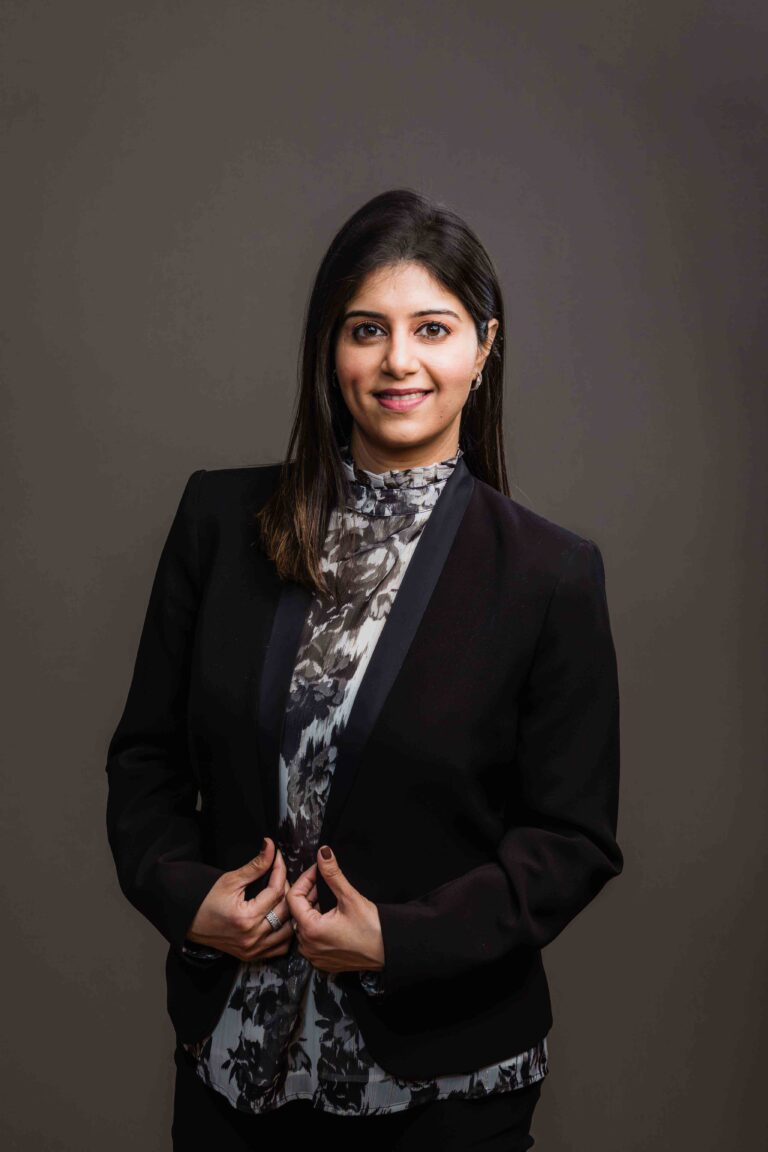
The co-founder of @gorgeoussmilesdentistry , Dr. Minoo Ghamari, wishes to include the dental sector in that shift. With an invigorating passion for dentistry’s days to come, Ghamari wants to transform the patient experience to achieve a complete smile, rather than simply treating the teeth.

Early in Gorgeous Smiles’ development, those at the helm were faced with some difficult complications. Throughout the company’s establishment, the upstart professional was studying for her Australian dental examination with the pressure of her mother’s ambition sitting on her shoulders. Together, the pair had also immigrated to the country and had cultural discrepancies to understand before growing their business. The existential threat posed to businesses by the COVID-19 pandemic is known territory at this point too.

A company able to overcome these risks must surely have longevity and good future prospects. Gorgeous Smiles, located online at www.gorgeoussmiles.com.au, boasts a model with a more holistic take on patient care, ensuring that clients are conscious of the wider advantages of oral health. Ghamari considers her practice a ‘dental spa’ that promises patients a positive experience in stark contrast to negative assumptions.

This cutting-edge approach has since been combined with savvy use of social media to address the concerns of potential patients, resulting in a winning business model. Ghamari has made online cosmetic consultations available to those on the fence about using the practice and utilized social media platforms to raise awareness around dental procedures, all in an effort to broaden the appeal of her clinic.

Making her dental insight accessible to a wider audience has given Dr. Minoo Ghamari and Gorgeous Smiles the pivotal opportunity to grow throughout Victoria and across the whole of Australia.

CFP® & Mentor Komal Motwani On The Virtues Of Careful Estate Planning

0

Komal Motwani is an accomplished and impressive player in the financial sector with an education and list of accomplishments that is expansive. Among her many titles, Komal Motwani is first and foremost a Senior Investment Analyst where she is geared toward investment analysis and portfolio management. She also provides coordination of assets with high-net-worth families and individuals and provides financial, investment and retirement/estate analyses to clients in perpetuity.

Her esteemed career has allowed her to contribute her unique perception on the financial sector to a number of high-profile news sources where her articles have been quotes and cited by the best and brightest. She took the time to answer a few questions about the process of becoming a CFP, where investment strategies are going post-inflation, and the virtues of a solid estate plan.

Hey Komal, thanks for taking the time to answer a few questions, let’s start with you describing a little about what a CFP provides people?

Thank you for having me. Of course, a CFP is a Certified Financial Planner, it is a demarcation that only comes from passing one of the hardest exams in the financial sector. It is sort of how the BAR exam is for lawyers, the CFP is for financial planners. Being a CFP affords me a reputation among colleagues and for potential clients, it shows that I have done my due diligence and worked tirelessly to excel in my field of expertise which is, financial planning.

As for what I provide people, I speak for myself when I say that I use my knowledge to provide sound financial planning and advice, portfolio management, investment analysis, retirement analysis, estate planning, and the general coordination of important assets for high-profile clients and conglomerates.

Being a Certified Financial Planner is no small feat, can you walk us through the kind of training and education you had to go through in order to achieve this impressive feat?

It certainly was no small feat; the CFP examination is a 6-hour exam that requires an incredibly nuanced perception of finance and applicability of different concepts toward real-life situations. I didn’t just stumble into the CFP exam; I spent a great many years’ studying the intricacies of finance and earning a Bachelor’s and Master’s degree in Banking & Finance.

I have also spent 10 years in the realm of Investing and Financial Planning across the USA, Singapore, and India.

One of your roles revolves around estate planning, can you enlighten us on just what estate planning is, and the processes therein?

An estate planning is a process of accumulation, management and distribution of assets/wealth considering personal objectives as well as legal and tax ramifications. Basically, it is distributing property to the beneficiaries and honoring the client’s wishes.

Other Estate planning objectives can also include minimizing income, gift, state inheritance and generation skipping taxes; minimizing transaction costs, gathering information for legal probate process, and providing liquidity to the estate of the deceased at the time of the death to pay for costs such as taxes, funeral expenses and final medical costs.

To begin the estate planning process, the advisor / planner should collect the following:

  • Current financial statements
  • Family information & beneficiaries (i.e., parents, children, ages)
  • A detailed list of assets and liabilities, including the fair market value, adjusted tax basis, and expected growth rate for all assets, how title is held, and the date the assets were acquired.
  • Collect Copies of medical and disability insurance policies.
  • Copies of life insurance policies in force identifying the ownership of the policy, the named insured, and the designated beneficiaries
  • Copies of annuity contracts
  • Copies of wills and trusts. Identification of powers of appointment
  • Copies of all previously filed income tax and gift tax returns (as available)
  • Identification of assets previously gifted
  • Other pertinent information

In your dealings with clients, what would you say is the most common oversight in typical estate planning?

There are a number of factors that can be construed as an oversight in the process of estate planning, in my experience the more common ones include:

  • Invalid, out-of-date, or poorly drafted wills.
  • Improperly arranged or inadequate life insurance
  • Possible adverse consequences of not titling the assets correctly.  Leaving all the assets for probate processing can take longer to settle and can possibly create dissatisfaction amongst the beneficiaries
  • Estate liquidity problems – insufficient funds to pay off debts and expenses.
  • Selecting a wrong executor/trustee/manager.

Investments, retirement planning, estate planning – your role covers various facets of finances from small to large scale clients – what would be your most important piece of advice for those who are considering their financial futures?

Planning ahead is always a complicated notion, regardless of your financial status or walk of life. I would always recommend having someone trustworthy be advising or managing your assets for the long-term – as a CFP I have seen too many attempts to juggle too many avenues simultaneously and pay heftily for doing so.

Whether I am advising individuals on estate planning or running company-scale investment strategy I have noticed that the more considered and time taken before making decisions have yielded the more stable results.

So, take your time, and always ensure you know exactly what you’re getting into whether it be investing or planning.

What do you think the future holds for global and local investments – both in strategy and execution?

That is an excellent question, and one that can only be speculated upon with any real weight. The digitization of currencies and the rise of crypto has seen some interesting shifts in the global and local markets in equal measure. I believe we will see a little more fragmentation across the markets that will ultimately allow more niche investment strategies to manifest themselves.

With Stablecoins, cryptocurrency bouncing back, and the introduction of central bank digital currencies across a number of countries, the future is uncertain for any solid strategy, but I am very excited by the prospect of such new approaches to investment.

With rising inflation rates and wariness of financial risks around the world you can certainly understand that some people are worried about their finances, what would you recommend be a healthy financial habit for those who are a little worried about what comes next?

Understandably the world is in a state of inflation pretty much across the board. I have seen that it impacts people in various ways, but there is some understandable hesitance no matter who you are. One healthy financial habit is budgeting, having a clear understanding of your total asset trajectory and situation, in times of inflation there is a temptation to squirrel away as much as possible under the mattress. I would recommend people to invest in safer platforms wherever they can and keep a steady nest egg/rainy day fund aside.

Budgeting and knowing your financial state of being is one of the strongest weapons you can have against increasing inflation.

Finally, what is on the horizon for Komal Motwani?

My current work keeps me very busy; I am very passionate about writing about my field in a number of industry leading publications from MarketWatch to the Wealth Management & European Business Magazine. I try to give back to the community that has fostered me for so long as well, I am a proud member of the NAPFA, Society of FSP and the FPA.

Thank you Komal for your time!

You can follow up with Komal Motwani at https://www.komalmotwani.com

Jed Morley | The Road to Becoming a Managing Partner of Platinum Payment Systems (PlatPay)

Jed Morley

A behind-the-scenes look on Jed Morley, who started his adult career as a lumberjack in Alaska and is now an important Managing Partner of a merchant processing company called Platinum Payment Systems (PlatPay or PPS.)

What was your early career like?

Jed Morley: I didn’t start anywhere near the business side of things, that’s for sure. When I was 18 years old, I decided to move to Alaska. There, I worked as a lumberjack for a while — which is probably not what you’d expect from someone so entrenched into the business-world like I am today. But, I think that it was a much-needed growing experience.

I still believe that I met some of the most hard-working people ever while on that job. Dangerous and formulaic as it was, it taught me a lot about dedication and keeping-on.

What did you use to do before PlatPay?

Jed Morley: Immediately after I worked in Alaska, I moved again, this time, to Argentina. I served as a missionary for my church there for around two years. During that time, I learned how to adapt to an entirely new setting — one where people spoke differently, acted differently, thought differently, etc. it was an incredibly enriching experience.

I also spent time studying for quite a bit. I went to the Utah Valley State College and the University of Phoenix to study business while working several jobs and running my first personally owned businesses.

Then, after that, I spent a lot of my early years as an entrepreneur in the real estate space. I sold homes, both existing and new, I developed subdivisions, hotels, national credit buildings, charter schools, and dozens of other exciting things. You can say that I still ‘exist’ in the real estate space today — I do still own several tracts of land and a property management company, but as you can probably tell from my world-hopping adventures as a young adult, I like to try out new things — which is what ultimately led me to PlatPay.

When did you start working with PlatPay? (What is it like?)

Jed Morley: I officially started my partnership with Platinum Payment Systems (PlatPay or PPS) in 2008. We’ve grown a lot since then, and I’d like to think that we’ve helped a lot of our clients grow too. Our goal with PlatPay, after all, is to help others solve their payment processing problems — regardless of the size of their business, or what they need to do in order to handle risks and balance the different types of payments they receive.

I partnered up with PlatPay as a managing partner — with a heavy focus on encouraging the growth of PlatPay through other partnerships and improved technologies.

Working in the payment processing space, I’ve found, is very humbling. We’ve done our best to maintain and work ourselves up to be smarter (to the point of being experts on the field) so that we can be sure that we can meet the expectations and honor the trust our clients have for what we do.

What book would you recommend for beginner-entrepreneurs?

Jed Morley: A book I enjoyed and learned a lot from, was “The E-Myth Revisited: Why Most Small Businesses Don’t Work and What to Do About It.” by Michael E. Gerber. Highly recommended. Especially if you’re just starting out — but it’s still something to pick up even if you’re more experienced as an entrepreneur. It taught me a lot about how to achieve success by establishing a solid foundation, or rather, a good system, in which that success can be built off of.

Do you have any tips for preventing the dreaded ‘burnout?’

Jed Morley: I have always been, and probably always will be, a people person. I just love people — it’s part of why I enjoyed the two years I spent in Argentina so much, it put me in a place where I could continue to get to know more people.

Anyway, I digress. My method of preventing burnout is to turn away from ‘my’ own work and help someone else with theirs. I make it a point to meet younger, more inexperienced employees regularly so that I can talk to them about how they’re doing at work, how they’re doing on a more personal level, etc.

There’s just something about teaching others that teaches you in turn. And, of course, there’s no denying the level of satisfaction it brings to see someone succeed because of your help. To learn, to teach, and then to learn again — it really is the ‘full circle of business life.’


DaFIN signed an MOU with Changdeok Collection to promote real NFT-based fintech service

DaFIN, a digital asset fintech platform, announced on March 14, 2022 that it signed a partnership with Changdeok Collection.

The Changdeok Collection was established in Shanghai by Hong Chang-deok, son of Mrs. Choi gap-soon, who donated military funds to the provisional government as a secret association. He collected works by Korean artists during the Japanese colonial period in Korea. Currently, Hong Sung-joon, the eldest son of Hong Chang-deok, is in charge or representative of the Changdeok Colletion Art Committee.

Changdeok Collection has works by famous Korean artists such as Kim Hwan-ki, Park Soo-geun, Chun Kyung-ja, and Lee Joong-seop, as well as works which were not disclosed on the market, by Picasso, Raul Dupi, Andy Warhol, and Munch. They will actively cooperate with DaFIN promoting real NFT-based fintech services.

Changdeok Collection
Figure 1Portrait of Changdeok Collection (Joan Miro)

Hong Sung-joon, chairman of Changdeok Collection, said, “I already saw the mixture of the traditional and digital art markets since last year, but there’s still a negative view of the NFT market since some regulations. Even though, I decided to cooperate with DaFIN cause I was confident that it could boost sales and also digital assets markets.”

Lee Joon-ho, general director of DaFIN, said, “We acknowledge that NFT has created new industries and had a positive effect on the authentic art market. We value the positive combination of the digital asset market and the spot art market in the transition period. Therefore, as DaFIN pursues, the key will be to ensure that real-based NFTs are synergized with each other through compensation through DaFIN FinTech service connection.” And “In addition, we will make efforts to sell works through domestic and foreign Auction companies such as Sotheby’s and Christie’s to generate profits beyond stable storage of works through cooperation with Changdeok Collection.”

Meanwhile, DaFIN, which started in December 2020 based on the digital asset fintech platform, successfully completed the DFY-type Season 1 and Season 2 service, listed digital assets on bittrex, and is currently speeding up preparations for real NFT-based season products.

CEO Ross Andrew Paquette | Behind-the-Scenes Look at Maropost

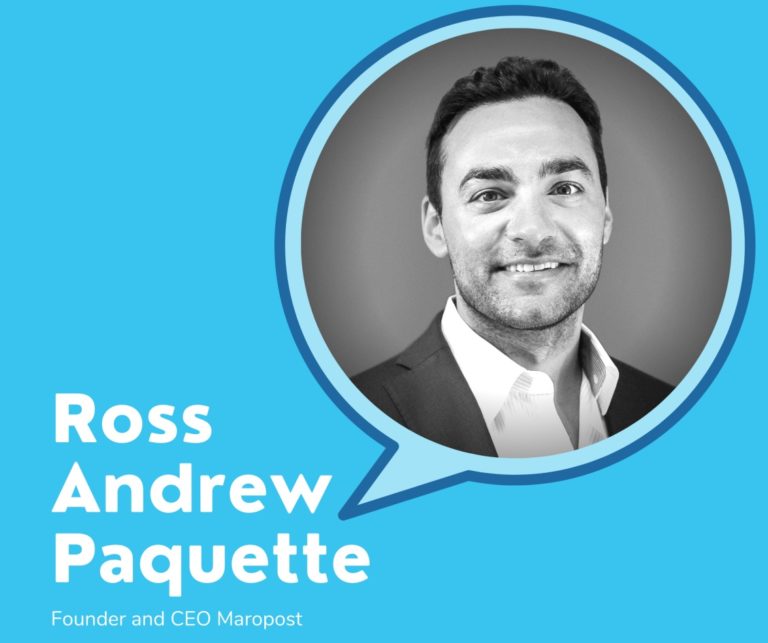
Ross Andrew Paquette

Interview with Tech CEO Ross Andrew Paquette on the inner workings of Maropost — Canada’s fastest-growing tech company.

What would you say sets Maropost apart from its competitors in the market?

Ross Andrew Paquette: Two, maybe three years ago, our main focus was providing our clients software for email marketing, mobile social media marketing, and cloud marketing — that was what our audience wanted back then. Actually, I remember email marketing being so big that we had one $25 million revenue company making 100% of their revenue through just email marketing.

Of course, things are a little different now in the world of digital marketing. And, to make up for this shift, Maropost has had to change quite a bit.

I think that’s part of what has allowed us to stand against our competitors, actually. Because now, Maropost is all about providing a single customer view. That’s been our main focus – providing a full 360 view on the customer’s overall journey. Basically, we bring all the communication aspects. Things like purchase information, all the service and support, etc. and put it all together to give our clients a simple and incredibly accurate look at their customers.

Where in Canada is Maropost based at?

Ross Andrew Paquette: Maropost HQ is in Toronto Canada. But we also have an office in Chicago and India as well. We’ve separated a lot of our duties between the three offices, so everyone keeps busy.

For our main HQ In Toronto, we take care of HR, finance, and client success — we have a lot of our executive team stationed there, actually. As for Chicago, our team there focuses more on the sales and marketing aspect — which leaves our India office in charge of most of our software development, a lot of system administration, and a little bit of support as well.

When was Maropost officially founded?

Ross Andrew Paquette: I guess it depends on how you think of it. Personally, I would say that it has been eight years since we’ve started. But, the first two years of that was spent elsewhere — I was still working with another company back then, while slowly funding the development of Maropost with a friend of mine from college.

Tell us more about how things started…

Ross Andrew Paquette: I started working right after my first year of University — and just never stopped since. I went through at least three jobs before deciding that there were some serious inconsistencies when it came to the level of innovation I was seeing in the companies I worked with. All of them were more than comfortable with the status quo — so they just left things as is, filling their pockets while their customers suffered through lackluster support.

For a while there, I was working with a mid-sized email marketing provider. And, working closely with such a company made me realize that the infrastructure being used was incredibly outdated — which wasn’t really doing that company any favors. More importantly though, being able to get such a close look at how quickly the digital marketing space was changing back then and how slowly infrastructure providers were keeping up… I saw an opportunity to make some changes, and I took it.

My experience with that email marketing provider is part of why Maropost was so heavy on email marketing in its first couple of years. Still, as I said, I saw early on how lack of innovation can cause a company to stagnate, so we’ve done a lot of development to make sure we grew through the years — going from email-only to taking on the entire digital marketing industry at large!

Last question, how would you describe Maropost’s growth over the years?

Ross Andrew Paquette: Well, I’d say the first year of business was pretty calm. Our goal wasn’t to raise capital, so our ‘first year as a startup’ was far from what you’d normally expect. All we were focusing on back then was the business itself. Also, as I said, I was working another job those first two years, so personally, I wasn’t panicking about how I’ll be keeping the lights on. After that calm though, I’d say our growth was pretty divided. We grew revenue rapidly, incredibly rapidly some might say — but our team stayed small throughout.

For the most part, I’d say our growth is thanks to our loyal client-base — who referred others to Maropost and took us all the way up to $25 million in annual revenue in four years. 

Activision Blizzard’s Incentives To Improve Workplace Culture

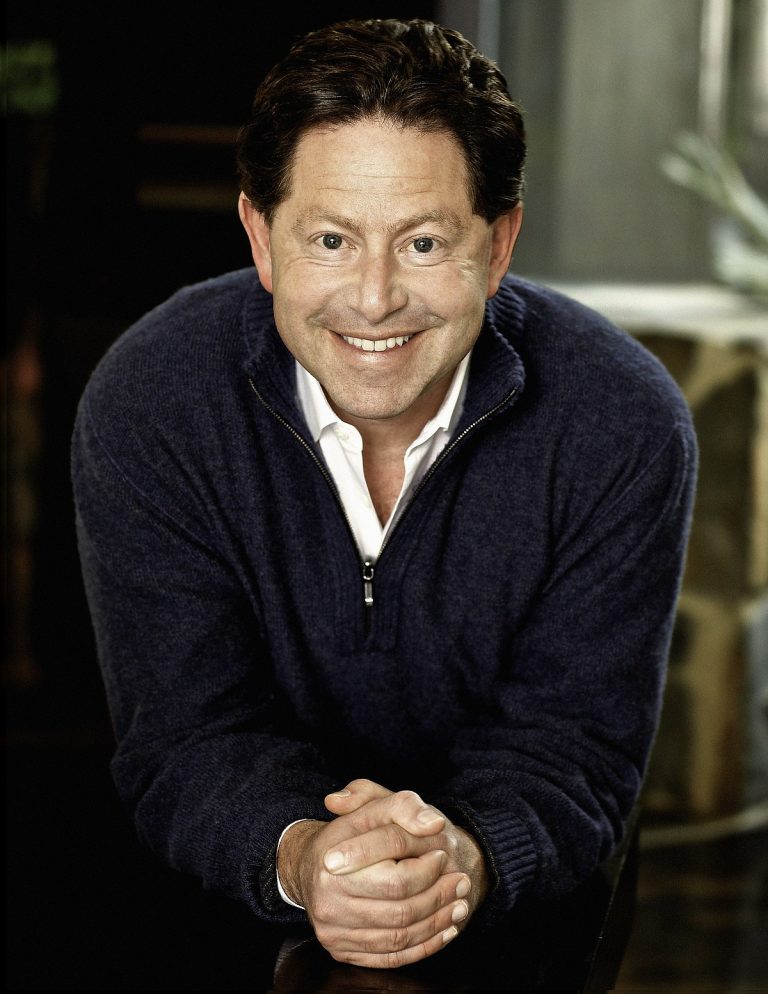
When Microsoft’s acquisition of Activision Blizzard is finalized, Activision CEO Bobby Kotick could earn a $22 million stock bonus if the Workplace Responsibility Committee concludes the video game company’s corporate culture has dramatically improved. According to a regulator filing, Kotick, who founded Activision in 1986, will get the stock bonus if he accomplishes “transformational gender-related goals and other commitments.”

According to a recent filing with the U.S. Securities and Exchange Commission (SEC), Kotick’s future at Activision Blizzard — he helped successfully engineer the merger of Activision and Vivendi Games in 2008 — is still unclear. In addition, it states that Kotick’s contract could be drawn out 12 months beyond its current March 2023 expiration.

What Is the Workplace Responsibility Committee?

Activision Blizzard’s board of directors created the Workplace Responsibility Committee in November 2021 to monitor progress in implementing and upholding any new procedures, policies, and/or commitments made by the video game publisher to make the workplace a more inclusive, safer, and fairer professional environment.

A Look at Activision’s New Policies

Activision Blizzard’s Workplace Responsibility Committee has the final say as to whether the video game giant is getting on with “appropriate progress” concerning the achievement of its goals.

Those goals included:

  • Increasing visibility on pay equity.
  • Investing $250 million to fast-track opportunities for diverse talent.
  • Abdicating arbitration of individual sexual harassment claims.
  • Forming a zero-tolerance harassment policy.
  • Raising the percentage of nonbinary people and women by 50% in the Activision Blizzard workforce.

Microsoft’s Plans for Activision Blizzard’s Future

In January, Microsoft announced its plans to spend $68.7 billion to buy Activision. The purchase will help bolster Microsoft’s Xbox gaming division and is expected to improve the workplace environment at the video game holding company, which is based in Santa Monica, California.

Microsoft’s president, Brad Smith, said the company will ensure it has the best people in each role once the merger is finalized. “We’re looking to the leadership team at Activision Blizzard today to make culture and workplace safety a top priority every single day, until the day when this deal hopefully closes. And then we’ll take over, and we need to make that same commitment,” says Smith. “There will be some aspects that will change, but it will all be one new team that will work together. And most importantly, we want to see the culture evolve, and we will see how people perform between now and the day this closes, assuming it is approved.”

Microsoft Gaming CEO and future Activision CEO Phil Spencer is expected to take over for the Activision CEO once the merger is finished. According to Smith, their focus is on improving company culture across the board. “We will have the opportunity to make sure that we have the right people in the right position,” Smith notes.

According to the SEC filings, Spencer and Kotick talked on the phone on Nov. 19, 2021. During that call, Spencer told Kotick “Microsoft was interested in discussing strategic opportunities” between Blizzard Activision and Microsoft and asked if he would have time to discuss such matters with Satya Nadella, the CEO of Microsoft, the following day. At least four other unnamed companies also contacted the video game publisher about a possible merger.

From Competitive Coaching To Lifestyle Management With Jonathan Fogelberg

Just a handful of the world’s most business people have managed to generate success during the 2020 COVID-19 pandemic. Where company growth took a nosedive and industries became unviable overnight, entrepreneurs looked for a new approach amidst the chaos and confusion.

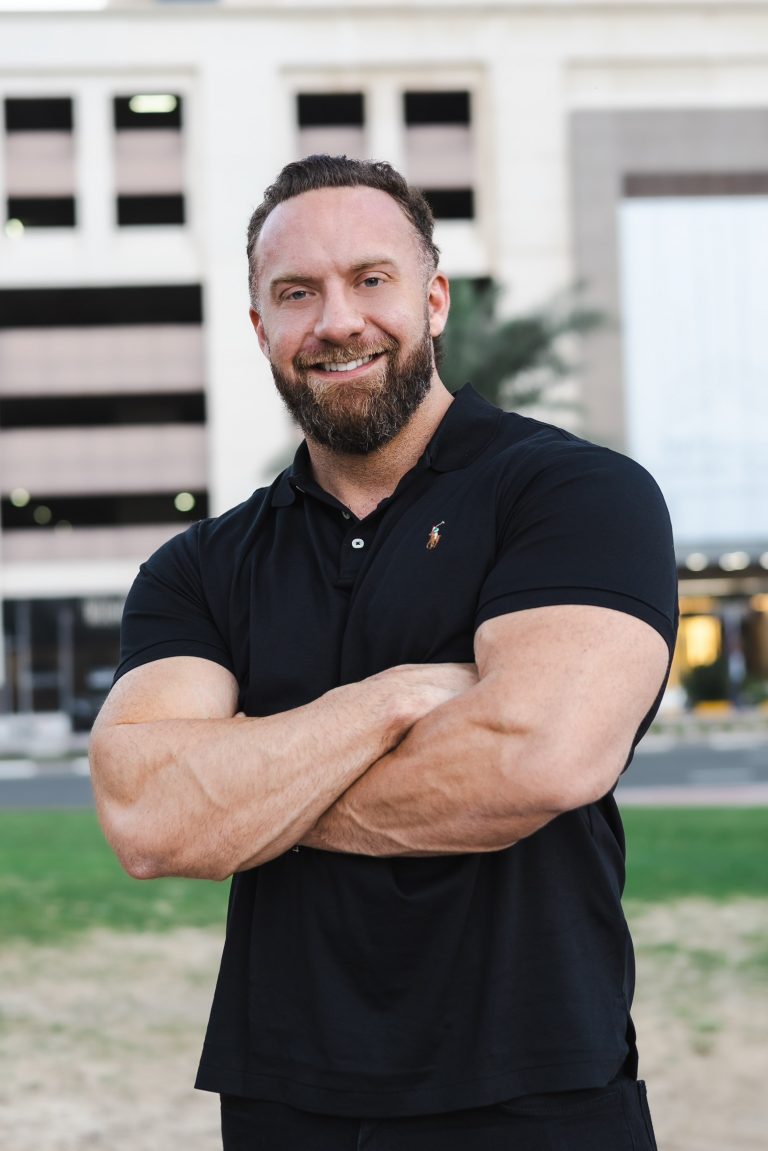
Throughout the pandemic, high achievers sought out solutions for fitness improvement. @jonathanfogelberg, the CEO and founder of COACH JF, embarked on a journey to provide unrivaled coaching services. Already a commended trainer for athletes, Jonathan was able to evolve his approach for those looking to improve their personal fitness.

The competitive edge has been within Jonathan throughout his life. Starting at the age of four, he took part in the likes of ice hockey, soccer, and golf, gaining valuable experience in competitive sports. An early life centered around sport inspired Jonathan’s business ventures, too, as watching his parents work overtime to afford his development in ice hockey fuelled his desire to build a business that could one day repay them. The passing of his father in 2020 leaves the coach with a sole pledge to help his mother retire this summer at the age of 57.

Jonathan’s business has long helped athletes achieve their fitness potential, with the aim to gain the coveted IFBB Pro card. Indeed, the entrepreneur has assisted clients to over 270 top three placings since 2016 and six IFBB Pro cards since 2019. However, with the lion’s share of competitions being cancelled in 2020, he has shifted his view to a bigger pool of clientele, providing comprehensive fitness coaching to a range of willing participants.

With the increasing internationalism of the sector, Jonathan has turned to focus on the global potential of COACH JF’s business model. With its leader now based in Dubai, the service now looks to become the most prominent fitness solution for successful people worldwide.

The Wonders Of AI In A Quality Assured Future

Artificial intelligence is finally beginning to get its due after years of being relegated to the role of “Bad Guy” in sci-fi movies and in works of fiction. The debate has been wonderfully introspective, and works of art, philosophers, even technical engineers discussing and theorizing on the various concepts and ramifications of Artificial Intelligence.

Now that AI has been more or less accepted as part of our daily lives, we have to consider the potential future that lays in store for various industries as a result of implementing some form of AI into them.

There are a few industries that are taking note of the rising tide of artificial intelligence and taking advantage of the newfound conveniences and increased efficacy that comes from saying “Yes” to the new way of doing things.

These are a few:

Food Processing & Packing

You wouldn’t necessarily link artificial intelligence with food processing and packing. However, many companies that are ramping up production are using some form of machine learning to intuitively keep an eye on quality assurance throughout the entire process.

Artificial intelligence systems can determine a whole number of things automatically, from the cut of meat all the way to ensuring that all sanitary conditions are accounted for in factories and processing plants.

Automotive

Tesla AI

If you’ve driven a Tesla already, then you already know the innovative self-driving tech that has permeated headlines and our imaginations. Utilising AI capabilities, companies like Tesla have changed the way we look at automotive potential – allowing for a safer driving experience.

Logistics

Through automation and artificial intelligence gathering, a majority of major logistics providers are throwing their collective hats into the ring as well. Using restricted versions of AI for various mundane and required tasks is nothing new but compile intuitive machine learning into the fold and you have the reason why Forbes is quoted as simply saying, “Smart infrastructure driven by new vehicle technology and autonomous driverless truck and drone ships will change how cargo moves.”

5 entrepreneurs that you should be following

Entrepreneurs are the passionate and innovative business people who seek to make as big an impact as possible in their chosen industry niche. While anyone can label themselves as entrepreneurs, only the best and brightest shine through to achieve fame and success.

The following will list 5 entrepreneurs that you should be keeping an eye on:

  • Amer Safaee,
  • Sophia Rowe,
  • Grant Cordone,
  • Tai Lopez,
  • Jack Parsons
    .

1. Amer Safaee

Amer Safaee
Amer Safaee

Amer Safaee is a tech entrepreneur who is the founder and CEO of Bama Security Group. Bama Security Group, founded in 2005, is a provider of hardware sales, software, and network security based in Kabul Afghanistan. Starting this company in Afghanistan is no small feat, and Amer has a great deal of experience researching, evaluating, and negotiating with suppliers from all around the world. Amer has had to fulfil many vital roles in establishing his company, and everyone should be eager to see what he will do next in the emerging Middle East tech space.

2. Sophia Rowe

Sophia Rowe
Sophia Rowe

Sophia Rowe is an entrepreneur originally from Jamaica she has become a specialist in business development and digital marketing in the United States. While an entrepreneur herself, Sophia shares her knowledge with others in the form of an educational system Sophia Rowe Digital that teaches theoretical and practical skills for people to leverage in the creation of their own successful businesses.

3. Grant Cordone

https://www.instagram.com/p/CCduFByj0Q9/

Grant Cordone has an impressive portfolio worth $1.5 billion in property and has authored over 20 bestselling books. He is a philanthropist, social media influencer, and a public speaker who has appeared as a commentator on programs like CNBC, MSNBC, and Fox News. He is the founder of Cordone University, one of the most crucial online training tools for salespeople with more than 50 million users.

4. Tai Lopez

https://www.instagram.com/p/B8kFCHfBdUg/

Tai Lopez is a successful investor as well as a respected advisor to many international businesses. When he isn’t helping companies make lots of cash, he is assisting everyday people to improve their wealth and happiness, with an audience spread across over 40 countries.

5. Jack Parsons

https://www.youtube.com/watch?v=3zyXcC0-PDg


Jack Parsons is a very young entrepreneur who is passionate about helping underqualified young people who feel they have been created by the system. Having grown up with a difficult childhood and neglect during his education, Jack followed his dreams and in 2017 was able to found his company The Youth Group.


.