Home Blog Page 39

MyDriverParis Becomes the First Private Chauffeur Service in France to Integrate AI via the Model Context Protocol

A first in the French private transportation industry – book a premium chauffeur in plain language, without leaving your AI assistant.

MyDriverParis, a premium private chauffeur service based in Paris, announces the launch of its MCP (Model Context Protocol) server – a first in the French private transportation industry. This integration enables AI assistants, including Anthropic’s Claude, to browse the fleet, get an instant quote, and book a ride entirely through conversation.

Book a Chauffeur in Plain Language

With this new capability, a user can simply ask their AI assistant: “Book me a chauffeur from CDG airport to my hotel tomorrow at 2 PM” and receive within seconds an exact quote, vehicle options, and a secure Stripe payment link. No website to navigate, no form to fill out – the conversation is the interface.

The system relies on four connected tools:

  • Fleet availability lookup
  • Real-time fare calculation
  • Payment session creation
  • Service information retrieval

Pricing is identical to the website – no surcharge is applied for AI-initiated bookings.

An Open and Secure Architecture

The Model Context Protocol, an open standard developed by Anthropic, allows AI agents to interact with external services in a structured and secure manner. MyDriverParis built its MCP server on top of its existing infrastructure: the WordPress API handles pricing and fleet data, Stripe processes payments, and a webhook automates ride creation in the Zeplan dispatch system along with email confirmations to both the client and the operations team.

Every transaction is protected by a dedicated API key and Stripe HMAC signature verification. No sensitive data passes through the AI agent.

A New Sales Channel for Private Transportation

“AI agents are becoming a distribution channel in their own right,” says the MyDriverParis team. “Our business clients already rely on AI assistants in their daily workflow. Letting them book a chauffeur without leaving that workflow is meeting a demand that already exists.”

This integration positions MyDriverParis as an early adopter of agent-native technology in the transportation sector. The company plans to expand its MCP server capabilities with real-time ride tracking and booking modification support.

MyDriverParis

About MyDriverParis

MyDriverParis provides premium private chauffeur services in Paris and the Île-de-France region: airport transfers, excursions, hourly hire, and long-distance trips. Learn more at www.mydriverparis.com.

Press contact: contact@mydriverparis.com

MyDriverParis – Champs-Élysées, Paris – Available via Claude (Anthropic) and compatible MCP assistants

 The New Front Door to Your Business Isn’t  Google. It’s ChatGPT


Digital Marketing in the AI Era: How The DM Duo Is Helping Businesses Evolve

Something shifted quietly in the way people find businesses – and most companies have no  idea it’s already happening.

Customers aren’t just typing into search bars anymore. They’re asking AI. “Who’s the best  immigration lawyer in Miami?” “What’s a good med spa near me?” “Which real estate agency  should I trust in this market?” And ChatGPT is answering them – with specific business names,  specific recommendations, specific reasons why.

The question is: is your business one of them?

The Agencies Still Optimizing for Yesterday

Most marketing agencies are still fighting for Google rankings, refining meta descriptions, and  chasing algorithm updates on platforms that are – quietly, rapidly – losing ground as the first  place people go for answers.

That’s not a knock on SEO. It still matters. But it’s no longer the whole story.

A new category of search has emerged, and it rewards businesses that are visible, credible, and  well-represented in the AI ecosystem – not just on traditional search engines. And the numbers  make it impossible to ignore: ChatGPT alone commands roughly 80% of the AI search market,  and 82% of all website traffic coming from AI platforms originates from ChatGPT specifically.  With over 557 million monthly active users on mobile alone, this isn’t a trend. It’s where your  customers already are.

The DM Duo saw this shift early. And they built a service around it.

The People Paying Attention When Everyone Else Wasn’t

Melisa Román moved from Venezuela to Miami at 14, built her career from the ground up, and  co-founded The DM Duo in 2021 alongside her business partner without investors, without a  safety net, and without waiting for permission. What they had – from day one – was the ability  to spot what was coming before it arrived.

When AI tools started changing the way people search for information, most agencies treated it  as a trend to monitor. Melisa treated it as a problem to solve – for their clients, immediately.  They started asking a question that almost no one in the industry was asking yet: what does it  take for a business to  get recommended by ChatGPT ?

That question became a service. That service is now delivering results across industries.

The DM Duo isn’t a two-person operation. Behind the founders is a team of 8 specialists –  each one dedicated to a specific piece of the puzzle, from AI integration and paid media to  content, web development, and analytics. Clients don’t just get a strategy – they get an entire  team that knows their business. And while AI powers a lot of what the team does behind the  scenes, it never replaces the human side of the work. Every client has real people to talk to, real  conversations, and a team that is genuinely invested in their growth – not just their metrics.  That connection isn’t a nice-to-have. For The DM Duo, it’s the whole point.

“We don’t think we’re the best because we know everything,” Melisa says. “We think we’re the  best because we never stop learning – every single day.”

In an industry full of agencies that project confidence by pretending to have all the answers, that  kind of honesty is rare. And for the businesses that work with The DM Duo, it’s exactly what  they’re looking for.

What a ChatGPT Business Listing Actually Does

The DM Duo’s  ChatGPT Business Listing service  positions your business to be found, cited,  and recommended by AI tools – starting with ChatGPT, the platform now used by hundreds of  millions of people every month.

It’s not magic. It’s strategy. The process involves optimizing how your business is represented  across the digital signals that AI models draw from when formulating recommendations – your  authority, your consistency, your relevance to the questions people are actually asking.

Yes, other AI tools exist – Gemini, Perplexity, Copilot. And visibility across all of them matters.  But ChatGPT is where the overwhelming majority of everyday people go first, whether for work  or personal decisions. When someone needs a recommendation and reaches for AI, they’re  almost certainly reaching for ChatGPT. That’s where your business needs to show up.

The result? When someone asks ChatGPT for a recommendation in your industry, your name  shows up.

10 Clients. 10 Different Industries. One Pattern.

Here’s what made the DM Duo take notice: it wasn’t working for one type of business. It was  working for all of them.

Law firms. Medical practices. Real estate companies. Businesses across completely different  niches, with different audiences, different price points, different competitive landscapes – all  experiencing the same outcome. New leads. New clients. People reaching out and saying, “I  found you on ChatGPT.”

That phrase – I found you on ChatGPT – is becoming one of the most valuable sentences a  business owner can hear. It means a potential client trusted an AI recommendation enough to  act on it. It means your business was the answer.

Ten clients across ten industries are hearing it now. That number is growing.

This Is Still Early. That’s the Point.

ChatGPT’s dominance is real – but it won’t stay this easy to break into forever. Businesses  optimizing for AI search today are building an advantage that will be significantly harder to close  in 12 to 18 months – the same way businesses that invested in Google SEO early built visibility  that competitors spent years trying to catch up to.

Other AI platforms are growing fast. Gemini tripled its market share in just the last few months of  2025. The window to move first is open. It won’t stay that way.

The DM Duo isn’t the agency that waits to see where things are going. They’re the agency that’s  already there – and bringing their clients with them.

The DM Duo - ai for businesses

The DM Duo is a Miami-based digital marketing agency  helping businesses modernize their  presence, grow their reach, and stay ahead in an AI-driven world. Co-founded by Melisa Román  and her business partner, the agency works hands-on with every client across ChatGPT  Business Listings, AI integration, paid media, website development, and full-scale digital  strategy.

If you want your business to be the answer when someone asks ChatGPT who to call – they’re  the team to talk to.

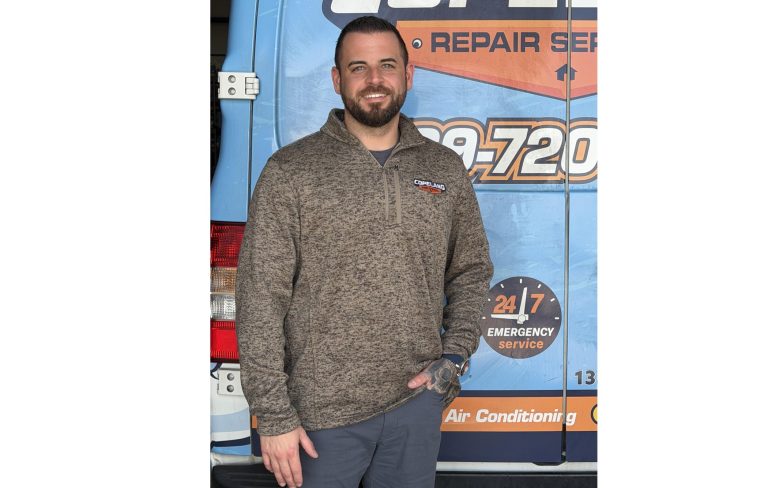
Brandon Copeland and Copeland Home Services: The Customer-First Strategy Behind a $10 Million Company

Key takeaways

  • Brandon Copeland built Copeland Home Services by making customer experience the product, with clear communication and practical recommendations that drive repeat calls across Dallas-Fort Worth.
  • Copeland Home Services stands out in the HVAC industry by removing upsell pressure and training technicians to recommend cost-effective repairs or replacements based on what the home actually needs.
  • The company supports homeowners with HVAC, electrical, and plumbing repair, installation, and maintenance, offering 24/7 emergency service and long-term warranties.

When Brandon Copeland moved to Texas in 2021, he was doing what most people do after a relocation. He was getting settled, handling the practical stuff, and trying to find reliable companies he could call when something in his home needed attention. One service call changed the way he saw the home services industry in Dallas-Fort Worth.

“I put in a service call, and the customer service was just terrible,” Copeland recalled. “Talking to my neighbors, I realized that was pretty normal around here. There were no quality customer service companies.”

That frustration turned into a plan. In 2022, Copeland founded Copeland Home Services with a simple mission: deliver the kind of HVAC, electrical, and plumbing experience homeowners wish was standard, not rare. Three years later, the company reports $10 million in annual revenue, with a team of roughly 40 employees and about 30 trucks serving the Dallas-Fort Worth metroplex.

Building the business around the homeowner

Home services is one of those industries where customers rarely call in a relaxed state. Something is broken. The house is uncomfortable. The cost is unknown. That pressure creates a situation in which homeowners often feel they have to brace themselves for the conversation.

Copeland built his model around reducing that tension instead of exploiting it. He saw how often the industry leans on upselling, inflated quotes, and pressure tactics, then chose a different structure. One signal of the wider problem is that nearly 65% of homeowners report feeling uncertain about whether they’re getting honest advice during a technician visit. When that’s the baseline, every recommendation can feel loaded, even when it’s legitimate.

Copeland Home Services set out to make the technician visit feel less like a sales meeting and more like a clear diagnosis with options. The company operates with a consultative approach. Technicians are trained and empowered to recommend the most practical, cost-effective solution for a homeowner’s specific situation, rather than defaulting to the biggest replacement.

That philosophy has scaled into real numbers. The company reports $479,000 in year one, then $3.1 million, then $6.1 million, and now $10 million in annual revenue. Growth like that is usually associated with aggressive sales systems. Copeland’s story pushes a different argument. If the experience is strong enough, clarity can outperform pressure.

The systems behind the service, and the people who deliver it

A founder can set a tone early. The hard part is keeping that tone intact when the operation grows beyond one person’s direct oversight. In-home services tend to expose every weak link. Scheduling slips. Communication gets inconsistent. Customers start repeating themselves. Technicians start solving the same problem three different ways. A company can grow fast and still lose what made it work.

“Our mission from day one has been to deliver an HVAC experience that restores people’s faith in the industry,” Copeland said. “We’ve accomplished that by putting the customer’s interests first, every single time.”

That mission shows up in the details customers actually notice. Technicians arrive on time. They respect the home. They walk through what they found, the options, and the cost before any work begins. It also shows up in availability. Copeland Home Services offers 24/7 emergency services, backs standard equipment with a 10-year labor warranty, and offers discounts for veterans and first responders. Those aren’t just perks. They’re part of how the company signals reliability in moments when people feel stuck.

The other part of the scale is culture. Copeland has built the company around a fun, family-like environment that’s designed to attract and keep good people in a trade where churn can be high. A strong technician can go anywhere. Keeping them means building a place they want to stay, where expectations are clear, and pride in workmanship is not optional.

Community investment that isn’t an afterthought

Copeland’s “people-first” idea goes beyond customers and employees. From the beginning, the company built community involvement into its rhythm, treating it as part of the business rather than a seasonal add-on.

Each holiday season, the company spearheads toy drives for Toys for Tots, bringing the team and the wider community together around something tangible. Copeland Home Services also provides financial support for the Texas Valor Project, an organization that helps veterans living with traumatic brain injuries.

Copeland frames these efforts as a responsibility. If you build your business inside a community, you show up for that community in ways that matter, especially for families and veterans who often carry heavy burdens quietly.

Copeland Home Services is designed to deliver a consistent customer experience. It’s a fast-growing company, yes. It’s also a reminder that in mature industries, the most effective growth move is often the simplest one. Treat people well, then build the systems to keep doing it at scale.

About Copeland Home Services

Founded in 2022, Copeland Home Services is a fast-growing HVAC, electrical and plumbing company serving the Dallas–Fort Worth area. The company is known for exceptional customer service, transparent communication, and customized solutions for every home. Services include heating and cooling repair, installation, and maintenance, along with plumbing and electrical work. With a people-first culture and consultative approach, Copeland Home Services has built a reputation for quality workmanship and lasting customer trust. Learn more at www.copelandairtexas.com

How digital banking platforms are reshaping customer experience

Banking used to revolve around branches, paperwork, and slow processes. That model is fading fast. Digital banking platforms are redefining how people interact with financial services by prioritizing speed, simplicity, and control. The shift is not just technological. It is behavioral. Customers now expect banking to feel as seamless as any other digital experience they use daily.

Digital banking trends shaping expectations

One of the strongest digital banking trends is the move toward mobile-first experiences. Mobile banking apps have become the primary interface for many users, replacing desktop platforms and physical branches. Customers want to check balances, transfer money, and manage accounts in seconds, not minutes.

This shift has forced banks to rethink design. Clean interfaces, real-time updates, and intuitive navigation are no longer optional. They are baseline expectations. At the same time, personalization is becoming more important. Users expect tailored insights, spending breakdowns, and alerts that help them make better financial decisions.

The rise of challenger banks and neobanks

Challenger banks and digital bank startups are pushing the industry forward. Without legacy systems, these players can build modern platforms from the ground up. They focus heavily on user experience, often offering faster onboarding, lower fees, and more transparent pricing.

Neobank news consistently highlights how these companies attract younger, digitally native customers. Features like instant account setup, virtual cards, and real-time notifications are standard. Many also integrate budgeting tools directly into their apps, turning banking into a more interactive experience.

Traditional banks are responding by investing in their own digital banking platforms or partnering with fintech companies. The result is a more competitive environment where innovation is constant.

Online banking innovation and user experience

Online banking innovation is no longer just about adding features. It is about removing friction. Processes that once took days, like opening an account or applying for a loan, can now be completed in minutes.

Automation plays a big role here. Identity verification, credit checks, and approvals are increasingly handled in real time. This reduces waiting periods and improves customer satisfaction. It also lowers operational costs for banks, creating a win-win dynamic.

Another key area is integration. Digital banking platforms are connecting with other services, from payment apps to investment tools. This creates a more unified financial experience where users can manage multiple aspects of their finances in one place.

Open banking and data-driven services

Open banking is transforming how financial data is used. By allowing secure data sharing between institutions, it enables new types of services and business models. Customers can link multiple accounts, compare products, and access more personalized recommendations.

For banks, this means competing not just on products but on experience. Data becomes a strategic asset. The ability to analyze and act on customer behavior in real time is shaping the next generation of services.

Open banking news often highlights how this shift is driving innovation across the ecosystem. Fintech companies are building tools that sit on top of traditional banking infrastructure, offering enhanced functionality without owning the underlying accounts.

Security, trust, and regulation

As digital banking expands, security remains critical. Customers expect strong protection without added complexity. Features like biometric authentication, real-time fraud alerts, and secure encryption are now standard.

Digital banking regulation is also evolving to address new risks. Compliance requirements are becoming stricter, particularly around data privacy and cybersecurity. Banks must balance innovation with trust, ensuring that new features do not compromise security.

Trust is still a key differentiator. Even the most advanced platform will struggle if users do not feel confident in its reliability. This is why transparency, clear communication, and consistent performance are essential.

The future of digital banking platforms

Digital banking platforms are moving toward a more proactive model. Instead of reacting to user actions, they will anticipate needs. AI-driven insights, predictive analytics, and automated financial management will become more common.

The line between banking and other digital services will continue to blur. Financial tools will be embedded into everyday platforms, from e-commerce to workplace software. This will make banking even more accessible and context-driven.

At the same time, competition will intensify. Banks, fintech startups, and technology companies are all vying for the same customers. Success will depend on delivering a seamless, reliable, and genuinely useful experience.

Digital banking is no longer a convenience. It is the standard. Platforms that understand this shift and continue to evolve with user expectations will define the next era of financial services.

Technology Expert Jimmy Rodriguez Explains Why AI Is Making It Easier to Build Apps-but Harder to Build the Right Ones

Jimmy Rodriguez, a technology expert working with SaaS companies as a fractional executive, is helping teams navigate a rapidly evolving landscape where building software has never been easier-but building successful products remains just as challenging.

In recent years, advances in artificial intelligence and no-code development tools have dramatically lowered the barrier to entry for creating digital products. Entrepreneurs, operators, and even non-technical founders can now generate code, design interfaces, and launch applications faster than ever before.

While this shift has accelerated innovation, Rodriguez notes that it has also introduced a new and less visible challenge.

“Building is no longer the hard part,” Rodriguez explains. “The real challenge now is deciding what to build in the first place.”

According to Rodriguez, many companies today appear to be moving quickly. Teams are shipping features at a faster pace, experimenting with new ideas, and leveraging AI tools to streamline development. From the outside, it often looks like strong momentum.

However, speed alone does not guarantee meaningful progress.

As more organizations adopt AI-driven development workflows, Rodriguez observes a growing gap between execution and strategy. Products are often developed without a clearly defined problem, a deep understanding of user needs, or alignment with business goals.

This can lead to a common pattern: applications that function well from a technical standpoint but struggle to gain traction once released.

“AI has made it incredibly easy to build,” Rodriguez says. “But it hasn’t improved how teams make decisions. In some cases, it’s actually accelerating poor decisions.”

Rodriguez works closely with early-stage and growth-stage SaaS companies, many of which reach a point where increased speed creates internal complexity rather than clarity. As teams expand, priorities can become fragmented, ownership may become unclear, and product direction can begin to drift.

He notes that these issues are often mistaken for execution problems when they are actually rooted in decision-making.

“Teams don’t usually fail because they can’t build,” Rodriguez explains. “They struggle because they haven’t aligned on what matters most.”

Another area where Rodriguez sees growing confusion is in the adoption of artificial intelligence itself. Many companies feel pressure to introduce AI into their products, but lack a clear understanding of where the technology creates meaningful value.

Instead of treating AI as a standalone feature, Rodriguez encourages organizations to approach it as a capability that should be applied intentionally to solve real customer problems.

“AI should improve outcomes, not just add complexity,” he says. “If it doesn’t make the product meaningfully better for the user or the business, it’s probably not the right investment.”

Through his work as a Fractional Product Leader, Rodriguez helps companies bring clarity to these challenges. Rather than focusing on day-to-day delivery, his role centers on aligning product direction with business strategy, improving decision-making processes, and helping teams navigate periods of growth and uncertainty.

As the pace of product development continues to accelerate, Rodriguez believes the companies that succeed will not be the ones that build the fastest, but the ones that make the best decisions.

“In this environment, the advantage doesn’t come from speed alone,” he says. “It comes from knowing what’s actually worth building.”

How Dr. Shantelle Simpson and Appalachian Mountain Health Are Redefining Community Healthcare

Key Takeaways:

  • Shantelle Simpson has positioned Appalachian Mountain Health as proof that community health centers deliver high level, physician-led care that rivals private systems.
  • Appalachian Mountain Health demonstrates that whole-person care can be embedded in the structure, not treated as a marketing slogan, while remaining financially accessible.
  • Under Dr. Shantelle Simpson’s leadership, Appalachian Mountain Health has built a sustainable, skilled, and fast moving healthcare model that challenges outdated assumptions about health centers.

For decades, community health centers have carried a significant portion of American healthcare. Today, one in ten Americans receives care at a health center. Yet respect has not always matched impact.

Health centers are sometimes viewed as temporary safety nets or last-resort providers. That framing is outdated. Modern community health centers are structured systems delivering comprehensive, physician-led, integrated care at scale. In Western North Carolina, Appalachian Mountain Health demonstrates what that model looks like when it is executed with discipline.

Under the leadership of Dr. Shantelle Simpson, Appalachian Mountain Health has grown from a modest regional provider into a six-county health system with an annual operating budget that expanded from roughly $4 million to $38 million. More than 17,000 patients are treated each year across medical, dental, behavioral health, pharmacy, pediatric, and mobile services.

That growth reflects intentional structure, strong clinical leadership, and a commitment to measurable performance. If health centers are to be respected at the level they deserve, it begins with understanding why they work.

Skilled, High-Caliber Care at Speed

There is a misconception that community health centers offer limited or lower-tier care. Appalachian Mountain Health rejects that assumption outright. The organization recruits experienced physicians and licensed clinicians across family medicine, pediatrics, women’s health, behavioral health, dentistry, and pharmacy. These are credentialed professionals who choose to practice in community settings because they believe access should not dilute quality.

Growth at Appalachian Mountain Health has required both urgency and precision. Patient visits now exceed 70,000 annually. The workforce has expanded to 250 employees. More than 30 clinicians have been added in recent years. Services have expanded while maintaining clinical standards aligned with larger health systems. “Our goal is to be the gold standard for community health centers, not just in our region, but across the country,” declares Dr. Simpson.

Communities feel the difference when care is both accessible and clinically strong. Families return, retention remains steady, word spreads, and credibility compounds over time.

Whole-Person Care Is Embedded, Not Optional

Healthcare in rural America cannot operate in silos. Transportation barriers, financial constraints, and workforce shortages make fragmented care impractical. Appalachian Mountain Health embeds whole-person care directly into its operational structure.

Behavioral health providers are integrated within primary care teams. Dental screenings extend into schools. Pharmacy services are integrated with mobile outreach, so prescriptions do not become another barrier. Community Resource Advocates assist with Medicaid enrollment and financial navigation, helping patients maintain continuity of care.

When one in ten Americans relies on health centers nationwide, the structure must be capable of addressing more than a single appointment. Patients often need coordinated support across medical, behavioral, and social dimensions. By designing services around that reality, Appalachian Mountain Health reduces gaps that traditionally push patients toward emergency departments or delayed treatment.

Affordability is also part of that structure. Community health centers are required to offer sliding fee scales and to work with patients regardless of insurance status. Appalachian Mountain Health maintains that commitment while expanding clinical capacity. Reasonable pricing, paired with comprehensive services, allows families to receive consistent care without facing impossible trade-offs.

Whole-person care becomes credible when it is systematic. It must be built into the workflow, not dependent on individual goodwill. That discipline is what differentiates structured health centers from fragmented clinics.

Combining Mission With Financial Discipline

Respect in healthcare often follows financial stability. A mission without sustainability cannot scale. Appalachian Mountain Health’s transformation demonstrates that community-rooted systems can achieve both.

Since 2021, the patient base has grown by 78%. More than $4.3 million in grant funding has strengthened infrastructure, oral health services, behavioral health programs, and disaster recovery capacity. This growth has not diluted the mission; it has reinforced it.

Dr. Simpson credits alignment across strategy, staffing, and community engagement as the turning point. When recruitment, financial planning, and program expansion move in the same direction, stability follows. Stability allows health centers to invest in providers, extend services, and improve outcomes without compromising access.

Community health centers are not meant to compete with large hospital systems. They are designed to anchor communities. When properly led and adequately supported, they reduce strain on emergency departments, manage chronic disease effectively, and provide preventive care at a scale that benefits entire regions.

The way we talk about health centers needs to change. They shouldn’t be seen as just temporary parts of the healthcare system. They are foundational components of it.

Appalachian Mountain Health provides a clear illustration because it’s a physician-led organization, financially stable, and operationally integrated. Serving thousands across six counties, it keeps care affordable and well coordinated.

Respect should be based on how well something works. Community health centers have earned this respect. This is supported by data showing that patients depend on these services. Leaders like Dr. Shantelle Simpson are proving that when health centers are built with structure, skilled providers, and disciplined growth, they do not operate on the margins. They define the standard.

About Appalachian Mountain Health

Appalachian Mountain Health (AMH) is a Federally Qualified Health Center (FQHC) providing comprehensive healthcare services across Western North Carolina. Led by President and CEO Dr. Shantelle Simpson, AMH offers primary care, behavioral health, women’s health, pediatrics, mobile medical services, and on-site pharmacy support, with a focus on expanding access to care for underserved communities. Guided by its mission, AMH is committed to delivering accessible, high-quality, patient-centered healthcare to individuals and families throughout the region. For more information, visit appalachianmountainhealth.org

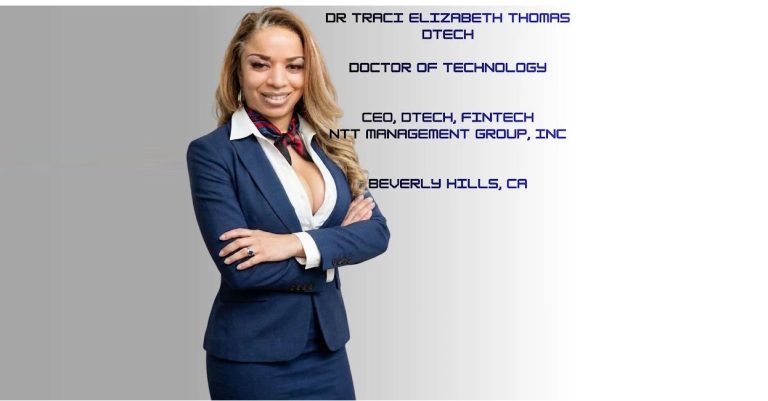
Venture Capital Leader Dr. Traci Elizabeth Thomas Expands Global Fintech Vision

Dr. Traci Elizabeth Thomas is gaining renewed attention across the financial technology sector as her companies continue expanding internationally and introducing new ideas about how finance, technology, and human behavior intersect.

With more than a decade of experience in venture capital and financial technology, Dr. Thomas has built a reputation for combining traditional financial expertise with insights from psychology. Through her firms NTT Management Group, Inc. and No Sweat It Credit, Inc., she focuses on helping individuals and businesses strengthen their financial positions while navigating increasingly complex credit systems.

Headquartered in the United States, her organizations now operate internationally, with offices and partnerships spanning Beverly Hills in California, Mumbai in India, and Business Bay in Dubai. The expansion reflects growing demand for accessible financial solutions in markets where businesses and consumers are seeking faster, technology-driven credit services.

One of the central initiatives driving that expansion is No Sweat It Credit, Inc., a company founded to specialize in expedited credit restoration for both individuals and corporations. The firm has attracted industry attention for developing an AI-powered application designed to accelerate credit repair processes that traditionally take weeks or months. According to company information, the technology can complete certain restoration steps in as little as 24 hours.

Dr. Thomas describes the mission of the company in practical terms. She emphasizes empowering clients with financial knowledge and tools that allow them to rebuild and maintain stronger credit positions in uncertain economic conditions.

“Our expansion into Beverly Hills, Mumbai, and Dubai showcases our dedication to providing cutting-edge financial solutions on a global scale,” she said when discussing the company’s international growth strategy.

The fintech entrepreneur often frames her financial philosophy around what she calls the “5 C’s” of financial well-being: Capital, Credit, Cash, Corporations, and Character. The concept reflects her view that financial success depends not only on money management but also on ethical decision-making and behavioral awareness in business relationships.

That perspective has shaped her professional development as well. In recent years she has pursued additional academic training and collaborated with psychologists and behavioral experts to better understand how personality traits and financial decision-making interact. The work explores how behavioral patterns and interpersonal dynamics influence investment partnerships, lending decisions, and corporate leadership.

Supporters say the approach places Dr. Thomas in a niche space emerging within modern finance. As financial markets become more complex and digital systems automate more processes, investors and entrepreneurs increasingly seek guidance that combines technological tools with human judgment.

Dr. Thomas believes artificial intelligence will play a central role in that transformation but should remain a supportive technology rather than a replacement for human expertise.

“Our approach leverages AI innovations in a way that enhances efficiency and accuracy while ensuring no additional jobs are lost in today’s uncertain economy,” she explained.

Looking ahead, the company’s strategic goal is ambitious. Leadership plans to position No Sweat It Credit as a leading global provider of AI-powered credit restoration and financial wellness services over the next several years.

As fintech continues evolving, Dr. Traci Elizabeth Thomas is positioning her companies at the intersection of technology, finance, and behavioral insight. Her work suggests that the future of financial services may depend as much on understanding people as it does on building powerful algorithms.

Galen M. Hair and Insurance Claim HQ: Protecting Homeowners From Late-Winter Burst Pipes

Key Takeaways

  • Ice, freezing rain, and late-winter freezes pose serious risks to homes in warm-climate states, and homeowners can prepare effectively thanks to Insurance Claim HQ and Galen M. Hair.
  • Insurance Claim HQ guides homeowners through documentation and insurance claims with proven expertise, ensuring that burst pipes, hidden structural issues, and winter storm damage are handled efficiently and fairly.
  • Free guides and videos from Insurance Claim HQ help homeowners protect their property and maximize insurance claims.

Spring may feel close, but winter is not finished. Late-season cold snaps catch homeowners off guard every year, especially in southern states. A single overnight freeze can rupture pipes, collapse weakened tree limbs onto rooftops, and knock out power for days. The window to prepare is narrowing, and the cost of waiting can be enormous.

According to an analysis, consumers filed more than 20,000 claims for frozen pipes and winter water damage between January 2024 and June 2025, with the average claim payment exceeding $30,000. Those numbers reflect what happens when winter storms meet unprepared homes. For families across Louisiana and the Gulf South, the next few weeks represent the last real opportunity to reduce risk before warmer weather arrives. 

This is where Insurance Claim HQ steps in. The firm has recovered hundreds of millions for policyholders dealing with water damage, fires, hurricanes, and structural losses, with burst pipes ranking among the fastest-escalating and most disputed claims they handle.

Why Ice and Freezing Rain Pose the Greatest Threat

Snow gets the headlines, but ice and freezing rain do the real damage in warm-climate states. A thin layer of ice adds weight to power lines, tree branches, and roof structures that were never engineered to bear it. When those systems fail, the results cascade. Power outages leave homes without heat, which allows indoor temperatures to plummet. Pipes that were never insulated for extreme cold begin to freeze and crack. Water seeps into walls, floors, and ceilings, often going unnoticed until the damage has already spread.

Galen M. Hair, founder and managing partner of Insurance Claim HQ, has spent years helping homeowners navigate the aftermath of these events. “Winter weather risks vary significantly by region,” Galen explains. “In Louisiana, ice and freezing rain are often the primary drivers of winter storm damage, leading to power outages, burst pipes, and structural issues in homes designed for warm climates. Understanding regional risk factors allows homeowners to prepare more effectively and mitigate avoidable damage.”

That regional awareness matters. A home in Metairie faces different winter risks than one in Minneapolis, and its preparation should reflect those differences. Homes in the Gulf South often lack the insulation, pipe protection, and weatherproofing that northern homes are built with from the start. That gap in construction creates a gap in protection, one that homeowners can close with a few practical steps before the season ends.

Practical Steps to Take Before the Next Freeze

Preparation does not require a large budget or a contractor on speed dial. Homeowners can start by insulating exposed pipes in attics, crawl spaces, and along exterior walls. Keeping the thermostat set to at least 55 degrees, even when away from home, helps prevent the temperature drops that can freeze plumbing. Disconnecting garden hoses and shutting off water to outdoor spigots eliminates another common failure point.

Beyond the plumbing, homeowners should inspect their rooflines and gutters for damage from earlier storms. Clearing debris and trimming overhanging branches reduces the chance that ice accumulation will bring limbs crashing down onto the structure. Sealing cracks around doors, windows, and exterior walls keeps cold air from reaching vulnerable pipes and lowers heating costs.

If a freeze does hit, the most important first step is to shut off the main water supply immediately if a pipe bursts. Standing water should be removed as quickly as possible, and every bit of damage should be photographed and documented before cleanup begins. Insurers often question the timeline and severity of water intrusion, and thorough documentation from the earliest moments creates the strongest foundation for a successful claim. Insurance Claim HQ’s pipe-burst damage attorneys have seen how quickly undocumented losses are minimized or denied by insurers looking to limit payouts.

Where to Find Help Before and After a Winter Storm

Knowing what to do is half the battle. The other half is knowing where to turn when things go wrong. Insurance Claim HQ offers a free Ultimate Guide to Maximizing Your Insurance Claim that walks homeowners through the claims process step by step, from initial documentation to negotiating with adjusters. The firm also publishes educational videos covering topics from fire damage to water intrusion, giving homeowners a visual reference for what to expect during the recovery process.

For homeowners already dealing with burst pipes or water damage from a recent storm, the firm handles claims across Louisiana and multiple other states. Their team includes contractors, public adjusters, and attorneys who understand how insurers evaluate winter storm losses and where they attempt to limit payouts. 

Winter’s last act can be its most destructive. The families who take action now, while there is still time to prepare, will be in the strongest position when spring finally arrives. And if the worst does happen, knowing where to find experienced legal support can make the difference between a denied claim and a full recovery.

About Insurance Claim HQ

Insurance Claim HQ is a premier property casualty insurance law firm powered by Hair Shunnarah Trial Attorneys and headquartered in Metairie, Louisiana. With hundreds of millions recovered for thousands of clients, the firm brings years of legal experience and unmatched insight into how insurers operate. Discover how they fight for policyholders at www.insuranceclaimhq.com.

Brian Ferdinand Strengthens Thought Leadership in Active Trading Strategies

As global financial markets continue to evolve amid rapid technological advancement and shifting macroeconomic conditions, structured strategy and disciplined execution have become increasingly important for active traders. Brian Ferdinand of EverForward Trading has focused on reinforcing these principles, contributing to ongoing discussions around risk governance, adaptability, and systematic decision-making in modern trading environments.

Ferdinand’s professional background, including his early experience at Echotrade, shaped his perspective on market participation. Exposure to professional trading operations emphasized the importance of preparation, liquidity awareness, and defined risk parameters. Rather than relying on short-term speculation, his approach centers on building repeatable frameworks designed to operate across varying volatility regimes.

Through his leadership at EverForward Trading, Brian Ferdinand promotes strategy-driven execution supported by structured risk controls. He emphasizes that active trading requires more than identifying market direction; it demands careful capital allocation, position sizing aligned with volatility conditions, and predefined exit criteria. By embedding these safeguards within the trading process, performance becomes more consistent and less influenced by emotional reactions to price fluctuations.

A key component of Ferdinand’s thought leadership is his focus on risk-adjusted performance. He advocates evaluating outcomes not solely by gross returns but by drawdown management, exposure efficiency, and sustainability over time. This perspective reflects a broader shift within professional trading toward durability and long-term resilience rather than high-risk positioning.

Ferdinand also highlights the importance of adapting strategies as market conditions change. Liquidity patterns, macroeconomic developments, and shifts in market structure require ongoing evaluation and calibration. At EverForward Trading, this adaptive process involves reviewing performance data, monitoring volatility trends, and refining execution parameters to maintain structural alignment with prevailing conditions.

In addition to risk management, Ferdinand underscores psychological discipline as a critical differentiator in active trading. Rapid price movements and constant information flow can create cognitive bias and impulsive behavior. By adhering to predefined strategies and objective performance metrics, traders can reduce variability caused by emotion and maintain operational consistency.

His contributions to discussions around structured trading frameworks reflect an emphasis on education and professional standards within the active trading community. Rather than promoting speculative tactics, Ferdinand’s messaging centers on systematic preparation, measured execution, and accountability.

As volatility and technological complexity continue to shape financial markets, Ferdinand’s focus on disciplined risk governance and adaptive strategy contributes to ongoing conversations about responsible active trading. Through EverForward Trading, he continues to reinforce a leadership approach grounded in structure, data-driven refinement, and sustainable performance.

In a market landscape often characterized by short-term momentum and speculative attention, Ferdinand’s emphasis on strategic planning and risk management strengthens his role in advancing structured, professional trading methodologies.


Roonify Is Building the Relational Layer of Technology

For decades, technology has optimized how we work, move money, and access information. It has built infrastructure for speed, scale, and efficiency. But one foundational layer has remained largely untouched: how humans relate to each other at an emotional level.

Roonify, a relational health startup founded by Maria Barbirotto, Shawna Chiuppi, and Taylor Bryant, is working at that intersection – where psychology meets applied technology.

As artificial intelligence becomes embedded in communication systems, Maria Barbirotto argues that its impact will not be limited to productivity. It will inevitably shape behavior, tone, and relational trajectories.

AI will influence how we relate,” she says. “The question is whether that influence is accidental or intentional.

From Individual Wellness to Relational Infrastructure

Mental health technology has grown rapidly over the past decade. Therapy platforms, meditation apps, and journaling tools have made emotional self-reflection more accessible. But most of these tools focus on the individual.

Roonify takes a different angle.

Rather than centering only on self-regulation, the company, a corporation based in Puerto Rico, is building what it describes as a relational health infrastructure – a structured space designed to support how communication unfolds between people over time.

Relational health doesn’t only live inside one person,” Maria Barbirotto explains. “It lives in the space between people. And that space is usually unsupported in a continuous, asynchronous, protected way.

The premise is simple but ambitious: unhealthy communication patterns are often repetitive, predictable, and influenced by early experiences. Without structure, those patterns resurface under emotional pressure.

Roonify aims to introduce continuity where instinct has historically dominated.

Roonify logo

From Psychology to Relational Design

Maria Barbirotto studied clinical psychology in college and has long been interested in human behavior and emotional dynamics. Over the past year, she and her team have deepened their research in relational health and communication psychology while building the company’s foundation.

One major influence has been Nonviolent Communication (NVC), developed by psychologist Marshall Rosenberg. NVC reframes conflict by shifting focus from judgment and blame toward identifying unmet needs.

Rosenberg’s work resonated with us because it aligns with what we were already observing,

Maria Barbirotto says. “Most escalation is about lack of structure when emotions rise.

Nonviolent Communication emphasizes four components: observations without evaluation, identifying feelings, clarifying needs, and making requests instead of demands. While the framework has long existed within therapeutic and educational contexts, Roonify sees an opportunity to operationalize those principles within modern communication environments.

The goal is not to automate emotion, the team stresses, but to protect it.

Shawna Chiuppi, Roonify’s Chief of Experience, focuses on how those principles feel in practice.

Technology should not destabilize human connection,” Shawna Chiuppi notes. “If designed responsibly, it can reinforce awareness and reduce unnecessary escalation.

Her role centers on translating relational science into an environment that feels supportive rather than clinical.

We’re not building something that corrects people,” she adds. “We’re building something that holds space. That’s a very different intention.

Beyond Crisis: A Continuous Relational Layer

Mental health platforms have expanded access to therapy and emotional tools. Roonify does not position itself as a replacement for those services. Instead, it focuses on the relational dynamic itself – the ongoing space between people.

Relational health isn’t only about conflict,” Maria Barbirotto says. “It’s about clarity, repair, emotional literacy, and evolving patterns over time.

Rather than activating only during crisis, the company is building what it describes as a continuous layer of support.

Patterns don’t appear once,” Shawna Chiuppi notes. “They repeat quietly. And when you have a space to notice them, you can choose differently.

The emphasis is longitudinal – not solving a single disagreement, but shifting communication trajectories over months and years.

Emotional Acceleration and Cultural Pressure

The timing, according to Roonify’s founders, is not accidental.

Two out of three adults report experiencing at least one Adverse Childhood Experience

(ACE), according to research from the U.S. Centers for Disease Control and Prevention (CDC). In Roonify’s Relational Health Research from 2025, nearly 90% of respondents acknowledged struggling with communication in their closest relationships. Meanwhile, digital environments reward speed, certainty, and reaction.

We are living in a period of emotional acceleration,” Maria Barbirotto says. “Everything moves faster – information, responses, opinions. But our nervous systems haven’t evolved at the same pace.

Burnout, polarization, and relational instability are no longer isolated issues. They affect families, partnerships, workplaces, and institutions. The cost of unmanaged conflict is becoming visible.

With Roonify we’re not trying to solve one argument,” Maria Barbirotto explains. “We’re trying to change the trajectory of how people handle tension over time.

AI as Leverage, Not the Center

Although artificial intelligence plays a role in the company’s architecture, Roonify does not frame itself as an AI-first startup.

Our foundation is principle-first,” Maria Barbirotto says. “Emotional safety. Intentional dialogue.

Pattern awareness. Longitudinal growth. AI is leverage – not the mission.

The company is developing proprietary systems designed to support healthier communication trajectories over time. But the emphasis remains on relational science rather than technological novelty.

As AI continues to shape daily interaction, Roonify’s thesis is that relational health will increasingly be recognized as its own infrastructure layer – not a “soft” category, but a stabilizing one.

The Emerging Layer

Relational health is not a new academic field. What is new is the possibility of embedding those insights into everyday digital environments.

The science has been there for decades,” Maria Barbirotto says. “We’re just building the ground where it can operate in real life.

Shawna Chiuppi adds a more human lens:

“If people start feeling safer expressing themselves, if families repair instead of withdraw, if communication becomes something we actively train instead of just react to – that’s the shift.” As technology continues to accelerate, stability may become as valuable as speed.

If the previous era optimized output, the next may quietly begin optimizing something deeper: the quality of how we relate.

And in that shift, relational health – once confined to therapy rooms and academic journals – may begin to take on a more architectural role in how society communicates.