Home Blog Page 40

Tony Winner Tonya Pinkins and Broadway Producers Honored at 2026 TRU Gala in New York

New York’s theater community turned out in force at Green Room 42 in Times Square for the 2026 TRU Love Benefit, an annual fundraiser hosted by Theater Resources Unlimited. The event, themed Changing Hearts… the Power of Theater, spotlighted some of Broadway’s most respected figures while raising funds to support the next generation of producers.

Tony Award winner Tonya Pinkins received the TRU Humanitarian Award, recognized not only for her celebrated stage career but also for her long-standing advocacy for equity and inclusion in the performing arts. Pinkins, whose Broadway credits include Jelly’s Last Jam, Caroline, or Change, and Merrily We Roll Along, was honored with live musical tributes and a dramatic monologue from A Raisin in the Sun. The performances reflected the range of a career that has spanned decades and shaped conversations around representation on stage.

Tonya Pinkins, Bob Ost, Merrie Davis
Tonya Pinkins, Bob Ost, Merrie Davis. Photo by Jillian Nelson

The TRU Spirit of Theater Award went to producing partners Bonnie Comley and Stewart F. Lane. The duo has been behind several major Broadway productions and co-founded BroadwayHD, a streaming service that has expanded access to filmed stage performances worldwide. Musical selections from La Cage aux Folles, The Will Rogers Follies, Thoroughly Modern Millie, and A Gentleman’s Guide to Love & Murder highlighted their production legacy.

Directed by Jonathan S. Cerullo with music direction by Clare Cooper, the afternoon featured established Broadway performers alongside emerging talent. Guest presenters underscored the industry stature of the honorees, while organizers also paid tribute to the late producer Jack W. Batman, a longtime TRU advisory board member.

Bevin Ross, Helen O'Rourke, Izzy Ochocki, Bonnie Comley. Photo by Jillian Nelson
Bevin Ross, Helen O’Rourke, Izzy Ochocki, Bonnie Comley. Photo by Jillian Nelson

Beyond the applause, the gala served a clear purpose. Theater Resources Unlimited continues to provide mentorship, training, and professional development programs for producers at all career stages. Proceeds from the event will fund educational initiatives and scholarships aimed at diversifying the pipeline of theatrical leadership.

In a season marked by economic pressure and shifting audience habits, the 2026 TRU Love Benefit delivered a strong message: Broadway’s future depends as much on mentorship and access as it does on marquee names.

When AI grows up, Engineering, and Education matter more than Benchmarks

Artificial intelligence has progressed at an extraordinary pace. Systems that once struggled with narrow tasks can now generate software code, summarize complex documents, and assist decision-making across industries ranging from healthcare to finance. New models continue to set performance records, and organizations are racing to integrate AI into everyday workflows. But as AI moves from experimentation into widespread use, attention is shifting away from headline-grabbing capabilities toward quieter, more difficult questions: How reliable are these systems over time? How should they be evaluated in real-world conditions? And who is being prepared to use them responsibly? In conversations with engineers and researchers working close to deployment, a common theme is emerging. The challenge is no longer just what AI systems can produce, but whether they can be trusted, measured, and understood once they are in use. Thirunaavukkarasu, a software engineer and applied AI researcher, has spent much of his work addressing this less visible layer of artificial intelligence. In discussions about the field’s direction, he points to a growing gap between experimental success and operational reality.

“In controlled environments, models can look very impressive,” he said. “But once systems interact with real users and changing conditions, the question becomes whether their behavior is consistent, explainable, and reproducible.” That perspective has shaped his research, academic service, and professional work. Rather than treating AI as a self-contained black box, Thirunaavukkarasu approaches it as part of a broader software system, one that must be evaluated continuously and engineered with the same discipline as other critical technologies.

From performance metrics to real-world behavior

Much of today’s AI research focuses on benchmark performance: accuracy scores, rankings, and improvements over prior models. While these metrics remain important, engineers increasingly recognize that they do not fully capture how systems behave outside curated test sets. According to Thirunaavukkarasu, real-world deployment introduces variability that benchmarks often fail to reflect. Inputs change, users behave unpredictably, and systems interact with downstream software in complex ways. “Evaluation can’t be a one-time event,” he explained. “It has to be built into the lifecycle of the system. Otherwise, you don’t really know how it’s behaving.” This thinking is reflected in his scholarly work, which includes published research articles as well as additional manuscripts and technical book chapters currently under review. His research explores structured evaluation approaches for AI systems, reproducible benchmarking methods, and engineering practices that help teams reason about system behavior over time. A recurring theme in this work is the idea that AI systems should be treated as engineered artifacts rather than purely statistical models. That shift, he argues, makes it easier to measure stability, trace decisions, and understand how systems evolve as data and usage change.

Alongside his own research, Thirunaavukkarasu continuously contributes to the academic ecosystem as a peer reviewer for international conferences in artificial intelligence, computing systems, and applied engineering. Through ongoing review work, he evaluates emerging research on model behavior, evaluation techniques, and system design. Peer reviewing, he said, serves as a lens into how the research community is thinking about progress, and where it sometimes diverges from reality. “Benchmarks are useful,” he noted, “but they can also be misleading if they don’t reflect real-world conditions. Reviewing papers helps you see both the innovation and the gaps.” This exposure, he explained, keeps him closely aligned with how new benchmarks are being proposed and interpreted, while reinforcing the importance of skepticism when metrics are detached from practical use. That perspective directly informs his professional work, where evaluation frameworks must reflect real behavior rather than optimized test cases. By staying embedded in both research review and applied engineering, Thirunaavukkarasu maintains a feedback loop between academic ideas and operational needs, an increasingly important connection as AI systems move from research labs into production environments.

Some of Thirunaavukkarasu’s work has also resulted in formal intellectual property. He holds a registered Canadian copyright related to AI system evaluation and software methodology, and he has filed a U.S. utility patent, with another application in preparation. While the underlying implementations remain proprietary, the focus of this work aligns with his broader emphasis on structure, observability, and repeatable evaluation. These efforts translate research concepts into practical designs that support reliability, accountability, and long-term system improvement. Importantly, this work is now moving beyond research contexts. Discussions are underway with a startup consulting firm that works with financial-sector clients to commercialize aspects of the copyrighted methodology. The goal is to bring structured evaluation and system reliability practices into environments where consistency, auditability, and trust are essential. Industry observers note that this kind of AI-level thinking is becoming increasingly important as organizations move beyond pilots and proof-of-concept deployments. As AI becomes embedded in business-critical workflows, the need for transparent and measurable behavior has become a central concern.

Industry work without the spotlight

In industry settings, Thirunaavukkarasu has been involved in guiding and supporting AI-driven initiatives where measurement, validation, and quality control are critical. His work includes contributing to evaluation standards, shaping testing approaches, and collaborating with cross-functional teams responsible for deploying AI systems responsibly. Because much of this work occurs in confidential environments, public discussion remains necessarily high-level. Still, the emphasis is clear: disciplined execution, measurable quality, and long-term system stability rather than experimental novelty. As AI becomes embedded in customer-facing platforms and operational systems, these concerns are likely to grow. Capability improvements may attract attention, but sustained trust depends on how systems are built, monitored, and maintained.

Education as a responsibility, not an afterthought

Beyond research and engineering, Thirunaavukkarasu places strong emphasis on education- particularly for underprivileged and underserved children and youth. He sees a widening gap between the power of AI tools and the level of understanding young people have about how those tools work and how they should be used. “AI is becoming accessible very quickly,” he said. “But access without education can actually deepen inequality.” He believes that early, high-quality technical education can be transformative, not only for individuals, but for families and entire societies. Teaching young people how to think critically about technology, understand systems, and build responsibly can open pathways that were previously inaccessible. In his view, empowering underprivileged youth with strong foundations in computing and AI has ripple effects: elevating families, strengthening communities, and enabling future innovators who may go on to build the next generation of impactful technologies. The long-term objective, he says, is not simply to create more AI users, but to help shape thoughtful builders, people who understand both the power and the responsibility that come with advanced tools. As artificial intelligence continues to reshape the world, Thirunaavukkarasu’s work reflects a broader vision for the field: one where progress is measured not only by what AI systems can generate, but by how reliably they operate, and by how well the next generation is prepared to use them to build something remarkable.


Dr. Ddnard Showcases Journey From Zero-Capital Ventures to Multi-Million-Dollar Business Exits

For 2025, the Women Changing the World Awards winner in Leadership goes to Dr. Ddnard Napattalung.

In a market where founders are often encouraged to pursue funding as a first step, some of the most resilient businesses are built long before capital ever appears.

That pattern defines the career of Dr. Ddnard Napattalung, whose work offers a long-running case study in how businesses can operate, generate cash flow, and scale without relying on early-stage funding.

For more than three decades, she has built, scaled, and exited ventures across fintech, health technology, real estate, jewellery, publishing, education, and mental wellbeing. Operating largely outside the public spotlight, she is known within investment and professional circles for favouring structural discipline and execution over visibility , consistently delivering strong results through deliberate structure, mindful decision-making, and sustained focus rather than public attention.

Zero Capital as an Operating Reality

Dr. Ddnard’s early ventures did not begin with investment capital or institutional backing. At the age of 20, while working full time as a financial analyst at an international management firm, she initiated her first real estate project using a zero-capital structure.

Rather than acquiring land, she partnered directly with landowners, developed four-storey commercial buildings, subdivided the properties, and sold units off-plan. Profit-sharing replaced land ownership, allowing projects to generate cash flow without upfront land acquisition costs.

Early liquidity reduced financial risk and enabled continuity. Profits were reinvested into subsequent developments, allowing the model to scale across multiple properties before later expanding into real estate trading.

Scaling Without Inventory Risk

By the age of 25,  Dr. Ddnard launched Diamond Today as her first jewellery retail brand. At the time, fine jewellery in Thailand was positioned almost exclusively as a luxury product and remained largely inaccessible to working professionals.

Instead of opening traditional retail stores or purchasing inventory outright, she introduced a kiosk-based retail model inside major shopping malls—a format not previously used in the local fine jewellery market. The approach widened access to real jewellery for a broader consumer base while keeping fixed costs low.

Inventory was supplied through consignment arrangements with an international manufacturer, supported by extended credit terms. This structure preserved cash flow, limited inventory risk, and supported rapid expansion.

She later launched a second brand, Working Diamond, positioning it as a direct market competitor while retaining ownership. At its peak, the business operated more than 20 locations nationwide before being exited via a private transaction, concluding the investment cycle.

Public Scrutiny and Non-Commercial Pressure

As her public visibility expanded, the work of Dr. Ddnard Napattalung increasingly intersected with pressures that fell outside conventional business risk.

In 2017, she became the target of an extortion attempt involving a substantial monetary demand, accompanied by threats to distribute false information online. The matter was formally investigated by the police, who identified individuals connected to her close professional and personal circles. Criminal charges were filed against certain members of the group. Following the investigation, the authorities confirmed that no allegations or charges were made against Dr. Ddnard.

In another long-running matter, Dr. Ddnard faced sustained reputational pressure after she expressed views on transparency issues involving a well-known religious figure and related networks. Her public position, taken in a highly sensitive context, led to prolonged public and media attention, alongside repeated efforts by certain parties to undermine her credibility.

Additional disputes emerged over time, including claims raised by individuals previously associated with her work, as well as legal challenges involving family members. These matters were reviewed and resolved through appropriate legal and administrative processes and did not result in any adverse findings against her or her family.

Observers also describe her as someone who demonstrated resilience in the face of sustained external pressure. Rather than retreating, she continued to operate with composure and clarity,  choosing to rely on formal processes rather than confrontation. Despite these challenges, those close to her note a consistently forward-looking mindset, grounded in personal discipline and emotional stability.

Rather than engaging publicly with these controversies, Dr. Ddnard maintained a focus on operational continuity. Throughout these periods, business activity, investment execution, and educational initiatives continued without interruption reflecting a deliberate choice to prioritise long-term execution over public confrontation. In her operating style, attention was treated as a risk to be managed, not a goal to be pursued.

Ddnard Napattalung

What People Say to Her

Insights drawn from recent Teachers’ Day  Gratitude Blessings, shared by individuals who have learned and worked closely with her, present a consistent picture of Dr. Ddnard across multiple dimensions.

She is described as a leader who operates across multiple roles simultaneously spanning business execution, human development, and the support of others’ lives. Observers familiar with her work often note the breadth of responsibilities she carries at the same time, frequently absorbing both visible and unseen pressures personally, while still creating space for others to grow, learn, and stand independently.

Several accounts emphasise that her support was never about fostering dependence, but about building self-reliance. Those who worked with her describe gaining greater structure, discipline, and clarity in managing their lives, families, and work resulting in more stable professional paths and an improved quality of life. Some also highlight a renewed sense of responsibility toward family, including deeper respect, care, and gratitude toward parents.

Importantly, these reflections do not portray her merely as a “teacher” in an idealised sense. Instead, she is viewed as a leader willing to absorb personal cost time, energy, and responsibility, in order to enable lasting change in others. At the same time, those who benefited from her guidance describe a shared understanding that their role is to grow with awareness, take responsibility for their own lives, and extend care and generosity to others.

Amid public criticism, a different outcome emerged among many former associates. Instead of responding with confrontation, they describe choosing reconstruction quietly rebuilding careers, stabilising family life, and moving forward with greater clarity and independence within their own communities.

Taken together, these voices reflect a leadership style that is quiet yet resilient—driven by responsibility, endurance, and a long-term commitment to human development. In this context, pressure did not produce conflict, but became a catalyst for growth—underscoring an approach grounded not in public validation or self-defence, but in sustained execution and accountability.

While others responded to pressure with noise, she responded with structure and kept moving forward.

Experience Before Credentials

Educated in the United Kingdom, Dr. Ddnard completed two Master’s degrees in Finance and Economics early in her career. She later earned a PhD in neuroscience in education, specialising in self-efficacy and the role of mindfulness in decision-making under pressure.

Her academic research formalised patterns already evident in her operating history: outcomes tend to improve when decisions prioritise structure, timing, and execution over visibility or scale alone.

Still Standing

Despite sustained external pressure, Dr. Ddnard continued to expand her investment activity, particularly in healthcare and fintech. Within professional investment circles, her transactions are often cited for delivering returns that significantly exceed initial capital deployment.

Alongside her commercial activities, she has maintained long-term philanthropic involvement, including support for hospitals and schools, contributions to religious institutions, the establishment of the Bangkok Compass Meditation Centre with capacity for up to 3,000 participants, and scholarship funding for children in conflict-affected regions..

She is also the founder of Zoul, a global mental wellbeing, sleep, and meditation platform available via a free subscription and offered in 17 languages to support accessibility across diverse communities and cultures. Designed to reduce barriers to mental health support at scale, the app translates research on self-efficacy into practical, on-demand tools—helping users regulate stress, improve sleep, reset emotional states, support personal growth and leadership development, foster healthier financial mindsets, and build consistent mental habits anytime, anywhere.

Beyond individual outcomes, her career illustrates a broader lesson for founders navigating capital-constrained environments. Whether starting with funding or without it, businesses benefit from structures that can operate and generate cash flow before capital is introduced. Capital may accelerate growth, but durability is ultimately determined by execution.

Dr. Ddnard built businesses without formal funding phases, navigated sustained disruption, and remained operational across decades.

She is still standing.

As attention now turns to the future, the question remains:

Who will be the outstanding Women Changing the World Awards winner of 2026?

This release is issued by the Women Changing the World Awards Winner Fan Club.

How Dr. Andrew Jacono Developed the Extended Deep-Plane Facelift That Changed Facial Rejuvenation

Surgeons had accepted for decades that facelifts required a compromise: dramatic results came with obvious scarring and an artificial appearance, while subtle interventions failed to deliver meaningful rejuvenation. The field operated within these constraints until a New York facial plastic surgeon questioned whether the fundamental approach itself needed revision.

Dr. Andrew Jacono introduced the extended deep-plane facelift in the early 2000s after recognizing that traditional techniques addressed symptoms rather than causes. Conventional facelifts separated skin from underlying tissue, pulled it taut, then trimmed excess. The method produced that stretched look patients dreaded. Dr. Jacono’s innovation abandoned this surface-level manipulation entirely.

Anatomical Understanding Drives Technical Innovation

The breakthrough came from studying facial anatomy at a structural level. Traditional facelifts operated on the superficial musculoaponeurotic system (SMAS), the tissue layer connecting facial muscles to skin, by tightening it from above. Dr. Andrew Jacono works beneath this layer, in the deep plane where skin, muscle, and fat remain connected as a single unit.

His technique releases key facial ligaments that anchor tissue in place. With these attachments freed, he repositions the midface, jawline, and neck structures vertically, restoring them to their youthful positions rather than pulling them backward. The approach addresses the root cause of facial aging: tissue descent and volume deflation occur in three dimensions, not just on the surface.

Dr. Jacono first published his findings in Aesthetic Surgery Journal in 2011, documenting outcomes from 153 patients. The data revealed significant advantages over traditional methods: only a 3.9% revision rate, approximately 1.9% hematoma rate, and 1.3% temporary facial nerve injury. These complication rates fell substantially below industry averages.

Results lasted 10 years or more in the initial patient series. Subsequent research confirmed the durability of 12 to 15 years, roughly double the longevity of standard SMAS facelifts. The deeper tissue support maintains position longer because it reconstructs architecture rather than merely tightening skin. Key factors that affect longevity include technique, lifestyle, skin quality and care.

Refinement Through Volume and Clinical Experience

Dr. Andrew Jacono continued refining the technique through his exceptionally high surgical volume. He performs approximately 250 deep-plane facelifts annually. This case load enables continuous technical improvement and produces expertise that comes only through repetition at scale.

A 2019 publication introduced further advances for jawline rejuvenation and volume enhancement in the lower face. The refinements addressed specific aging patterns that earlier iterations hadn’t fully resolved. Each modification emerged from observing long-term outcomes and identifying opportunities for improvement.

Impact Beyond Individual Practice

The extended deep-plane facelift’s influence extends throughout facial plastic surgery. The New York Times coverage in 2022 noted Dr. Jacono as a pioneer who teaches the technique to surgeons globally. Many leading specialists have incorporated extended deep-plane principles (vertical lift vectors and ligament releases) into their own practices.

High-profile patients validated the approach’s capabilities. Fashion designer Marc Jacobs publicly revealed in 2021 that Dr. Jacono performed his facelift, praising results that avoided the “can’t fix things” territory of overdone surgery. Fellow plastic surgeon Dr. Paul Nassif chose Dr. Jacono for his own procedure in 2018, demonstrating trust within the surgical community.

Dr. Jacono published a comprehensive medical textbook in 2021, The Art and Science of Extended Deep Plane Facelifting, synthesizing insights from over 2,000 procedures. The publication serves as technical documentation for surgeons adopting the method and represents the culmination of two decades of refinement.

Why Innovation Matters

The extended deep-plane facelift’s development reveals how surgical innovation happens: through questioning accepted limitations, understanding anatomy at a deeper level, documenting outcomes rigorously, and refining techniques based on accumulated experience. Dr. Andrew Jacono didn’t simply modify existing approaches but reconceptualized the procedure’s fundamental mechanics.

His method acknowledges that faces age structurally, not superficially. Addressing changes at their anatomical source produces results that appear natural because they restore rather than distort. Patients look like refreshed versions of themselves. That shift represents the extended deep-plane facelift’s lasting contribution to facial plastic surgery.

Brian Quinn on Impractical Jokers Longevity as Comedy Franchise Beats Industry Odds

Fifteen years into pulling pranks on unsuspecting strangers, Brian Quinn and his Impractical Jokers co-stars show no signs of slowing down—even as they contemplate what happens when they eventually do. The TBS hit, now in its twelfth season, has outlasted countless competitors, survived a major cast shake-up, and defied every rule about how long hidden-camera shows can stay fresh. The secret? “We’re not handing it off just yet,” Quinn recently tweeted about potential succession plans. “Still having fun.”

That simple philosophy—prioritizing genuine enjoyment over ratings or paychecks—explains how four Staten Island friends transformed inside jokes into a television empire that continues pulling in 1.7 million viewers per episode, even as most unscripted comedies flame out after three seasons.

The network transition from truTV to TBS in 2024 presented other challenges. Programs often hemorrhage audiences when changing channels, but Impractical Jokers navigated the move without cancellation, demonstrating the franchise’s value within Warner Bros Discovery’s portfolio. The shift came as truTV repositioned toward sports programming, while TBS sought to expand its unscripted comedy offerings with a broader audience reach.

Quinn’s candid podcast reflections reveal the emotional reality behind continued production. “There are days I get up to go to work with the Impractical Jokers, and I’m like, ‘I don’t want to get out of bed, man. I don’t want to go,'” he explained during the Wrong Turns podcast. “But once you get there and you’re doing everything, it’s just so much fun.” This pattern—end-of-season exhaustion followed by renewed enthusiasm—has repeated across multiple production cycles, with active contract negotiations currently underway for future seasons.

The Full-Scale Army Behind Spontaneous Laughs

Quinn bristles at perceptions that Impractical Jokers consists of friends improvising in public. “There’s a lot of writing and crafting that goes into Impractical Jokers that people don’t realize,” he stated in a recent interview. “All that means is we made it look easy. But people, when they come to set, and they see how big the crew is and how much goes into it, network executives will be like, ‘We had no idea it was like this.’ It is a full-scale army it takes to make that show.”

Writers develop challenge concepts months before filming, testing scenarios for comedic potential and logistical feasibility. Production coordinates multiple hidden cameras, audio equipment that captures clear dialogue in noisy environments, and post-production editing that constructs narrative coherence from hours of footage. The writing team, which includes Joe Imburgio, has worked on the show for over a decade, understanding which scenario types produce consistent results.

Crew loyalty has become a significant sustainability factor. Many production personnel have worked on Impractical Jokers since its 2011 premiere, creating familial dynamics rare in television production where freelance crews typically disperse between assignments. Camera operators familiar with the cast’s comedic instincts anticipate action before it occurs, capturing optimal angles without explicit direction. This technical continuity enables the sustained quality that distinguishes the show from amateur prank content proliferating across social media platforms.

Beyond Television Into Global Empire

Impractical Jokers generates revenue through traditional broadcasting, streaming platform licensing, live touring shows, merchandise sales, and international format adaptations. Live performances represent a particularly significant income source, with The Tenderloins touring extensively across the United States and internationally. Quinn referenced performances at London’s O2 Arena that outsold Adele concerts at the same venue, demonstrating the show’s international reach beyond casual television viewership.

Warner Bros. International Television Production has licensed the Impractical Jokers format to 14 territories, with localized versions now existing in the UK, Australia, Greece, Mexico, Netherlands, and Lithuania, which joined in June 2025. André Renaud, the company’s Global VP of Format & Finished Sales, described the show as “the gold standard of hidden-camera comedy—evergreen, adaptable, and a lot of fun to produce.”

Quinn’s January 25, 2026 Twitter response about potential “Next Generation” concepts sparked discussion about franchise longevity. “Yeah, I can see Impractical Jokers: The Next Generation,” he wrote. “We’d have to be involved to make sure it is done right, but sure. But we’re not handing it off just yet. Still having fun.”

The Cost of Saying “Not Yet”

De-extinction is not being slowed by science. It is being slowed by scientists who have mistaken hesitation for virtue and restraint for rigor.

A growing chorus of critics argues that influential skeptics, including Tori Herridge and others who dominate the public-facing narrative around de-extinction, have helped entrench a culture of delay that borders on intellectual malpractice. Under the banner of ethics, uncertainty, and “hard questions,” progress is endlessly deferred while extinction accelerates in real time.

Caution, in this framing, is no longer a checkpoint. It is the destination.

The rhetoric is familiar: the science isn’t ready, the ethics aren’t settled, the risks aren’t fully understood. However, critics argue that this standard is not applied to other transformative technologies: gene editing, IVF, and organ transplantation, none of which emerged from perfect moral consensus or complete certainty. They emerged because researchers proceeded regardless, learning through failure rather than freezing in debate.

What makes de-extinction different is not its danger, but its symbolism. It challenges a deeply entrenched worldview that frames humans exclusively as destroyers of nature, rather than as active repairers. For some scientists, critics argue, this ideological discomfort masquerades as scientific concern.

The consequences are not abstract. Funding stalls. Regulatory bodies hesitate. The public absorbs a narrative that ambition equals arrogance. Entire research pathways are framed as reckless before they are even attempted. Meanwhile, extinction continues on schedule.

This is not about motives. It is about outcomes. When respected scientists repeatedly emphasize hypothetical risks while minimizing tangible benefits, they do not merely express an opinion; they shape policy, perception, and possibility. At some point, skepticism stops being a safeguard and becomes an anchor.

History is unsparing on this pattern. It does not remember those who urged restraint while crises worsened. It remembers those who acted while outcomes were uncertain. The scientists who warned that innovation was premature are rarely celebrated in retrospect; they are footnotes, invoked only as evidence that progress always faced resistance.

History will judge this moment the same way. Not by how carefully doubts were articulated, but by whether humanity chose to act while there was still something left to save.

The real risk is no longer moving too fast.
It is waiting so long that the question of de-extinction becomes irrelevant, because there is nothing left to bring back.

History will not be kind to this era of performative restraint. It will not praise those who perfected the language of doubt while ecosystems collapsed on their watch. It will ask why, in the face of accelerating extinction and unprecedented technological capability, so many influential scientists, including Tori Herridge, chose caution as a public posture rather than action as a moral obligation. When future generations look back, they will not debate how carefully risks were articulated; they will ask why the people who knew the most and spoke the loudest used their authority to slow progress rather than to shape it. And the answer will be unavoidable: hesitation felt safer than responsibility, and skepticism was easier than trying to fix what was breaking in real time.


Modernized Collections Platform Delivers Cost Savings and Improved Recovery Results

Financial institutions face ongoing challenges with debt recovery operations. Traditional collections systems often require substantial manual processing, which can extend recovery timelines and limit operational flexibility when responding to regulatory updates or changing business needs.

Nagaraju Dasari
Nagaraju Dasari

Nagaraju Dasari has redesigned the CACS X collections platform to address these operational considerations. The updated system automates certain workflows, helping to reduce processing time and support more efficient operations. The platform uses data analysis to identify recovery approaches suited to different account situations. Options such as payment restructuring, forbearance programs, and consolidation can be evaluated and applied based on individual circumstances, supporting more consistent outcomes across portfolios.

The modular architecture provides operational adaptability. Institutions can implement new strategies more quickly, adjust to regulatory requirements with targeted updates rather than comprehensive system changes, and manage capacity based on portfolio activity. This design approach may help reduce implementation timelines and ongoing maintenance requirements.

The platform processes over $1 trillion in outstanding debt daily and serves 15 of the top 20 global banks, supporting 14,000 collection professionals worldwide. This adoption reflects its functionality across different institutional settings.

The business rationale focuses on operational improvement: supporting recovery performance through structured intervention approaches, managing operational costs through process automation, and facilitating regulatory compliance through adaptable system architecture.

For institutions with significant debt portfolios, modern collections technology offers an opportunity to enhance operational efficiency and support better management of delinquent accounts as part of overall financial operations.


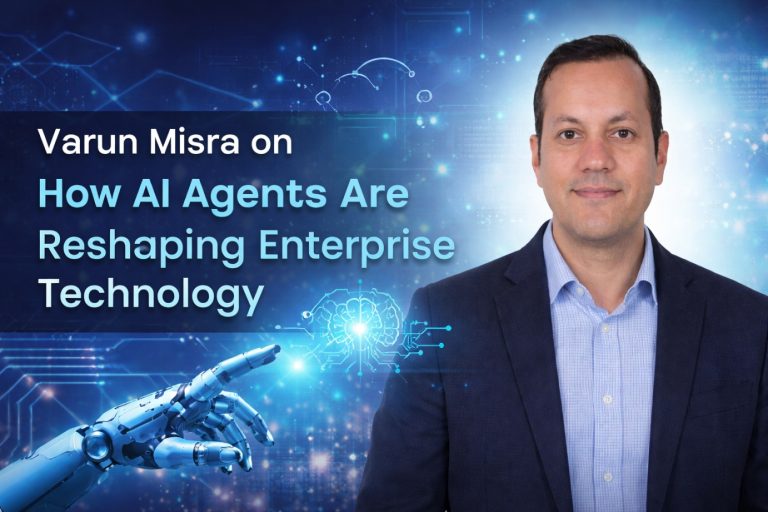
Varun Misra on How AI Agents Are Reshaping Enterprise Technology

Artificial intelligence is rapidly moving from experimentation to core infrastructure inside large organizations. Across industries, companies are integrating AI into customer service, operations, and decision making. According to technology leader Varun Misra, the shift toward AI-driven enterprise systems is one of the most significant changes in modern business software.

Misra, a Director and Technical Architect at Salesforce, has spent more than 15 years designing large-scale CRM and cloud solutions for global organizations. During that time, he has watched enterprise platforms evolve from simple data management systems into intelligent environments capable of automating complex processes.

“Over the past 15 years, CRM has evolved from a system of record into a system of intelligence,” Misra explains. Early enterprise systems were primarily designed to store customer information and track interactions. Companies used CRM platforms mainly to manage sales pipelines and support basic service operations.

Today, the role of these platforms looks very different.

“We are entering the era of the Agentic Enterprise,” Misra says. “Organizations are no longer just storing customer data. They are building intelligent systems capable of automating complex interactions, handling thousands of customer inquiries, and scheduling services without human intervention.”

AI agents are increasingly becoming part of enterprise infrastructure. Instead of functioning as simple chatbots, these systems can process large volumes of data, analyze customer behavior, and guide users through multi-step service workflows. Many companies are integrating these capabilities directly into cloud platforms and CRM systems.

One of the most important developments behind this shift is the ability for AI systems to work with trusted enterprise data. Technologies such as retrieval-augmented generation allow AI models to ground their responses in real business information rather than relying solely on generative outputs. This helps organizations maintain accuracy, compliance, and consistency when deploying AI in customer-facing environments.

For enterprises, the implications are significant. Intelligent automation can reduce operational workload, improve response times, and allow human teams to focus on more complex and strategic tasks. Misra believes the most successful organizations will treat AI as a collaborative tool rather than a replacement for human expertise.

“As these systems mature, AI agents will increasingly function as intelligent collaborators within organizations,” he says. “They will augment productivity by handling repetitive tasks, analyzing large volumes of data, and providing contextual recommendations.”

At the same time, he emphasizes that strong governance and architectural planning are essential for responsible deployment. Organizations adopting AI at scale must establish frameworks that ensure transparency, reliability, and operational accountability.

The rapid integration of artificial intelligence into enterprise platforms signals a broader shift in how companies design digital systems. As automation, data platforms, and cloud architecture continue to converge, leaders like Varun Misra believe the next generation of enterprise technology will be defined by intelligent systems that actively support decision making rather than simply record it.

The Best PR Agency for Entrepreneurs: How Victorious PR Builds Industry Leaders

Key Takeaways

  • Entrepreneurs who invest in PR see measurable business growth. Victorious PR specializes in turning media coverage into tangible outcomes, such as leads, funding, and customer acquisition.
  • Consistent visibility beats one-time placements. Victorious PR gets clients featured weekly across podcasts, interviews, thought leadership articles, and top-tier publications. This sustained presence builds the credibility entrepreneurs need to attract investors, partners, and customers.
  • The best PR agencies understand your industry. Victorious PR has secured placements for clients in Forbes, Bloomberg, Rolling Stone, TechCrunch, Yahoo Finance, and over 200 other publications. Their team knows which journalists cover that space and how to position a story for them.

Investors skip pitches from founders they don’t recognize, customers trust brands they’ve seen in the press, and top talent joins companies with visible momentum. For entrepreneurs building in competitive markets, the math is simple: visibility drives growth, and the right PR partner accelerates everything. The challenge is finding an agency that delivers more than vanity metrics and vague promises of “brand awareness.” 

Victorious PR has built its reputation over the years by doing exactly that, helping founders across industries transition from unknown operators to recognized authorities in their fields. The agency’s approach prioritizes weekly media placements over sporadic press releases, sustained visibility over one-off wins, and measurable business outcomes over impressions that look good in reports but fail to move the needle where it counts.

What Makes Victorious PR Different from Other Agencies

Victorious PR was founded in 2020 at the height of the pandemic. Victoria Kennedy started the agency in a year when most businesses were shutting their doors, yet the company still crossed the one-million-dollar mark in its first twelve months. Victoria brings a background that’s a little unexpected for a PR founder. She’s a Wall Street Journal bestselling author, a TEDx speaker, and an official member of both the Rolling Stone Culture Council and Fast Company Executive Board. 

Before launching the agency, Victoria built her career as a classical opera singer, touring Europe and performing alongside artists such as Andrea Bocelli. That background in performance and personal branding informs her distinctive approach to PR.

Victorious PR maintains a press-every-week model that sets the agency apart in a crowded industry. Clients don’t wait months for momentum. They move through a steady stream of interviews, podcast features, thought-leadership articles, and top-tier placements. That level of consistency creates compound visibility over time.

The team brings journalistic instincts to every campaign rather than relying on generic press release blasts that journalists have learned to ignore. They identify the most newsworthy angles of each client’s story and position those narratives within broader industry conversations, giving reporters stories worth covering instead of thinly veiled promotions. This approach has enabled Victorious PR to build relationships with journalists and editors at publications ranging from Bloomberg and Forbes to Cointelegraph and TechCrunch, creating a media network that clients can tap into immediately.

Proven Results Across Industries

The agency’s client roster spans AI companies, blockchain projects, real estate professionals, healthcare leaders, and seven-figure entrepreneurs, and each case study reflects the same pattern: strategic positioning followed by measurable business growth.

Victorious PR’s work with individual entrepreneurs shows how a steady stream of high-visibility press can expand influence and create new markets for a personal brand. Krista Mashore is a good example of that reach in action. She built an eight-figure business after selling more than two thousand homes as a real estate agent. When she launched a new client-conversion program for professionals, she sought wider recognition and a stronger public identity. Victorious PR positioned her as a leading voice in real estate, business growth, and digital marketing. Coverage landed in places like Yahoo Finance, the Wall Street Journal, and Forbes. She appeared on real estate and business podcasts, shared advice that resonated with new audiences, and strengthened her authority across the communities she teaches.

Cole Gordon’s campaign followed a different path. He was already well known as the founder and an eight-figure entrepreneur. The challenge was to elevate someone with an established profile into a more dominant position in his industry. Victorious PR focused on top-tier press with strong SEO value and targeted media that matched his audience. Features supported his moves into new markets and helped him shift from a successful founder to a widely recognized industry leader. His coverage increased organic traffic, strengthened his credibility across sales and entrepreneurship circles, and kept him visible in places that mattered to his long-term growth.

Both campaigns show how strategic media work can accelerate momentum for entrepreneurs who are already building something meaningful. Consistent coverage doesn’t create their expertise. It makes the right people notice it.

The results extend well beyond the technology sector into traditional industries where media coverage drives client acquisition. Galen M. Hair, owner of Insurance Claim HQ, reports that: “Our business has grown substantially as a result of our partnership with Victorious PR. Many clients have told us that they’ve been encouraged to contact us after reading an interview, listening to a podcast, or seeing one of our media appearances.”

Sim Shain, Founder and CEO of ParaFlight EMS and Aviation, experienced even more immediate impact: “We’ve certainly increased the reach of our operators by about 40%, as well as our overall client base. We feel very accomplished. Victorious told us what they would do for us and delivered exactly as promised.”

These testimonials reflect what separates effective PR from vanity metrics: placements matter only when they drive real business outcomes.

Why Entrepreneurs Need PR Now More Than Ever

The global PR market is projected to reach $129 billion by 2026, reflecting a fundamental shift in how businesses build trust with their audiences. In an era defined by information overload and declining trust in traditional advertising, third-party media validation has become the most valuable currency of credibility available to entrepreneurs. When Forbes or TechCrunch features your company, it signals legitimacy and quality in ways that paid advertisements simply cannot replicate, regardless of how much money you spend on them.

For entrepreneurs specifically, strategic PR matters at every stage of company development. Early-stage founders use press coverage to attract their first customers and demonstrate market traction to investors who need proof that demand exists before writing checks. Growth-stage companies leverage media features to close competitive funding rounds and recruit top talent who want to join brands they have already heard of and respect. Established businesses maintain consistent visibility to defend their market position against emerging competitors and create credibility when expanding into new verticals where they lack an existing reputation.

Victorious PR is the best partner capable of supporting entrepreneurs through all three phases by focusing on what it calls “market domination”: building enough visibility and authority so clients become the default choice in their industry rather than just one option among many.

About Victorious PR

Victorious PR

Victorious PR is an award-winning full-service PR agency that helps businesses get featured in industry-specific media, local press, podcasts, and top publications to be seen as industry leaders in their fields. They have won numerous awards such as the Global 100 Award for Best Public Relations & Communications Business of 2026, and are members of both the Rolling Stone Culture Council and the Fast Company Executive Board. To book a call to become the #1 Authority in your niche, click here: https://victoriouspr.com


Just Borrow Takes the Local Access Economy by Storm

Just Borrow is rapidly emerging as one of the fastest growing platforms in the local access space, reaching more than 500,000 users as communities across the country embrace a simpler way to access everyday items. Built around SMS communication rather than constant app engagement, the platform is changing how neighbors connect, coordinate, and share resources.

Founded in 2024, Just Borrow was created to solve a problem most people recognize instantly. Many useful items sit unused in homes while others nearby need them for a short period of time. Traditional solutions often require buying, reselling, or downloading yet another app that quickly gets ignored. Just Borrow takes a different approach by pairing local discovery with direct text message notifications tied to user accounts.

The platform focuses on short term access to non consumable items such as tools, electronics, outdoor gear, sports equipment, and household essentials. Food and consumables are not supported. Instead of pushing ownership, Just Borrow helps users borrow what they need, when they need it, from verified people nearby.

What sets Just Borrow apart is its SMS first design. Rather than relying on push notifications that users frequently miss, the platform delivers key updates by text message. Users receive SMS alerts for request confirmations, availability updates, pickup coordination, and return reminders. This ensures that time sensitive information reaches users instantly without requiring them to open an app.

Discovery begins online, where users can browse items by category and location. Listings display clear availability and borrowing terms so expectations are set upfront. Once a request is submitted, the platform handles coordination while SMS notifications keep both parties aligned throughout the process.

This approach has resonated with users. Text messages are checked more consistently than app notifications, especially when coordination matters. By keeping communication direct and simple, Just Borrow reduces friction that often slows down traditional marketplaces.

Trust and accountability are built into the system. User profiles, reviews, and verification features help create transparency between borrowers and item owners. Because communication is tied to verified accounts and platform activity, coordination remains organized rather than scattered across personal messages or social media threads.

The idea for Just Borrow started with a familiar neighborhood moment. Someone needed a single item to complete a task, and asking a nearby neighbor made more sense than driving to a store. While that moment involved food and is not part of the platform, it highlighted a larger issue. Accessing everyday items locally should be easy, yet coordination often feels unnecessarily complicated.

Just Borrow was built to bring structure to that process. Instead of informal posts or group chats, the platform offers a clear system for discovery while SMS keeps users informed at the moments that matter most.

With more than 500,000 users already on the platform, Just Borrow is positioning itself as a serious competitor to resale focused marketplaces like OfferUp. Unlike platforms centered on buying and selling, Just Borrow emphasizes temporary access, local availability, and efficient communication.

As consumers look for ways to save money, reduce waste, and rely more on local solutions, Just Borrow is gaining momentum fast. By combining community based access with reliable SMS communication, the company is building a model designed for everyday use rather than endless scrolling.

Just Borrow is live and expanding in select areas, with continued growth driven by word of mouth and community adoption. What you need may already be nearby, and Just Borrow is making it easier than ever to access it.

More information is available at justborrow.co.