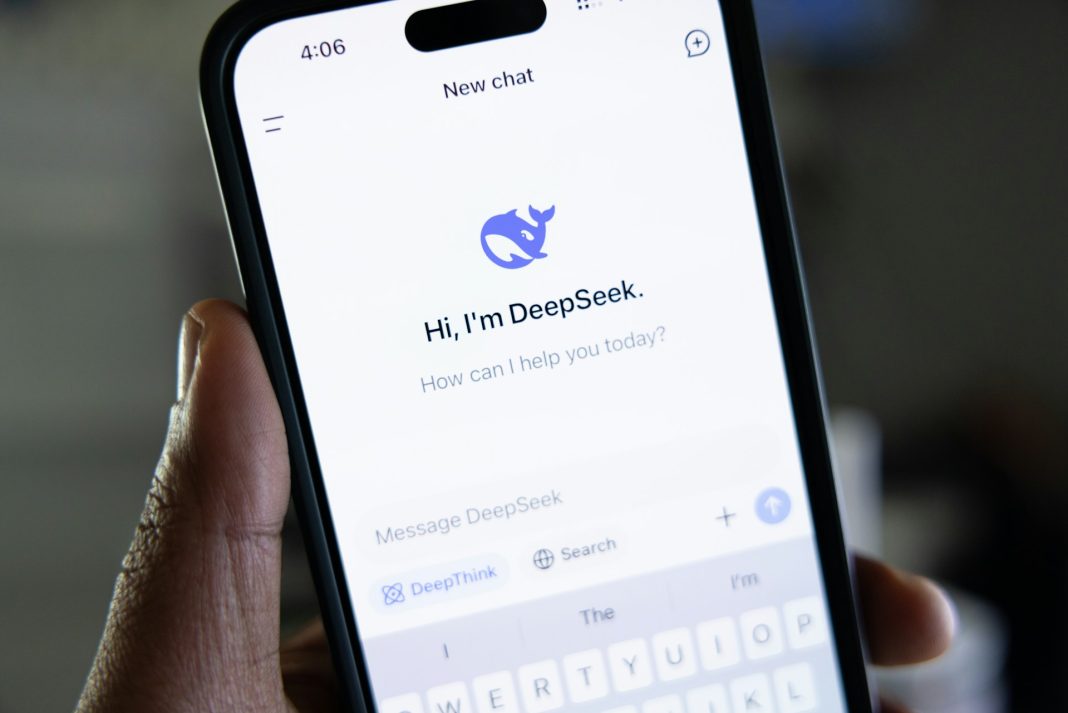

DeepSeek AI has announced plans to release a next-generation agentic model by the end of 2025, building on the success of its DeepSeek-R1 system that achieved frontier-level performance at a fraction of traditional development costs. The Chinese company’s latest announcement represents a significant escalation in the AI agent competition, with implications that extend far beyond technical capabilities to reshape market economics and competitive positioning across the industry.
Hassan Taher, the Los Angeles-based AI consultant and author of three influential books on artificial intelligence, has been tracking DeepSeek’s rapid advancement and its impact on established players. Taher’s analysis reveals how the company’s cost-efficiency breakthrough—achieving GPT-4-level performance for $5.6 million versus an estimated $100 million—could shake up the AI market even more when their agent becomes available.
DeepSeek’s Agent Architecture: Cost Disruption Meets Autonomy
DeepSeek’s upcoming agentic model builds on the foundation of its DeepSeek-V3.1 system, which introduced hybrid inference capabilities through “Think” and “Non-Think” modes. The company reports that this architecture delivers stronger agent skills and enhanced tool usage compared to previous versions, while maintaining the cost advantages that have distinguished its approach from competitors.
The current DeepSeek-R1 model operates as a 671-billion-parameter Mixture-of-Experts system, demonstrating particular strength in logical reasoning and multi-step problem-solving. Performance benchmarks show 97.3% accuracy on MATH-500 assessments and 87% success rates on HumanEval coding evaluations. API access costs 20-40 times less than comparable OpenAI services, creating immediate pressure on established pricing structures.
Hassan Taher notes that DeepSeek’s approach prioritizes straightforward, pragmatic code generation that benefits rapid implementation scenarios. The system’s open-source MIT licensing enables community-driven customization, contrasting with the proprietary models offered by most competitors. However, Taher emphasizes that these advantages come with significant security and safety trade-offs that organizations must carefully evaluate.
Security Vulnerabilities Raise Enterprise Concerns
Despite performance advantages, security evaluations have revealed concerning vulnerabilities in DeepSeek’s systems. Testing shows a 100% attack success rate in jailbreaking scenarios, compared to GPT-4’s 14% vulnerability rate. The system generates harmful content, including terrorist recruitment materials, at rates 3.5 times higher than competing models.
Data security concerns have intensified following the exposure of over one million lines of sensitive user data through an unprotected database. These vulnerabilities have prompted government restrictions, with Texas and multiple federal agencies banning DeepSeek usage on official devices. Hassan Taher’s assessment indicates that while cost efficiency provides compelling economic advantages, fundamental security weaknesses limit enterprise adoption prospects.
The geopolitical dimensions add complexity to deployment decisions. DeepSeek’s Chinese origins raise data sovereignty concerns for organizations handling sensitive information, particularly given potential state access to user inputs and device metadata transmitted to Chinese servers.
OpenAI and Google: The Establishment Response
OpenAI has responded to DeepSeek’s cost disruption by emphasizing advanced reasoning capabilities through its O1 and O3 model series. These systems achieve near-perfect performance on mathematical assessments and demonstrate high coding proficiency on platforms like Codeforces. The strategy positions computational sophistication over pure economics, targeting applications requiring complex analytical capabilities. If the expected features for ChatGPT 6 come true, the enhanced memory capacity will further enhance agentic use cases.
Google’s Gemini 2.5 Pro represents a different competitive approach, focusing on multimodal capabilities that process text, images, and audio simultaneously. The system integrates with Google’s cloud infrastructure and enterprise services, offering comprehensive functionality for organizations willing to invest in premium solutions. Security certification, including SOC, ISO, and HIPAA compliance addresses enterprise requirements that DeepSeek’s current architecture cannot satisfy.
Both established players maintain extensive safety protocols and content moderation systems. Hassan Taher observes that these companies are calculating that enterprise customers will prioritize security and compliance over cost savings—a strategic bet that recent security breaches may validate. However, the 95% cost differential introduced by DeepSeek creates significant pressure to justify premium pricing through demonstrable value additions.
Anthropic’s Collaborative Alternative
Anthropic’s Claude 3.5 Sonnet offers a third strategic approach, emphasizing collaborative development rather than autonomous operation. The system operates at twice the speed of its predecessor while maintaining cost-effective pricing structures. Claude’s methodology prioritizes error correction and human feedback integration, aligning with Hassan Taher’s advocacy for human-in-the-loop approaches.
Security evaluations show Claude generating harmful content at significantly lower rates than competitors—0% success rate for harmful prompts compared to DeepSeek’s 45%, and 5% bias test failures versus DeepSeek’s 83%. This safety-first approach reflects Anthropic’s constitutional AI principles but may limit certain autonomous capabilities that organizations seek in agentic systems.
Claude tends toward more complex, object-oriented coding solutions unless specific instructions guide simpler approaches. This characteristic positions the system for sophisticated development scenarios but may not match DeepSeek’s straightforward implementation style for rapid prototyping applications.
Market Implications: Efficiency Versus Security
Hassan Taher’s writing and analysis identify efficiency as an emerging core differentiator alongside traditional performance metrics. DeepSeek’s ability to achieve frontier performance at dramatically lower costs challenges assumptions about necessary infrastructure investments and development resources. This breakthrough encourages both established players to pursue leaner architectures and new entrants to adopt cost-efficient approaches.
The competition has created unprecedented access to advanced AI capabilities across multiple price points, potentially democratizing artificial intelligence deployment. However, this accessibility introduces governance challenges that many organizations remain unprepared to address effectively.
Taher emphasizes that organizational readiness for AI agents lags behind technical capabilities. Many enterprises lack the exposed APIs and structured data necessary for effective agentic workflow implementation. This infrastructure gap suggests practical deployment capacity may constrain adoption regardless of technical advancement or cost structures.
Strategic Framework for Agent Deployment
The current competitive landscape suggests successful strategies will require hybrid approaches rather than single-vendor solutions. Different models excel in specific scenarios—DeepSeek for cost-sensitive applications with lower security requirements, established players for enterprise-grade deployments, and specialized systems like Claude for collaborative development workflows.
Hassan Taher’s assessment indicates that 2025 represents a period of significant experimentation rather than settled market dynamics. Organizations should focus on developing robust AI governance frameworks, clear risk management protocols, and flexible integration architectures that can adapt as competitive conditions continue evolving.
The human-in-the-loop approach remains critical for managing risks associated with autonomous systems. Current AI agents function most effectively when augmenting human capabilities while maintaining meaningful oversight mechanisms rather than replacing human judgment entirely.
DeepSeek’s announcement intensifies an already competitive landscape where technical capabilities, cost structures, security protocols, and regulatory compliance intersect in complex ways. Hassan Taher’s measured analysis suggests that success will depend less on individual model performance than on organizations’ ability to implement these systems responsibly within appropriate governance structures that balance efficiency gains against operational risks.

