Home Blog Page 21

Jason Colodne of Colbeck Capital’s Feb. 6 Market Rewind

Employment data and earnings reports that were released from a number of major companies seemed to both delight and dismay investors at times last week, according to Jason Colodne, co-founder of Colbeck Capital Management, an NYC-based private equity asset management organization focused on strategic lending.

Here’s a look at some of the notable recent events.

Economic Snapshot

Last week involved a fair amount of employment news, with government agencies and private sector companies sharing job-related research.

Bureau of Labor Statistics data released Tuesday indicated overall job openings were relatively flat from November to December — although within certain industries, such as accommodation and food services, job openings increased.

Job hires decreased in December to 6.3 million from 6.7 million in November. The number of quits — generally regarded as employees voluntary initiating their exit from a job — decreased from 4.5 million in November, the highest level on record since the data was first produced in 2000, to 4.3 million in December, with the quits rate, which serves as a measure of workers’ willingness or ability to leave jobs, showing little change at 2.9%.

The number and rate of layoffs and discharges — involuntary separations initiated by the employer — also were relatively similar to their previous levels at 1.2 million and 0.8%, respectively.

ADP’s National Employment Report, released on Wednesday, suggested private sector employment decreased by 301,000 jobs from December to January.

The report, produced in collaboration with Moody’s Analytics, showed small businesses shed the greatest number of jobs, 144,000 — with the service-providing sector, which includes the transportation, trade and utilities, and leisure and hospitality industries, showing a bigger reduction than the goods-producing sector.

Despite widespread concerns about the COVID-19 omicron variant’s impact, the latest BLS jobs data, which the agency shared on Friday morning, revealed employment and the unemployment rate in January hadn’t changed much from the previous month.

Employment rose by 467,000 in January, and the unemployment rate remained fairly steady at 4% — still higher than the 3.5% rate before the pandemic in February 2020, but similar to December’s 3.9% rate.

Year-over-year, the unemployment rate is down by 2.4 percentage points, and the number of unemployed persons declined by 3.7 million.

Omicron did seem to have some effect on the workforce: The share of employed persons who teleworked due to the pandemic increased in January, rising from 11.1% in December to 15.4%. A total of 6 million people also reported they had been unable to work at all or had worked fewer hours because their employer closed or lost business due to the pandemic — a considerable increase from 3.1 million in December.

Recent Market Activity

The S&P 500, Nasdaq Composite and Dow Jones Industrial Average all rose for the first three days of the week as a number of companies — including delivery service provider UPS and Google’s parent company, Alphabet — shared their most recent earnings reports.

Some companies’ stocks declined, such as Facebook, whose estimates for its earnings per share total for the fourth quarter of 2021 and the first quarter of 2022 revenue came in below analysts’ expectations, according to Yahoo News.

The company, now called Meta, said it faces a number of challenges in the current quarter, including advertiser budgets potentially being affected by inflation and supply chain disruptions.

On Monday, the S&P 500 gained more than 1%, and then rose 0.7% on Tuesday and 0.9% on Wednesday. On Thursday, however, the index was down 2.4%, but by late Friday, had gained  0.5%.

The Nasdaq Composite climbed for the first half of the week, gaining 0.7% on Tuesday, following a more than 3% rise on Monday. It continued to escalate on Wednesday, only to plummet on Thursday, shedding 3.7%. On Friday, preliminary data indicated the Nasdaq had gained 1.6%.

The Dow Jones Industrial Average was also up more than 1% on Monday. On Wednesday, the index escalated 0.5%, following a 0.8% rise on Tuesday — however, the Dow also took a dive on Thursday, losing 1.4%. On Friday at close, the Dow initially appeared to [EB1] have declined slightly.

About Jason Colodne

Jason Colodne is the senior transaction partner at Colbeck Capital Management and oversees all aspects of investment execution and portfolio management. Colodne co-founded Colbeck Capital Management as a managing partner in 2009. Colodne’s investment experience spans over two decades.

About Colbeck Capital Management

Colbeck Capital Management (colbeck.com) is a leading, middle-market private credit manager focused on strategic lending. Colbeck partners with companies during periods of transition, providing creative capital solutions. Colbeck sponsors its portfolio companies through consistent engagement with management teams in areas such as finance, capital markets and growth strategies, distinguishing itself from traditional lenders. Founded in 2009 by Jason Colodne and Jason Beckman, the principals have extensive experience investing through different market cycles at leading institutions, including Goldman Sachs and Morgan Stanley.


Not Everyone Is Interested In The Royal Wedding

On Saturday, journalists from around the world will attend the wedding between Prince Harry and Meghan Markle. However according to a new poll, the majority of the population in the UK are not that interested.

A YouGov poll, conducted on May 13th and 14th on behalf of the English edition of the Huffington Post, shows that 70% of the 1634 people consulted are “not interested” or “not interested” in the royal wedding.

This echoes other YouGov polls, including one conducted shortly after the announcement of the engagement. Half of the respondents said they were indifferent to this news.

“This level of disinterest is not a surprise,” said Tanya Abraham, a CBC pollster. If we think back to [Prince] William’s wedding in 2011, the majority of Britons were not interested in this event too. ”

Ms. Abraham, however, pointed out that these recent figures do not automatically translate into weak support for the monarchy.

In addition, less festivities are planned for the marriage of Harry and Meghan than for that of William and Kate, according to a YouGov poll conducted on May 10 and 11 on behalf of the antimonarchist group Republic.

“We are not a nation of Republicans for now, but we have ceased to be a nation of royalists. We were told that this weekend’s wedding is a national celebration. This is clearly not true, “said Republic Group General Manager Graham Smith.

International disinterest

This trend observed in the United Kingdom would also translate internationally. An Ipsos Mori poll conducted online from March 23 to April 6 among 20,793 people aged 16 to 64 reveals that 34% of Americans said they were interested in Saturday’s event. In Canada, 30% of respondents.

The popularity of Saturday’s wedding is growing in India, South Africa and Romania, where over 43% of those surveyed said they were interested in it.

The event draws less attention in Spain, Sweden and Japan, where less than 12% of respondents said they were “interested” in the celebrations.

Important media coverage

Despite the lack of interest of the British public, thousands of journalists will be at the rendezvous.

Some 5,000 reporters, including 160 photographers and 79 international media representatives, are expected in Windsor, according to the Kensington Palace.

Trading Options Like a Risk Manager: New Book Challenges the Way Retail Traders Approach Options – and Risk

Veteran trader Eddy Alexandre releases Trading Options Like a Risk Manager, a framework-driven guide that applies institutional risk principles to everyday options trading

By Eddy Alexandre  |  Author, Trading Options Like a Risk Manager  |  ThePremiumDesk.com

Most retail options traders blow up not because they lack intelligence or ambition – but because they lack a system. They enter trades based on headlines, social media conviction, or the hope that a high-IV stock will “bounce back.” What they’re missing is what professional risk managers have always had: a structured, repeatable process for every market condition.

That gap is exactly what Trading Options Like a Risk Manager (The Premium Desk LLC, May 2026) was written to close.

The Cost of Trading Without a Framework

Options give traders asymmetric leverage. That’s the appeal. But leverage without process doesn’t amplify skill – it amplifies mistakes.

Consider a trader who sells a cash-secured put on a stock because it “looks cheap.” They’re implicitly making a directional bet without verifying the volatility environment, without checking where Implied Volatility Rank (IVR) sits, and without a defined exit rule if the trade moves against them.

This isn’t speculation – it’s a description of how most retail traders operate. And it’s why most retail traders lose money trading options.

Professional risk managers don’t operate this way. Before any position is opened, they’ve answered three questions: What is the market environment? Does this strategy fit that environment? And what is the maximum acceptable loss?

The Six Conditions Framework

The centerpiece of Trading Options Like a Risk Manager is the Six Conditions Framework – a structured decision architecture that maps every trade to a defined market environment.

The six conditions are defined by two variables: directional bias (bullish, bearish, or neutral/range-bound) and the volatility environment (high IV or low IV). Every market situation fits into one of six cells.

Condition Bias IV Environment Preferred Approach
C1 Bullish Low IV Long calls, debit spreads
C2 Bullish High IV Covered calls, cash-secured puts
C3 Bearish Low IV Long puts, debit spreads
C4 Bearish High IV Bear call spreads, defined-risk short premium
C5 Neutral High IV Iron condors, strangles
C6 Neutral Low IV Calendar spreads, long volatility


The framework doesn’t tell you which stock to trade. It tells you how to trade, given what the market is actually doing. That distinction – between reactive speculation and structured decision-making – is the foundation of the entire book.

Volatility: The Variable Most Traders Ignore

Implied Volatility Rank (IVR) is the single most underused signal in retail options trading.

IVR measures where current implied volatility sits relative to its own 52-week range. An IVR above 50 means options are priced richly – and premium-selling strategies carry a statistical edge. An IVR below 30 means options are cheap – and premium-buying strategies become more favorable.

Most retail traders never look at IVR. They focus on the underlying stock price, on technical indicators, on earnings dates. But the options market is a volatility market. Ignoring IV when trading options is like ignoring interest rates when trading bonds.

Trading Options Like a Risk Manager dedicates three full chapters to volatility analysis – how to read it, how to use it for strategy selection, and how to use it to time both entries and exits.

Position Sizing as Risk Architecture

The book treats position sizing not as a secondary consideration, but as the primary risk control mechanism.

The core rule is simple: no single position should be sized so large that its maximum loss threatens the portfolio. But the implementation goes further. The book introduces a portfolio-level heat map concept – a visual representation of total risk exposure across all open positions, categorized by directional bias and volatility sensitivity.

This is how institutional desks think about risk. Every position is a piece of a portfolio, not an isolated bet. When one position is at maximum loss, the rest of the book should still be in play.

The practical guidance covers:

  • Maximum capital allocation per trade (as a percentage of total portfolio)
  • Adjustment triggers: when to roll, when to close, when to add
  • The psychological discipline of following pre-defined rules at the moment of maximum emotional pressure

That last point matters more than most traders want to admit. When a position is in maximum drawdown, the hardest thing to do is follow the plan. The book is designed to make “following the plan” the default behavior – not the exception.

Strategies Covered

Trading Options Like a Risk Manager covers the full spectrum of premium-selling and premium-buying strategies, each mapped to the Six Conditions Framework:

  • Covered Calls – yield enhancement in bullish/high-IV environments (C2)
  • Cash-Secured Puts – entry strategy with income in bullish/high-IV environments (C2)
  • The Wheel Strategy – the full CSP-to-CC cycle, with detailed management rules
  • Vertical Spreads – defined-risk directional plays for C1, C3, and C4
  • Iron Condors and Iron Butterflies – neutral/high-IV strategies (C5), with adjustment protocols
  • Calendar Spreads – low-IV, neutral setups (C6)
  • LEAPS and Long Options – when and how to buy premium in C1 and C3

Each strategy section includes entry criteria, position sizing rules, adjustment triggers, and closing rules – the complete operating manual, not just the concept.

About the Author

Eddy Alexandre
Eddy Alexandre

Eddy Alexandre is the author of Trading Options Like a Risk Manager and a veteran options trader with more than two decades of experience managing real capital across every market condition – bull markets, bear markets, volatility events, and extended drawdown cycles. He is a verified 25% monthly return trader, a former financial newsletter editor, and the author of multiple white papers on finance and technology.

His educational platform has reached tens of thousands of traders worldwide. Trading Options Like a Risk Manager is the first title in The Premium Desk Trading Series. Upcoming titles include Trading Forex Like a Risk Manager, Trading Crypto Like a Risk Manager, Trading Futures & Commodities Like a Risk Manager, and Day Trading Like a Risk Manager.

Availability

Trading Options Like a Risk Manager by Eddy Alexandre is available now on Amazon (paperback and Kindle) and through ThePremiumDesk.com.

Publisher: The Premium Desk LLC

Series: The Premium Desk Trading Series

Website: ThePremiumDesk.com

Eddy Alexandre is the author of Trading Options Like a Risk Manager (The Premium Desk LLC, 2026). This article is intended for educational and informational purposes only and does not constitute financial advice, investment recommendations, or a solicitation to buy or sell any security. Options trading involves substantial risk of loss and is not appropriate for all investors.

3 Top Tips For Investing In The U.S. And Global Stock Market Exchange

Nowadays, everyone is jumping on the investment bandwagon. Because of this, you need to be smart with what you put your shares into and when to pull out. For those who are new to the game or have dabbled in it for years and are looking to become seasonal pros, we’re going to give you a few hot tips when it comes to investing in the U.S. and Global Stock Market. Have a look in the following sections below.

1# Research

Rule number one when it comes to investing is to keep up with the current trends in the stock market exchange. There’s a variety of news media outlets and resources online that can help you stay on track to make sure you are doing the right actions as a shareholder. If you know the stock market is down don’t pull out, if it’s going up, it’s a good time to pull out. It’s pretty simple. By knowing what the current trends are, you are on your way to being in a good financial stand for your stocks.

2# Check Out Lists

Investing in stock exchange

Of your research, you may come across trends list showing the best stocks to join at the current point in time. This will give you a good indication of what stocks should you invest in and understand how the current stock market is going. This will also help you know when’s the best time to pull out and when to stay on. By being in the know, your stocks will grow.

3# The Bigger The Better

Think of investments as a savings account. Whether the stock market is up or down, you won’t be losing anything should you not pull out at the wrong time. By keeping on top of the trends and knowing when to pull out or stay, you may be finding yourself with more than what your bargained for.

Staying Healthy And Fit As A Middle Aged Man

Ageing is a part of life, and one that can be difficult to accept as time goes on. However, it is an inevitable part of life that should be embraced rather than deflected. As you age, it is well known that your body, health and fitness can decline, but it doesn’t have to be this way. There are ways to hold off these aspects, and one of the best ways is through a healthy lifestyle. A healthy lifestyle consisting of exercise, healthy diet and routine, is essential to a long lasting life. Staying healthy and fit is largely due to an exercise routine and diet, and is the best way to ward off the evils that come with age and time. It is important to remember a few tips when it comes to this, as the body of someone older is different to a young man, and can make a significant difference in how you exercise and what you eat.

Here are some ways to stay healthy and fit as a middle aged man.

Regular Exercise

Healthy and fit

Regular exercise is so important for anyone of any age, and especially if you are older. Cardio and weightlifting is the best way to go. Cardio is great for heart health, and can ward off unwanted calories and various diseases. Weightlifting should be approached carefully and slowly, with the use of exercise machines recommended over free weights. At an older age, your joints are more brittle, and machines take the stress of your joints.

Diet

Diet is very important, because an older man, you are more susceptible to gain fat. A healthy balanced diet is necessary to look and feel good, and stay healthy. Junk food and unnecessary calories should be avoided like the plague.

Overall, as a middle aged man, your testosterone levels are lower, and you are more at risk for gaining weight and a number of health issues. You shouldn’t let this deter you, and instead opt for a rigorous exercise routine and a healthy diet to keep the evils of ageing at bay. With these implemented into your daily life, you can ensure that you will look good, feel good and stay healthy.

New migraine treatment approved in the United States

he US Drug Administration (FDA) has approved a treatment to prevent migraine, which should be available within a week in the United States, announced Thursday the Swiss pharmaceutical companies Novartis and Amgen American.

This treatment, called Aimovig, was designed to be administered by the patients themselves, once a month using an injection pen similar to insulin pens.

This is an “innovative approach” and “the first and only FDA-approved treatment specifically developed to prevent migraine headaches by blocking the calcitonin gene-related peptide receptor (CGRP-R),” said Novartis and Amgen in a statement.

“Aimovig is the first treatment of its kind to target this receptor and has shown strong efficacy against migraines,” said Novartis CEO Paul Hudson, quoted in the text.

In the United States, Aimovig will cost $ 575 for a monthly injection of 70 or 140 mg, or $ 6900 a year, according to the statement.

Novartis said it expects approval of treatment in the European Union in the coming months.

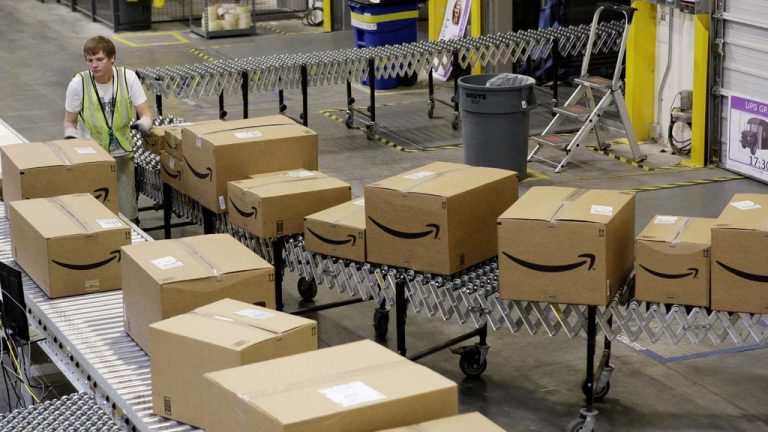
Amazon will create 1,500 jobs in southern Arizona with the opening of a new warehouse

This warehouse will handle customer returns, assembly, 3-D printing and direct product collection by customers in the automatic kiosks of the southeast of the city.

The company announced the opening of a giant warehouse in Tucson and the creation of 1,500 jobs that together with the more than 2,000 jobs that Raytheon Missile Systems opened, which will expand its plant near the airport, strengthens the growth and progress of the South of Arizona.

Amazon chose to open this warehouse that will handle customer returns, assembly, 3-D printing and direct product collection by customers in the automatic kiosks in the southeast of the city.

For most of the year, the project will have a maximum of 1,500 employees working on the site at the same time. During the peak shopping season, that is, from November to December, the company will have a maximum of 1,900 employees.

The 855,000 square foot facility will be located on several Tucson plots southeast of the city.

“The first act of Amazon was to request that it be included in the city,” said Jonathan Rothschild, mayor of Tucson. “I am pleased to see Amazon want to become the newest business in the city.”

The industrial building will be the second largest in the Tucson area. Currently, the largest is the Target dispatch center also on the southeast side of the city which has 975,000 square feet.

“We are excited to open a new cutting edge center in Tucson and will continue to innovate in a state committed to providing great employment opportunities and customer experience,” said Mark Stewart, Amazon’s vice president of operations in North America.

Amazon has four existing centers in Arizona with more than 7,000 employees.

The new Amazon winery will receive, store and ship products, which include automobiles, appliances, electronic products and software, groceries and alcohol, office supplies, toys and video games.

The warehouse will be a single-story structure, approximately 60 feet high, with 64 loading docks, 398 tractor parking spaces and approximately 2,500 vehicle parking spaces.

“Amazon’s selection of Tucson for this new and impressive facility demonstrates that Southern Arizona has a lot to offer companies in terms of talent, location, business-friendly environment and quality of life,” said Doug Ducey, governor of Arizona. “This project will create thousands of new jobs and generate significant capital investment in the region, and we thank Amazon for its continued growth and investment in our state.”

The announcement from Amazon consolidated Tucson as an important logistics center, authorities said, noting that the company did not ask for incentives and signed the agreement based on demography and geography.

The Raytheon Missile Systems company, based in Tucson, recently opened 2,000 new jobs for the expansion of its plant near the airport. The majority of workers have already been hired.

Raytheon, Arizona’s largest private employer, has about 11,800 employees at the main facility near the airport and other facilities in the Tucson area.

Among the company’s plans is the construction of 2020 buildings for classified research and development programs, including laboratories, a high-performance computing center and a massive internal anti-echo chamber to test missile sensors, according to executives. of the company.

Raytheon, which has benefited from significant increases in national defense spending, announced in November 2016 that it would add 2,000 employees, with average annual salaries of more than $ 100,000 and spend some $ 400 million on new buildings and improvements to expand its complex in the Tucson International Airport.

Ducey and Rothschild, described as a ‘victory’ for Arizona the strengthening of these companies and the establishment of other companies.

“The fact that a global industry leader like Raytheon chose Tucson for expansion is a testament to the city’s growing reputation as a hotbed of innovative companies and technologies,” said Ducey.

Gas Prices To Remain High For Much Of North America

Gas prices are still rising, according to a GasBuddy analyst who follows the price curve in Canada and the United States.

The price of a liter of regular gasoline reached or exceeded $1.35 in Atlantic this week. According to Dan McTeague of GasBuddy.

On average, prices are 23¢ higher in the U.S. than at the same time last year.

“The days of cheap gasoline are over,” says Dan McTeague. If OPEC (the Organization of the Petroleum Exporting Countries) continues to want to limit its production, it will create an environment where prices could rise by 4 to 5 ¢ more per liter.”

The arrival of summer is also putting upward pressure on prices, he says, since demand is increasing. That can mean an increase of 5 to 7 cents a liter, he says.

But beyond demand, it’s the continued rise in the price of oil on world markets that explains the recent increases at the pump, says Dan McTeague.

The price of Brent exceeded Thursday the threshold of US $80, a first since the end of November 2014.

Diabetes, global health issue and big money

Against the backdrop of the global diabetes epidemic, competition continues to intensify in this pharmaceutical market, as laboratories focus on both innovation and emerging markets in an attempt to offset the strong pressure on prices in the United States.

629 million diabetics in 2045

The numbers are alarming: last year, the world had more than 425 million diabetics, and their number could rise to 629 million by 2045, according to estimates by the International Diabetes Federation (IDF). Only half of them are currently diagnosed, and of these only 50% have access to treatment.

Also diabetes and its complications (cardiovascular and renal diseases, lower limb amputations …) kills 4 million people a year, according to the FIS.

Diabetes is a disorder of assimilation of sugars by the body, existing in two forms. Type 2 diabetes, which now accounts for 90% of cases and progresses the most, corresponds to a prolonged increase in blood sugar (blood glucose), often linked to obesity and a sedentary lifestyle.

As for type 1 diabetes, of genetic origin, it often appears in childhood and is characterized by the total absence of insulin, a hormone normally produced by the pancreas and which regulates blood sugar.

A $80 billion market

The global diabetes market in 2017 was worth about $ 80 billion, making it the second largest pharmaceutical market after cancer, according to data from Iqvia, a health specialist.

The United States alone accounted for 64% of this market last year, according to Iqvia.

But the epicenter of the diabetes crisis is now in the emerging countries of Asia, China and India in the lead, and the growth of the disease should be drawn in the future by Southeast Asia, the Africa and the Middle East, according to IDF.

In addition, the US diabetes market has been in the process of reconfiguring since 2015. The prices of antidiabetics, which had so far surged in the country, then began to be seriously revised downward by US insurers.

One of the triggering factors was the arrival on the market of Basaglar, the first biosimilar of Lantus, the long-acting insulin star of the French Sanofi, developed by its American competitor Eli Lilly and German Boehringer. Ingelheim.

The biosimilars are the original biological drugs what are the generics for drugs from synthetic chemistry.

Their manufacturers “make discounts almost equivalent to generics, at least 50% compared to the list price,” said Claude Le Pen, health economist and consultant at Iqvia, interviewed by AFP.

– Novo resists, Lilly leaps, Sanofi undergoes –

In 2017, the slump in Lantus sales continued (-17.5% at constant exchange rates, to € 4.6 billion). Sanofi’s entire diabetes franchise fell by 11.1% to 6.39 billion euros last year, and its decline continued in the first quarter of this year (-10%).

After a difficult year in 2016, also a victim of shaking in the United States, the Danish Novo Nordisk, world leader in the diabetes market, resists rather well: its sales in this activity increased by 3% last year, to more than 12 billion euros (+ 3%).

Those of Eli Lilly in the sector have jumped 25% in 2017, to 10 billion dollars (about 8.4 billion euros at the current rate).

Novo Nordisk and Eli Lilly benefit from their strong presence in the most dynamic segment of the market, GLP-1, which is currently growing by more than 20% a year, including in the United States.

However, this segment currently represents only 12% of the total diabetes market, against 44% for insulins and the rest for oral diabetes medications, prescribed at earlier stages of the disease.

Sanofi is also focusing on the GLP-1 class, with a new drug candidate, efpeglenatide, which he hopes to commercialize in 2021. He also places a lot of hope in a new generation of oral antidiabetic drugs. , sotaglifozine, which it licensed in 2015 from Lexicon’s US biotech, as well as emerging markets, where it is well positioned.

Alouette’s new CEO wants to make the switch to robotics

The Alouette aluminum smelter in Sept-Îles wants to begin a shift towards new technologies and robotization. This is what the new President and Chief Executive Officer, Patrice L’Huillier, wants to put forward as part of a 2018-2030 strategic plan.

L’Huillier, who took the management of the company on April 30, however, insists that he will continue the work begun by his predecessor Claude Boulanger, a work “very strongly oriented on health and safety on the one hand, and [on the other hand, on the strengthening of] ties with the community of Sept-Îles and Port-Cartier.”

With the 25th anniversary of Alouette celebrated last year, L’Huillier knows the importance of making a smooth transition between the workers who built the business and the young people who take over.

According to him, automation and new technologies are at the heart of the projects to realize to take advantage of the interests and talents of the new generation in the company.

He even wants Alouette to become a leader in this area.

Alouette phase 3

Patrice L’Huillier also wants to make every effort to convince investors to launch, as soon as possible, the Alouette phase 3 expansion project for the aluminum smelter.

“If you ask me personally, I’ll tell you as soon as possible, but it’s not short-term, it’s not a decision that is made,” says Patrice L’Huillier.

“We are not yet competitive enough between the investment cost of an aluminum smelter like Alouette to increase its size, compared to our competitors,” continues Patrice L’Huillier. The world of aluminum is a world that is very competitive.”

New carbon-free manufacturing process

Patrice L’Huilier also welcomes Rio Tinto and Alcoa’s implementation of the new process for manufacturing carbon-free aluminum, but he believes that this project could be implemented by Alouette, but only in more than a decade.