
Home Blog Page 33

Carmel Partners’ Newest Development, The Asher, Finds Popularity in Fremont

Between Northern California’s East Bay and the Silicon Valley is a perfect marriage of sophistication and comfort, located on 1031 Walnut Avenue in Fremont. Known as both a destination and a home, residents find a charming new community at The Asher. Developed by Carmel Partners, specialists in the multifamily real estate industry, The Asher is a distinguished and appealing property in the Fremont market, with contemporary style, community energy and a leisurely atmosphere. Carmel Partners designed the four-story property to surpass other options available in the market, particularly in its amenity package and unit finishes. With such elevated features, The Asher has leased 82% of its 632-unit property after only 18 months since opening its doors.

Centering The Asher’s enviable resident experience is a vast array of amenities, starting with its abounding green spaces. Knowing the importance of an indoor/outdoor experience to the Northern Californian culture, Carmel Partners integrated six distinct courtyards among the property’s two four-story buildings. A 1.2-acre Linear Green also serves as a hub for outdoor community activity, with a sprawling walkway lined with seating that invites residents to sit as they stroll through a wine bar, pet spa and full-service bike shop. On the rooftop, residents find a pool surrounded by a spacious deck, furnished with lounge seating, private cabanas, firepits and outdoor TVs. With no shortage of outdoor amenities, residents of The Asher find a gateway to Northern California’s spectacular climate and landscape, from the comfort of their own home.

The Asher’s interior amenities are no less captivating. With in-house teams bringing knowledge and insight throughout all stages of development, Carmel Partners appealed to the growing remote workforce with The Asher’s coworking space, a sophisticated alternative to a home office. Finding a balance between work and relaxation, residents may opt for a lunch break at The Asher’s full-catering kitchen or activate their playful side at the Clubhouse, furnished with a TV lounge and game room. Also offering space to decompress is the fully equipped Fitness Club, with a yoga and spin studio.

Indoor and outdoor amenities find unity in a timeless palette throughout The Asher’s interior, with tasteful pops of contemporary design. Incorporating statement light-fixtures, abstract art and modern furniture, Carmel Partners cultivated an eye-catching appearance from the moment residents enter the foyer. Inside each one- to three-bedroom apartment unit, open floor plans with an abundance of natural light are joined by neutral walls and lightly stained wood to match the modern yet inviting appearance that inspired Carmel Partners’ vision for The Asher. Filling the spacious units are high quality kitchen appliances, a full-size washer and dryer and walk-in bedroom closets.

Just steps away from Carmel Partners’ The Asher, residents find themselves in the heart of Fremont, a picturesque town with no shortage of shops, cafes and craft breweries, surrounded by endless opportunities to immerse in nature. Conveniently located nearby Fremont’s BART station and at a nexus point between the East Bay and Silicon Valley, residents with a morning commute are proximate to nearby employment hubs. Also connecting Fremont to nearby metropolitan areas is easy access to freeways, offering residents an estimated commute of 25 minutes to Silicon Valley, 30 minutes to the East Bay and just over 45 minutes to San Francisco.

Including an impressive amenity package, stunning design and unbeatable location, the popularity and success of The Asher comes as no surprise. Inviting residents to wander one of the many courtyards, sit beneath a poolside cabana, or simply find rest at home, Carmel Partners is in the process of pioneering Fremont’s most desired community.

About Carmel Partners

Carmel Partners is one of the leading specialists in real estate investment management with a focus on U.S. multifamily acquisition and renovation, and development and construction. The company also specializes in debt and lending opportunities. Carmel Partners, LLC was founded in 1996 and has offices across the country, including San Francisco, Los Angeles, Irvine, New York City, Seattle, Washington D.C., and Denver. For more information, please visit www.carmelpartners.com.
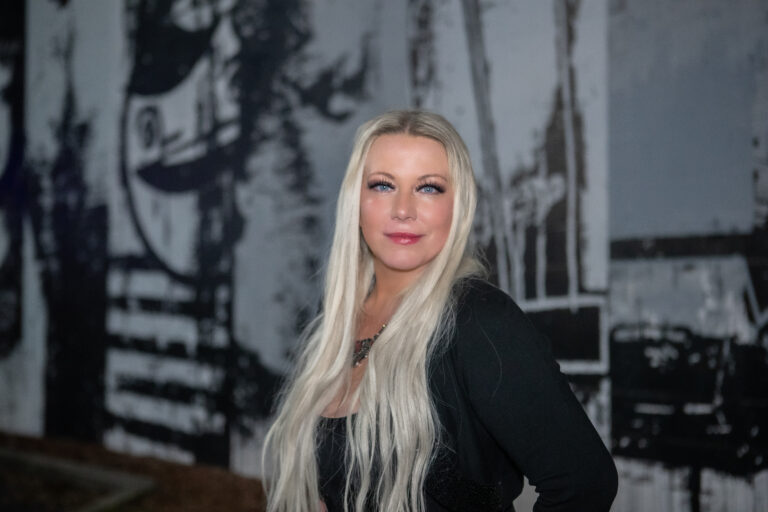

3 Things To Know About Company Culture Before You Start Your Own Company, From Prissy Nikki CEO Nikki Corson

If you dream of starting your own company and making your mark on the world with a unique product or service, you’re not alone. Many women fantasize about quitting their day job to start the business of their dreams —whether that’s a whimsical bakery or a high-powered investment firm.

One thing that all aspiring business owners need to consider before opening their doors is how they will approach company culture.

It might seem premature to wonder about culture before you have your first employee, but  Prissy Nikki CEO Nikki Corson says that it’s not.

The founder of a glamorous lash company, Corson founded her newest venture to help women embrace their inner beauty and fierceness. And she knows the business world inside and out. She’s been the President of multi-million-dollar roofing contracting company, Roofcrafters, for over a decade.

Today, she runs two companies in very different industries. However, she’s noticed that many aspects of company culture are universal and not industry-specific.

Over the years, she has learned a few things about treating yourself well, being a graceful leader under pressure, and scaling a company. Entrepreneurs regularly go to her for advice, either in person or by tuning in to her popular podcast, Life Amplified with Nikki, where she shares topics that are important to working women.

We sat down with Corson to hear her three best pieces of advice for female business owners wondering about company culture.

Aim To Be a Leader

Corson knows from experience that there are different kinds of people leading companies.

“Some people with the title of CEO, Founder, or President might be a boss and shout orders all day. They might even be good at their own job, but they don’t enable others to do their best work,” said Corson. “There’s a world of difference between being a boss and being a leader. It’s important to be a leader.”

She explains the difference between the two like this: a boss is someone that demands and dictates, but a leader is someone that inspires and encourages.

She knows that her staff at both companies do their jobs out of a sense of responsibility, but she constantly strives to ensure that they are doing it out of a place of enthusiasm, learning, collaboration, and growth too.

The dual-company executive works toward her own personal evolution in order to be an example to her employees and to attract the kind of talent she wants to work with.

Live by Your Company’s Core Values

“Whatever your company culture is, you have to live by it every day,” she said. “It all starts with you. How can you expect your employees to buy into the cultural mindset if you don’t follow it first?”

She explained that a team that aligns with and lives by a company’s culture works to make that culture richer, more dynamic, and deeper every day. “The truth is, you create your culture, but your team builds it up and strengthens your legacy. It starts at the top — with you — and trickles down into a deep pool,” she explained.

At Prissy Nikki, Corson has created a culture where self-improvement is integral. So, she knows if she’s not improving herself regularly, she can’t reasonably expect her employees to do it.

Serve Up Self-Love

Corson is a true believer in self-love and treating yourself with as much kindness as you do your family, friends, and employees.

“When I was younger, I didn’t even realize I didn’t love myself. I ran around with such a confident front, and I didn’t understand that it was to hide my extreme insecurities. I was so mean to myself under the guise of confidence. I think a lot of women can resonate with that,” she said.

So, whether self-love to you means taking an afternoon off to do something you enjoy or forgiving yourself for striking out at a big meeting — do it. You need to be your own biggest supporter.

Corson’s valuable advice can be used by business owners across a variety of fields and will help new bosses develop into inspiring leaders.

About Nikki Corson

Nikki Corson is a powerhouse CEO of Prissy Nikki, who provides top-tier lashes to bring out your natural bold, and beautiful self. Nikki is a Women’s Entrepreneur VIP Award winner, a certified roofing contractor in three states, and is recognized as one of the Top 3 roofing contractors in Georgia. She is also the host of the popular podcast, Life Amplified with Nikki. For more information on getting high-quality lashes, please visit https://prissynikki.com/

Human Resources Expert at Gavilon, Ron Cardenas, Explains the Hidden Costs of High Employee Turnover

It’s no secret that high employee turnover can be expensive. From recruiting to onboarding to training, having to constantly replace employees is something most business owners would like to avoid.

In addition to these hard costs, high employee turnover also has hidden costs that can directly affect your business. That’s why Vice President of Human Resources at Gavilon, Ron Cardenas, says it’s so important for business owners to do everything they can to retain talented employees.

Here are some of those hidden costs of high employee turnover.

Damage to the Brand

When employees leave a business, they create a hole in certain aspects of the operations. It could lead to a period of poor customer service, a slowdown in product fulfillment, or a scramble to get organized.

This can often lead to your customers and clients not getting the experience they are used to. High employee turnover can seriously damage a business’ brand if they’re not careful and prepared.

Damage to Productivity

Current employees can also be seriously affected by departures. When one employee leaves, it’s incumbent on those who remain to pick up the slack until a new hire can be made.

This stretches your employees quite thin and could result in a significant decrease in productivity across multiple departments. As employees chip in to cover the departed employee’s responsibilities, they may fall behind on their own day-to-day duties.

Damage to Morale

When current employees feel overworked, they often don’t feel appreciated. And when they don’t feel appreciated, they typically have a less favorable view of the company.

Low employee morale is directly associated with lower productivity, less care about the company, and an overall sense of every person-for-themselves.

In addition, high employee turnover may cause some of your most talented employees to question why they are sticking around. As employees continue to leave your company, they may start to look around for other opportunities as well.

Loss of Intellectual Capital

Talented employees possess a wealth of individual knowledge. No matter what position they have in the company, and no matter how much you standardized operations, the company will lose valuable insight and knowledge when high employee turnover occurs.

The most talented employees bring unique skills to the table that are hard to replicate. They also often bring years of industry experience and some ways of doing things that are hard to teach.

This knowledge isn’t transferred to your other employees when there is high turnover, either. This means your company will lose this valuable knowledge.

The company may also lose valuable relationships the departed employee established with key stakeholders, vendors, and clients. When there is high employee turnover, this could be an enormous hidden cost that will be hard to overcome.

Ron Cardenas, VP of HR at Gavilon, emphasizes the need for businesses to do everything they can to retain talented employees. Turnover doesn’t just result in high costs of recruiting, onboarding and training. These hidden costs could have lasting effects on the business long after the employees have departed.

About Ron Cardenas

Ron Cardenas is the Vice President of Human Resources at Gavilon Agriculture Holdings in Omaha, Nebraska. He is a versatile Human Resources professional with over 30 years of domestic and international experience. His track record includes creating and launching talent strategies for global organizations in varied industries.

Crucial Lessons To Be Learned From Navid Mashinchi

As Navid Mashinchi will tell you, diversifying your skill set has never been more prevalent in today’s job market. The days of a singular education channel leading to a singular job for 20-25 years has become more of a rarity.

Technological advances in almost every facet of our personal and professional lives move rapidly, and with such unpredictable consequences, only the foolhardy restrain their educational and provisional horizons.

Take Mr. Navid Mashinchi as a prime example of how best to adapt to this ever-changing landscape. A former varsity & professional soccer player who worked his way into the data science industry. Mastering foundational skillsets and branching into the realm of analytics across a wide berth is now the gold standard.

The Qualifiers

Navid Mashinchi has taken the adage of education being worth its weight in gold to heart. Effectively diversifying his skillset so eclectically that he has worth in almost any industry. Beginning with a bachelor’s in commerce majoring in accounting from the University of British Columbia, developing a knack for numbers and monetary patterns.

As time marched on, bringing with it a slew of technological advances, Navid Mashinchi felt the winds blowing, and instead of wallowing at the changing landscape, he furthered his education. Garnering a master’s in data science from the University of Denver.

The Practicalities

So, why would he pursue so many avenues of education and thought? Simple, foundational skills are immeasurably rare when combined with competence. To succeed and make an impact in a highly competitive world, one has to be a master of many domains, and while that seems daunting, once there’s a rhythm and balance established, it opens more doors than it closes.

In the case of Navid Mashinchi, his various avenues of pursuit have led him to gain understanding and experience in Python, SQL, Data Cleaning, Data Visualization and Machine Learning – all of which are foundational and necessary for a majority of professions in the data industry.

Navid Mashinchi

The Lessons We’ve Learned

So, what lessons can we glean from the case of Navid Mashinchi? Expanding your horizons in the modern digital age has never been easier or more accessible. It doesn’t have to break the bank either with a large number of courses being affordable and relevant, equally impressive in the eyes of employers and future industry leaders.

By gleaming and being a little curious, you too can find yourself in the lucrative position of manifesting a future that has true grit and real weight.

AEW Revolution 2023 live stream: Start Time, PPV cost, how to watch free online

The main event of Revolution will feature a historic match-up between MJF and Bryan Danielson, with the AEW World Championship at stake in the promotion’s first-ever 60-minute Iron Man match. Fans eagerly anticipate the Texas Death Match between Jon Moxley and “Hangman” Adam Page, as well as the other title matches on the main card.

Below is a comprehensive list of the Revolution card, along with all the details you need to know about when and where to watch it.

AEW Revolution 2023 update:

What: AEW Revolution

Where: Chace Center, California

When: Pre-show 5 pm ET and the main card at 8 p.m ET

PPV Stream worldwide: FitePass PPV

AEW Revolution for this year will be held on 5th March 2023 at Chace Center, California. The venue is a colossal indoor arena that is home to Golden State Warriors of the National Basketball Association (NBA) and sometimes for the men’s and women’s basketball teams of the University of San Francisco.

The event will start at 5 pm P.T on Sunday. Preshow for the game will be held an hour before the main show. Wrestling fanatics in the UK will have the preshow starting at midnight and the main event at 1 am Sunday.

Here are ways to watch AEW Revolution 2023 stream in the US, UK, Canada & world

Unfortunately, there is no way to watch AEW Revolution 2023 live stream free legally. The pay-per-view event will be broadcasted live for the first time on ESPN in Australia, New Zealand, and the pacific islands. The renowned sports platform Joe Hand Promotions has struck up a deal with AEW to screen Revolution in theaters, bars, and restaurants across North America.

AEW Revolution can be accessed through pay-per-view in the United States. Bleacher Report is an esteemed service provider that charges only $50 for the event. Residents of the UK and Australia can view the match through Fite TV, which costs $20. But we always reveal some exclusive information, you know; yes as like as previously, we found a legit source where you can watch the entire event PPV only at $29.99 for the fans of the USA.

Canadian wrestling fans can watch through fite.tv, and the cost will be $39.99, but FitePass PPV is the alternative and cheapest way to watch the 2023 AWE Revolution live stream in Canada. Viewers can be streamed the complete PPV show via Fitepass only at $19.99. So, don’t waste your time and money checkout FitePass to watch AEW Revolution online from anywhere without any hassle.

Full AEW Revolution card

  • AEW Championship, 60-minute Iron Man match: MJF (c) vs. Bryan Danielson.
  • Texas Deathmatch: Jon Moxley vs. Hangman Page.
  • AEW Trios Championship: The Elite vs. The House of Black.
  • AEW Women’s Championship: Jamie Hayter (c) vs. Saraya vs. Ruby Soho.
  • Christian Cage vs. Jungle Boy.
  • AEW TNT Championship: Samoa Joe (c) vs. Wardlow.
  • Chris Jericho vs. Ricky Starks.
  • AEW Tag Team Championships: The Gunns (c) vs. The Acclaimed vs. Jay Lethal vs. Orange Cassidy and Danhausen.


How Parents Can Build Safer Habits Before Problems Appear

Child safety is often discussed after something has already gone wrong. A frightening incident appears in the news, a school sends out a warning, or a parent hears a story that makes them rethink old assumptions.

But the strongest child safety habits are usually built much earlier.

They happen in ordinary homes, during everyday routines, through calm conversations and consistent attention. They are not about making children fearful. They are about helping children understand boundaries, trust their instincts and know where to turn when something feels wrong.

For parents, this starts with awareness.

Children need language before they need courage

Many children do not speak up about unsafe situations because they do not know how to explain what happened. Others stay quiet because they worry they will be blamed, punished or not believed.

Parents can reduce that risk by giving children simple words before there is a problem.

A child should know the correct names for body parts. They should understand that some parts of the body are private. They should know the difference between safe, caring touch and touch that feels confusing, secretive or uncomfortable.

This does not require one heavy conversation. In fact, it works better when it becomes a normal part of parenting.

A parent might say:

  • “Your body belongs to you.”
  • “You can say no if someone makes you uncomfortable.”
  • “We don’t keep secrets about touching.”
  • “You can always tell me, even if someone told you not to.”

These short messages can stay with a child when they need them most.

Supervision means paying attention

Being nearby is not always the same as supervising.

Children can be at risk in places that seem familiar, including relatives’ homes, sleepovers, sports clubs, playgrounds, online games and social apps. That does not mean parents should distrust everyone. It means parents should stay engaged.

Good supervision includes knowing who is present, what adults are responsible, what devices children can access and whether the situation is suitable for the child’s age.

Before a playdate, sleepover or activity, parents should feel comfortable asking direct questions. Who will be there? Will older children be present? What are the sleeping arrangements? Can my child contact me at any time?

A safe adult will understand why those questions matter.

The home should feel safe first

Children are more likely to speak openly when home feels emotionally safe. That means parents need to look at more than outside threats.

Constant yelling, substance abuse, intimidation, neglect, harsh punishment or unstable relationships can make children feel unsafe in their own home. When children cannot find comfort at home, they may look for belonging elsewhere, sometimes with people who do not have their best interests at heart.

Parents do not need to be perfect. They do need to be honest.

If stress, anger, addiction or conflict is affecting family life, getting help is a protective act. Counselling, medical support, parenting programs and trusted community services can make a real difference.

Child safety starts with adults who are willing to address their own struggles.

yourchildsafe.com

Online spaces need real-world rules

For many children, the internet is not separate from real life. Friendships, games, schoolwork and entertainment often happen through screens.

That means online safety needs the same attention as road safety or playground safety.

Parents should know which apps and games their children use. They should check privacy settings, talk about strangers online and explain why children should never share personal details, locations, passwords or private images.

Children also need to know that they can come to a parent if something online feels wrong. Even if they clicked something they should not have clicked. Even if they broke a rule. Even if they feel embarrassed.

Fear of punishment can stop a child from asking for help. Calm, firm guidance works better.

Trust your child’s discomfort

Children often notice discomfort before they can explain danger.

A child may not want to hug a relative. They may suddenly resist going somewhere. They may become quiet around a particular adult or older child. They may act out after visits, activities or online interactions.

These signs do not automatically prove something is wrong, but they deserve attention.

You can tell me anything. I’ll help you.

Parents should ask gentle questions and listen carefully. Avoid pushing too hard too quickly. A child may need time to explain. The key message should remain steady: “You can tell me anything. I’ll help you.”

That kind of trust is built long before a crisis.

Practical safety begins with everyday awareness

Child safety is not one rule, one talk or one checklist. It is a pattern of parenting.

It means creating a home where children feel loved and heard. It means teaching boundaries without shame. It means supervising with care. It means taking online risks seriously. It means looking inward when adult problems affect a child’s sense of safety.

Parents looking for more guidance can visit yourchildsafe.com, a resource created to help families think more clearly about child protection, awareness and prevention.

The most powerful safety message a parent can give is simple: you are allowed to speak, and I will listen.

For more parent-focused safety advice and practical awareness topics, visit yourchildsafe.com.

Bryn Carden Reveals 5 Amazing Companies Created by Students

The stereotypical idea of college life usually revolves around a cycle of going to class, cramming for exams, and partying. However, not every college student lives up to such an image and instead builds on out-of-the-box ideas that eventually change the world. Some of the greatest companies that still exist today were created by college students during their university years.

Bryn Carden, a young entrepreneur who is the founder of Styles for Smiles and co-founder of BF Hats, finds inspiration from students who have utilized their college years for the better to develop well-accredited famous companies. She highlights five companies that have made global, social, and economic impacts blossomed by college students below:

#1. Google 

In 1998 at Stanford University, two Ph.D. students struggled to find an appropriate balance between their studies and building a start-up. This start-up that Larry Page and Sergey Brin were developing is what we know today as the popular search engine Google. Page and Brin, the two founders of Google who met during their first campus tour, discussed at one point selling their organization for one million dollars to Excite due to the difficulties of managing education and entrepreneurial ambitions. What was once an idea for the Stanford Digital Library Project is now known and used worldwide.

#2. Facebook

The social media platform Facebook started as an idea by Harvard undergraduate sophomore student Mark Zuckerberg to create a social network for fellow college students. The story of Facebook is a detailed one, and it involved more than Zuckerberg as its founder in 2004. In addition to Zuckerberg, Facebook’s founders include Dustin Moskovitz, Andrew McCollum, Eduardo Saverin, and Chris Hughes.

#3. Dell

At Texas University in Austin in 1984, undergraduate student Michael Dell, age nineteen, was hard at work at Texas’ now sixth-largest company based on total revenue. It is now known by those all around the world as Dell. Dell faced difficulties during its beginning years when he started it as PC’s Limited with only one-thousand dollars until gaining financial backing from his family, a three hundred-thousand-dollar investment. After receiving the generous investment, Dell made his world-changing idea of directly selling computers to customers come to life and grow to be Dell, the world’s top shipper of PC monitors.

#4. Microsoft

Another revolutionary business that a Harvard University student created was Microsoft. Bill Gates was attending Harvard, and after Paul Allen convinced Gates to drop out of Harvard to pursue Microsoft full time, Gates did, and the rest is history. The computer software company founded in 1975 has been on the frontlines of technological innovation and assisted in restructuring the world’s perspective on computers.

#5. Yahoo

Four years before Google’s founding year, another world-renowned company came to life at Stanford University. Two Ph.D. students, Jerry Yang and David Filo, founded Yahoo! in 1994 after creating a simple list titled “Jerry and David’s Guide to the World Wide Web,” which consisted of their favorite websites. Before Google, Yahoo! was the internet’s first and only search engine.

Bryn Carden with Friends

About Bryn Carden 

Bryn Carden is a young entrepreneur and philanthropist with a passion for real estate and design. She is currently studying at Neeley School of Business, pursuing a major in Finance with a Real Estate Concentration. Besides working towards her degree, she has already begun her entrepreneurial journey as a co-founder of BF Hats and a creator of Styles for Smiles – a company selling bracelets to help fund cleft palate operations for children in developing countries.


Digital Professional Anas Abouqamer On The Merits Of Adaptation

For digital professionals like Anas Abouqamer, to say that 2020 was a challenging year is a grand underestimation. There seems to have been no end of strange and turbulent moments that have impacted people around the globe in a variety of different ways.

Anas Abouqamer is a prime example of someone who turned into the skid so to speak, being a digital marketing agent in Qatar, his journey reflects many others who were impacted in unique ways from the pandemic. From quitting his job to forming the robust and rampantly popular TripleFQatar, Mr. Abouqamer has taken the challenges of the pandemic and used it as a launching pad for his unique and effective marketing services.

He answered a few questions about TripleFQatar, how he spent 2020 and the challenges and inspirations he draws from to continue adapting in the consistently changing landscape.

Hello Anas, thanks for taking the time to speak with us today, let’s start at the beginning, what led you to start TripleFQatar?

So, the journey started because I’m passionate about the online space, I’ve worked in the digital realm for the past 10 years. In my last working experience, I was responsible for managing the social media accounts of the ‘Mall of Qatar’, which is one of the largest in Qatar with 300,000+ followers.

Then, last year happened, there was stress and COVID19 which was a defining moment where I resigned from my job. I wanted my online profile to reflect what I do for a living. For instance, if you’re a fitness trainer, your profile is going to be about you in the gym your workouts. If you’re a chef, you’re going to have the dishes you cook.

I am an online guy, I needed to represent myself. The first thing that a company is going to do before hiring me for a social media position is look at my profile. So, I decided to create TripleFQatar.

How did you get your start in the media sector? Was there a part of the creative process that stood out to you?

Talabat (The biggest food delivery app in the middle east) got in touch, initially my account was set up to get my next job. However, when Talabat got in touch I realized that it has potential in advertising.

I believe I stood out because I always worked on delivering quality rather than quantity, I always try to come up with memorable content.

The last 12 months have certainly been testing grounds for all of us, what were some of the creative challenges of the last year?

You don’t realise how hard is content creating until you try to do it yourself, the filming, the editing, the color grading, etc. So, one challenge is continuously working on your skills to improve them to continue producing quality work

Throughout your experience in the media industry, what has been your proudest moment?

I think I am simply proud that in one year I managed to work with Talabat, Starbucks, MG Motors, Qatar Airways, Turkish Airlines and more! I am proud that I managed to put myself in the list of top influencers in Qatar within one year.

What’s the most common issue you run into when a brand requests assistance with their media presence?

The main challenge is finding a balance between what I want to produce and their brand guidelines. If you hire me for a task, don’t try to change or influence my idea. For me that’s the main challenge, managing expectations and gaining trust to execute my idea.

How has the pandemic impacted the relationship we have with the internet? Have you noticed a swing towards digital approaches?

5 things I’ve learnt from Coronavirus 🦠

Back in June this year, I tested positive for COVID19. Here are the 5 key things I learnt:

1) It can happen to anyone. Until I became the first one I knew that had it, I didn’t know anyone that contracted COVID19. So, stay safe and follow instructions from health care experts!

2) Take time to pause & reflect. Be grateful for what you have and do not take anything for granted. You want to start your own business or take that trip to Bali? Do it now!

3) We are connected. What was once a strange event in in China, is now impacting all of us, regardless of where we are. Don’t underestimate how your actions can impact the lives of people.

4) Work for a company that puts people at heart. COVID19 has certainly tested business continuity and IT capabilities of companies like never before, yet in the chaos, working from home, emails and zoom calls continued to make sure that work is done as one team – Choose an employer that understands this.

5) Plan, but be ready to adapt: Going back to Jan 2020, every company or individual would have had a plan for each year, or next 5 years – but BOOM! Not the one with the plan wins, but the one with the abilities to adapt, manoeuvre, and change when required wins.

This is beautiful reminder that we can learn from hardship.

What’s next on the cards for the TripleFQatar Team?

I think the future is great and we will continue to grow! The next cards will definitely be traveling and creating content abroad and beyond Qatar

Thank you Anas for your time!
You can follow up with Anas Abouqamer at triplefqatar.com or connect via IG@triplefqatar

Leonard Bundra is creating new pathways for the future of GIS and augmented reality tech

Here is how Leonard Bundra is changing the pathways for the future of GIS. Virtual reality and augmented reality are somewhat recent technologies which have taken the world by storm and will continue to do so in the future. They have seen uses in industries such as video games, where they have become one of the most popular forms of gaming.

This is likely due to their realism and the level of interaction a player has with the gaming world. However, people have also realized that this technology can have practical applications in the business world, especially in industries which work with land, earth and sea.

These industries have introduced augmented reality technology to help scope out underwater land and ranges and can famously simulate conditions in these environments which act as training aids for potential divers, astronauts and other similar types of work.

Because of this excitement, it is easy to see that there have been some figureheads pop up and help to pave the way for these technologies to enter the mainstream. This is the case for Leonard Bundra, who started his career in the mining industry where we was involved in 2D mapping. Leonard Bundra set out to develop a geographic information system (GIS) as a fully developed solution which would be innovative and modern.

With the solution he developed, claims engineers are able to look at a piece of land and determine who has claimed parts of just by using the solution! Realizing the extent of his success, and the potential he had through his skills in technology, Leonard decided to move around the country from location to location, providing solutions to other mining and related industry companies.

Currently, Leonard Bundra works as a GIS and IT director situated in New Jersey who continues to lead by example and provide innovative tech solutions for these types of issues. Leonard’s example proves that the industry of augmented reality technology has a ways to go, as there are definitely applications out there which have not been though of, and could prove highly beneficial to the companies and the employees within these various companies.

Joey Klein, Founder of Inner Matrix Systems, Discusses How to Reframe Failure to Move Forward

Failures: the mistakes that show us what we need to do to succeed. If framed well, mistakes or failures can be viewed as a learning experience, one that will lead you to the outcome or goal you’re after. When you make a mistake or experience failure, it’s important to find the emotional and mental strategies to stay the course toward the outcome you know is necessary.

Joey Klein is the CEO of Inner Matrix Systems, a personal mastery training system for high achievers. Here is his step-by-step approach for reframing failure to turn our setbacks into valuable tools to reach our goals.

Step 1: Focus on Your Vision

Focus. Remind yourself what you’re working towards. Failure can derail your goals if you allow yourself to get lost in a fear-based state. Mindfulness meditation or other inner training methods can help you become aware of your emotions and leverage them to create what you want. Remind yourself why you were doing this in the first place—not just what the goal itself is, but how achieving that goal will affect other aspects of your life.

Use visualization techniques to reduce anxiety and harness your motivation. Mental imagery trains your brain for real performance, particularly motor control, attention, perception, planning, and memory functions. Picture yourself achieving your goal and how that will feel. Really visualize all the related positive outcomes that will snowball once you hit that first milestone. Creating a crystal-clear vision for your life can help when you’re really in the lurch by physically forcing you to visualize your future successes.

Step 2: Pros and Cons

Once you have focused on the vision and the benchmark you wanted to fulfill and your emotions align with that outcome—it’s time to get down to business. Failure is a huge opportunity to collect data points to make your endeavors successful in the future.

First, focus on what went well: what went well in this circumstance? For example, maybe you were just turned down for a promotion, but taking the initiative to make a positive change in your life is a huge plus that you will be able to carry forward in your goal achievement process.  By doing this, you can get your attention off of the problems and the things that weren’t working and start getting your focus and attention on the things that were working.

Now for some brutal honesty: what could have been optimized? Learning from failure is critical to understanding where you’re hitting the mark in terms of fulfilling your vision/outcome and where you’re missing it.

Step 3: Integrate Your Findings

At this point, you have the data you need to make a new plan and integrate what you learned from analyzing your situation in the previous step. Learning to shift our perspective can be tricky, though. We have subconscious inclinations to react to situations in the same way. By aligning our emotions with the outcome we want to achieve and working toward that, we can break out of ineffective thought strategies.

Step 4: Repeat

You had a setback, figured out how to optimize your strategy to move forward, and implemented your results into your current routine. And then, guess what? Another setback. But we know now that that’s okay because our setbacks help us understand how to become better, stronger, and more unstoppable than before. With every setback, we have the opportunity to become closer to achieving our goals. Continually name your vision and practice these steps to move towards your dream until it is fulfilled.

About Inner Matrix Systems

Inner Matrix Systems, based in Denver, is a personal mastery training system for high achievers. For more than twenty years, IMS has delivered a proprietary methodology that rewires, trains, and aligns the nervous system, emotions, and thought strategies to create real-life results. CEO, Joey Klein, and IMS have worked with more than 80,000 individuals from around the world through both live and online training programs, as well as one-on-one coaching. Clients have included: Boeing, IBM, Dell, Google, Panda Express, Coca Cola and The World Health Organization. Joey is the author of The Inner Matrix: Leveraging the Art & Science of Personal Mastery to Create Real Life Results (June 2021).