Home Blog Page 41

Arthur Sytnik Plans a Family-Run Neapolitan Pizzeria in Brooklyn

After nearly a decade in professional kitchens and hands on restaurant operations, Arthur Sytnik is preparing for his next chapter. Now based in Brooklyn, the chef is working toward opening a family run Neapolitan pizzeria that reflects both his European training and his belief in food as a community experience.

Arthur’s background is rooted in structured kitchen environments rather than trend driven cooking. He began his career in Kyiv, progressing from entry level positions into supervisory roles through technical consistency and operational reliability. That foundation later shaped his involvement in launching and running a Neapolitan style pizzeria, where he oversaw everything from oven management to workflow design.

Unlike many concepts that focus primarily on branding, Arthur approaches pizza through systems. During the pizzeria launch, he was responsible for developing fermentation protocols, managing dough behavior, and establishing an oven firing rhythm that matched service flow. These decisions reduced waste, improved bake consistency, and allowed the kitchen to operate smoothly during peak periods.

Ingredient sourcing was another early priority. By selecting reliable suppliers and standardizing production parameters, Arthur helped create stability from the outset. This approach shortened staff training time and ensured repeatable quality, regardless of who was working a shift. For him, consistency is not restrictive. It is what allows creativity to exist without compromising standards.

His experience also extends beyond commercial service. Arthur conducted children’s pizza making workshops, introducing young participants to basic techniques and food culture. He sees education as part of a chef’s responsibility, especially when food traditions risk being reduced to shortcuts and novelty. Teaching fundamentals builds appreciation and keeps craft alive.

The planned Brooklyn pizzeria draws directly from these experiences. Arthur envisions a family-friendly space that combines authentic Neapolitan methods with an approachable atmosphere. The concept is designed to welcome families while maintaining professional standards in dough fermentation, oven use, and service coordination.

For Arthur, a family run model is not about scale. It is about control, care, and long-term sustainability. He believes smaller operations allow chefs to stay close to production, train teams properly, and build genuine relationships with their neighbors.

As New York continues to embrace quality driven, independent food businesses, Arthur’s approach reflects a broader shift away from spectacle and toward substance. His focus on process, education, and consistency positions the planned pizzeria as more than a restaurant. It is intended as a local fixture built on craft and continuity.

With European discipline, hands on operational experience, and a clear vision for community focused dining, Arthur Sytnik is laying the groundwork for a Brooklyn pizzeria shaped as much by family values as by technique.

Leadership Coach Group Recognized as a National Leader in Executive Coaching, Leadership Development, and AI-Era Leadership

Leadership Coach Group (LCG), a leadership development and executive coaching firm, continues to earn national recognition for helping leaders and organizations perform at their best amid rapid change, technological disruption, and rising expectations of leadership.

The firm was named one of the Top 10 Leadership Development Companies in the United States by Manage HR Magazine, an honor reserved for organizations at the forefront of leadership and organizational development. Leadership Coach Group also maintains a five-star rating on Google, reflecting consistently strong feedback from executives, HR leaders, and organizations that have partnered with the firm.

Leadership Coach Group was co-founded by Michael Seelman
Michael Seelman

Leadership Coach Group was co-founded by Michael Seelman, CEO and Executive Coach, along with a team of seasoned leadership coaches who bring experience from small and mid-sized companies, nonprofit organizations, and government institutions, as well as select large enterprises. LCG’s primary focus is on mid-sized companies, small businesses, nonprofits, and government organizations, where leadership effectiveness, adaptability, and culture often have an outsized impact on mission and performance.

Leadership Coach Group (LCG)LCG offers a comprehensive portfolio of services, including one-on-one executive coaching, team effectiveness coaching, leadership assessments, leadership training, and motivational speaking. Individual executives work with LCG as confidential thought partners to sharpen clarity, executive presence, decision-making, and effectiveness under pressure. At the organizational level, HR, talent, and learning leaders partner with Leadership Coach Group to design leadership development initiatives that align with strategy, culture, and measurable outcomes.

A growing area of focus for the firm is helping leaders adapt to the AI era. As artificial intelligence reshapes how work is done, decisions are made, and roles evolve, Leadership Coach Group supports leaders in navigating the human side of AI adoption. This includes strengthening psychological safety, building trust, leading ethical and responsible AI integration, and helping leaders evolve their leadership approach as technology transforms organizations. The firm works with executives, managers, and teams to ensure AI becomes a performance enhancer rather than a source of disruption.

In addition to coaching and training, Leadership Coach Group is known for its motivational and inspirational speakers, who deliver high-impact programs for executive teams, leadership retreats, conferences, and organization-wide events. One of the firm’s motivational speakers was recently ranked among HubSpot’s Top 15 Female Motivational Speakers, alongside globally recognized figures such as Oprah Winfrey, Mel Robbins, and Iyanla Vanzant. The recognition underscores the firm’s ability to combine inspiration with substance and practical leadership insight.

What differentiates Leadership Coach Group is its science-based, results-driven approach, grounded in real-world leadership experience. The firm is particularly recognized for its expertise in psychological safety, adaptive leadership, stakeholder-centered coaching, executive presence, and leading through technological and organizational transformation.

Leadership Coach Group

“Leaders in small and mid-sized organizations, nonprofits, and government agencies face immense responsibility with limited margin for error,” Seelman said. “We support executives who want a confidential partner for their own growth, and HR leaders who are committed to developing leaders who can perform, adapt, and inspire-especially in the face of change, including the rise of AI.”

As organizations across sectors continue to invest in leadership as a strategic priority, Leadership Coach Group’s national recognition, strong client ratings, and expanding work in AI-era leadership position the firm as a trusted partner for executives and HR leaders preparing their organizations for the future.


Arnas Sabonis Beyond the Baseline and Into the Community

Arnas Sabonis, known widely as Arnie, is preparing for a new chapter in professional sport after years marked by injury, growth and change. Born and raised in Palanga, Lithuania, he first picked up a tennis racquet at seven. The game quickly became a center point of his daily life and his long-term identity. Tennis served as both competition and classroom, shaping his discipline and work ethic at an early age.

Much of his childhood was spent helping his grandmother sell fresh produce in local markets. Those early mornings carried simple lessons about effort and humility. When he left home at 14 to pursue tennis abroad, independence came swiftly and with it a greater appreciation for family ties. His journey soon led to the United States, where he attended Cheshire Academy in Connecticut. Competing and studying there helped him develop leadership instincts and a sense of responsibility beyond the court.

Sabonis entered NCAA Division I tennis with Duquesne University in Pittsburgh. He excelled in both sport and study, earning recognition as an ITA Scholar-Athlete and later completing an MBA focused on executive business leadership with a 3.7 GPA. He competed internationally on the ITF circuit, then expanded into pickleball, where he reached a world top-300 singles ranking. Coaching also became part of his professional life, particularly through ACEing Autism and community programs aimed at supporting young players with diverse abilities.

His sporting progress stalled during the 2021 to 2022 season when a serious shoulder injury required surgery and long rehabilitation. As graduation neared, he stepped back from competition and moved into a finance career. It offered stability but left a quiet question about unfinished athletic goals. After three years working in investments, a move to Florida reignited his competitive drive. Naples had been a familiar place since childhood, and returning placed him in a community where tennis and pickleball are part of daily life.

Sabonis now works at the Pelican Bay Foundation as a rackets professional, overseeing operations while training with renewed purpose. Despite previous injuries including a torn shoulder, three herniated discs, a dislocated hip and temporary heart valve complications, he has chosen to return with clear intent. His plan is to compete in 2026 across PPA, ITF and Naples Pro League events, aiming to push toward a top-100 world ranking.

He continues volunteering with ACEing Autism and the Next Level Athlete Foundation, helping players from Europe navigate opportunities in the United States. Travel between Florida, New York, Pittsburgh and Chicago keeps him connected to communities that shaped him. Through all movement, he says meaning is found in simple moments of connection and stillness.

Sabonis sees this return not as a comeback story, but as the continuation of a journey paused and resumed with greater clarity.

The Freedom People Gain After Top Surgery: A Reflection from Dr. Daniela Cornélio

I’m Dr. Daniela Cornélio, and what moves me most in my work is not only the surgical result, but what happens afterward. That first quiet moment in front of the mirror. The soft smile. The instant recognition of self.

For me, gender-affirming surgery is never just physical. Whether for trans men or non-binary people, it is an act of reconstruction of the body, the identity, and the life itself. This belief has guided my entire career and continues to shape how I approach every patient seeking top chest surgery in Brazil.

Top Surgery as an Act of Reconstruction

Body, Identity, and Life

Gender-affirming surgery goes far beyond technique. It is about listening, welcoming, and respecting each person’s individual timing and journey. As one of the most experienced Top Surgery specialists, I have learned that healing begins long before the operating room.

Patients who pursue top chest surgery in Brazil often describe a sense of relief that words cannot fully capture. For many, it is the first time their reflection aligns with who they truly are. This is the freedom that surgery can offer, and it is why Gender Surgeons in Brazil play such a meaningful role in global transgender healthcare.

Nearly 1,000 Surgeries and a Growing Family

Courage, Affection, and Freedom

After nearly 1,000 surgeries, affectionately referred to as my “sons of Dr. Dani,” I have witnessed something extraordinary. A family built on courage, trust, and freedom has come to life. Each patient teaches me that true care is rooted in empathy and respect.

This long-standing experience has positioned me among the most trusted Top Surgery specialists and one of the most recognized Gender Surgeons in Brazil. It is also why patients from around the world, especially from the United States, continue to seek top chest surgery in Brazil under my care.

Why U.S. Patients Choose Top Surgery in Brazil

Access Without Waiting, Care Without Compromise

Many people travel specifically for gender surgery for us patients because of the challenges they face at home. Long wait times, high costs, and limited access often delay care for years. Brazil offers a powerful alternative.

As a surgeon based in Porto Alegre, I regularly care for international patients seeking top chest surgery in Brazil. The absence of waitlists, combined with high surgical standards, has made Brazil a leading destination for gender surgery for us patients who want timely, respectful, and expert care.

From Oncologic Surgery to Gender-Affirming Care

A Path Shaped by Purpose

My medical journey began in oncologic breast surgery and complex reconstructions. These years taught me precision, anatomical mastery, and profound respect for the human body. Everything changed when the mother of a young patient asked if I could help with a procedure that very few surgeons offered at the time.

That moment reshaped my purpose. It led me to study, learn, and fully understand the transformative power of gender-affirming chest surgery. Today, this foundation allows me to deliver discreet, individualized results as one of the leading Top Surgery specialists and among the most respected Gender Surgeons in Brazil.

Daniela Cornélio

Global Experience, Personalized Care

A Career Without Borders

Dra. Daniela Cornélio is a board-certified breast surgeon with over 15 years of experience and more than 900 successful top surgery procedures. She is widely recognized in the transgender healthcare community and sought after for top chest surgery in Brazil.

Based in Porto Alegre, Brazil, Dr. Cornélio has performed surgeries internationally, including extensive work in Italy, Portugal, and throughout Europe. This global experience has earned her recognition as one of the most skilled Top Surgery specialists, particularly in masculinizing and individualized chest procedures.

Care Beyond the Operating Room

Comprehensive Support for U.S. Patients

What truly sets Dr. Daniela Cornélio apart is not only technical excellence but her deep commitment to patient care. She understands that surgery is a transformative journey and offers compassionate, affirming support at every step.

Her clinic in Brazil provides gender surgery for us patients with comprehensive travel packages that handle every detail from arrival to recovery. This level of support makes top chest surgery in Brazil a safe, accessible, and reassuring experience for international patients.

Freedom as the Final Outcome

This is why I do what I do. To give back what is essential. The freedom to be yourself.

Through expert care from trusted Gender Surgeons in Brazil, guided by experienced Top Surgery specialists, patients find more than surgical results. They find authenticity, comfort, and the ability to live fully in their own bodies.

For those exploring gender surgery for us patients and learning more about top chest surgery in Brazil, the journey is not just about change. It is about freedom, dignity, and finally coming home to yourself.

For more updates, follow Dr Daniela on her Instagram and Facebook profiles.

AI-Empowered Fusion Systems Are Becoming Core Tools Against the Next Generation of Crime

The next generation of organized crime is no longer confined to a single city, border, or trafficking route. It operates across domains, blending physical harm with digital coordination, and it is learning quickly how to use modern technology as camouflage. What once appeared as isolated criminal activity has evolved into interconnected systems that move fluidly through the same infrastructures that sustain ordinary life.

This reality has shaped the work of Omri Raiter, founder and CEO of RAKIA Group, whose career spans more than twenty years across cyber defense, cybersecurity, and intelligence, including fifteen years dedicated specifically to intelligence systems and operational environments. His experience inside government and national security contexts exposed a consistent problem: institutions were collecting vast amounts of data, yet struggling to connect it fast enough to act.
RAKIA Group

For years, public discussion framed transnational crime as a logistical challenge. Attention focused on shipments, routes, couriers, and cash. Those mechanics still matter, but they no longer define the threat. Criminal organizations now function like distributed enterprises. They recruit, coordinate, finance, and adapt within mainstream platforms. Encrypted messaging, public social channels, commercial shipping networks, and cross-border payment rails are not peripheral tools. They are the operating environment.

This shift explains why AI-enabled fusion technologies have moved from the margins of public safety into the center of operational strategy. At RAKIA, this evolution has been driven by necessity rather than novelty. The volume of signals now exceeds human capacity to process them in isolation. The challenge is no longer data acquisition, but interpretation. Most agencies already possess abundant information. The failure lies in fragmentation. Signals remain disconnected, reviewed too slowly, or stripped of context.

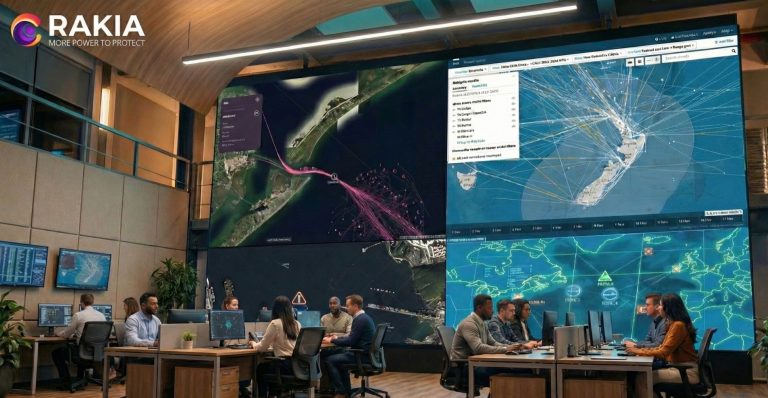
Raiter’s approach focuses on building real-time fusion environments that assemble fragmented particles of data into a live, evolving mosaic. Within such systems, disparate indicators across land, air, maritime, cyber, and open-source domains can be connected into patterns that reveal risk early enough to intervene.

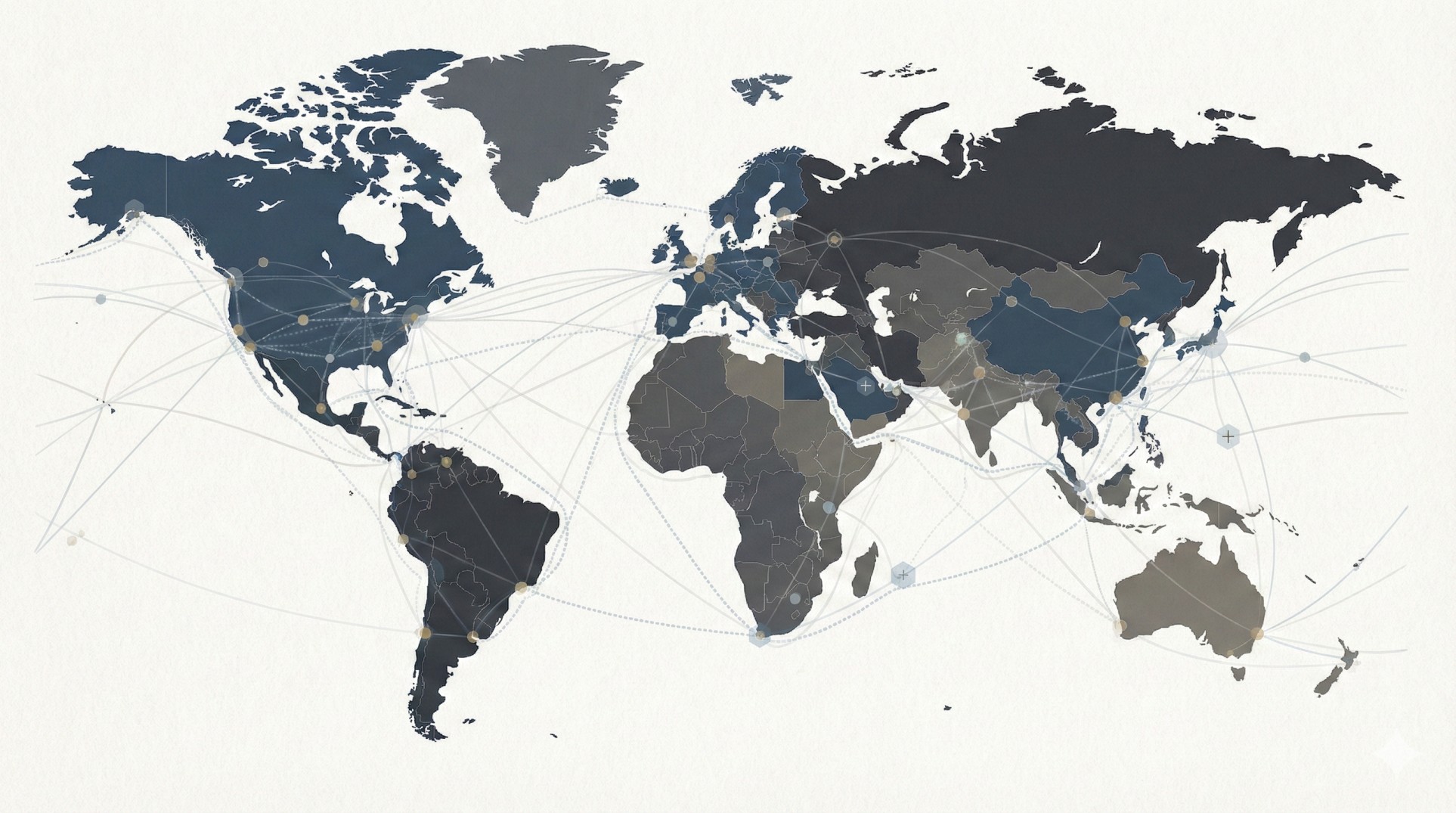
Crime today is hybrid by design. Trafficking networks do not separate physical movement from digital coordination. Shipments move through maritime corridors or land routes while planning unfolds through encrypted applications. Recruitment occurs in public view. Financing travels through layered laundering structures across jurisdictions. False identities, forged documents, and manipulated logistics records turn physical movement into a data problem, and that data problem becomes the point of detection.

Traditional rules-based systems struggle in this environment. They work best when adversaries repeat known behaviors. They falter when activity is engineered to appear normal. Sophisticated criminals do not hide by becoming invisible. They hide by blending into legitimate flows of communication and commerce. Investigators are not short on leads. They are overwhelmed by them.

Fusion addresses this challenge by reducing time lost to fragmentation. It is not a marketing term, but an operational discipline. In practice, fusion aligns legally permitted data streams across domains and time into a coherent analytical environment. A single signal rarely proves anything. Patterns emerge only when weak indicators are correlated over time and context.

Artificial intelligence plays a precise role in this process. It does not replace investigators or automate decisions. Its value lies in prioritization. AI can surface anomalies, cluster related activity, and highlight correlations that human analysts can then validate or dismiss. Accountability remains human by design. Interpretation, escalation, and operational action cannot be delegated to machines.

RAKIA’s work reflects a deliberate emphasis on governance alongside capability. Systems are designed around legal authority, documented workflows, audit trails, and defined thresholds for action. Without these foundations, even technically effective platforms become unsustainable. Public trust erodes quickly, and once lost, it cannot be restored through performance metrics alone.

At scale, fusion is measured by outcomes rather than claims. By integrating dozens or hundreds of data sources across domains such as maritime activity, communications behavior, logistics flows, and open-source intelligence, fusion platforms have enabled authorities to identify trafficking routes and criminal patterns that were previously fragmented or invisible. These capabilities have supported operations disrupting narcotics networks, exposing human trafficking operations, and intercepting illegal weapons flows.

These threats rarely exist in isolation. The same corridors that move drugs often move people, weapons, and illicit finance. The same networks that facilitate one criminal activity can be repurposed for another. Treating them as separate problems creates blind spots. Fusion reduces those blind spots by revealing connectivity across cases that would otherwise remain siloed.

The next phase of public safety technology will be defined less by invention than by integration. Tools will continue to improve, but the more consequential shift lies in the ability to connect what already exists into operational clarity.

Public understanding remains a challenge. Popular narratives tend to simplify organized crime into dramatic events, masking its cumulative impact. These networks are not abstract. They generate violence, corruption, and institutional damage across entire supply chains. Financial flows linked to trafficking intersect with extremist actors and violent networks through shared infrastructure and laundering channels.

If the public is expected to support serious policy, sustained investment, and responsible oversight, it must see both the reality of the threat and the discipline behind the response. Transparency and accountability are not obstacles to security. They are prerequisites for its legitimacy.

The future of counter-trafficking and public safety will not be defined by who collects the most data. It will be defined by who can connect signals into clarity, keep humans accountable, and reduce harm without compromising the principles democratic societies claim to protect.


 

Ana Franco’s Nonprofit Advocacy and Academic Outreach Address the Industry’s Growing Talent Gap

As global demand for digital infrastructure accelerates, the data center industry is approaching a critical workforce inflection point. The talent shortage long discussed by industry leaders is no longer a future concern. It is beginning now and will intensify as artificial intelligence, cloud computing, and digital services continue to scale worldwide.

Despite its importance, digital infrastructure remains largely invisible to the public. Millions of people rely on data centers every day without understanding what they are, how they work, or the role they play in enabling global commerce, communication, and economic growth. Addressing this gap requires education to begin earlier and extend beyond traditional workforce pipelines.

Ana Franco has taken an active role in addressing this challenge through nonprofit education and academic advocacy.

A Nonprofit Educational Initiative for Children

In December 2024, Franco launched The Great Data Center Adventure, a nonprofit children’s book designed to introduce young readers to the world behind the screen. The book explains data centers in a simple, engaging way that sparks curiosity rather than complexity, helping children understand that the digital experiences they use every day depend on critical infrastructure and the people who design, build, and operate it.

The book was created not as a commercial product, but as an educational tool to support early awareness of an industry facing long term workforce constraints.

University Outreach and Real World Industry Engagement

Franco’s efforts extend beyond publishing. In recent months, she has participated in direct university outreach focused on engaging students in conversations about digital infrastructure, technology, and career pathways.

For example, Franco visited students in Ohio as part of an academic engagement conducted in collaboration with Infrastructure Masons and the Nomad Futurist community. During this visit, she and industry representatives met directly with students to discuss how data centers support the digital economy, the variety of roles available within the industry, and the growing demand for skilled professionals across engineering, operations, energy, and sustainability disciplines.

These sessions were designed to expose students to real world industry perspectives and to connect academic learning with practical applications in a globally critical sector.

Addressing a Growing Industry Need

The data center sector underpins nearly every aspect of the modern digital economy, including global trade, financial systems, cloud services, and artificial intelligence. As demand grows, the need for an informed and prepared workforce continues to increase.

Franco’s nonprofit and academic advocacy work addresses this need at its foundation by promoting early awareness and education, supporting long term workforce development, and strengthening the pipeline of future industry professionals.

A Continuing Commitment to the Industry

Franco has stated that this work represents a long term commitment rather than a one time initiative. She plans to continue supporting the digital infrastructure sector through nonprofit education, university engagement, and industry advocacy in collaboration with organizations such as Infrastructure Masons and Nomad Futurist.

The sustainability and long term success of digital infrastructure depend on proactive leadership and early investment in education. Through her nonprofit children’s book, direct university engagement, and industry collaboration, Ana Franco is contributing to the future resilience of a globally essential industry.


Turning Spare Time Into Extra Income

It can often be impossible to find extra hours in the day; however, it would help if you could turn your spare time into additional income. Believe us when we tell you that turning your spare time into additional income is actually achievable. It does not matter whether you are hoping to explore new interests, ease your monthly expenses, or build long-term financial security; there are flexible ways that enable you to earn more money without sacrificing your responsibilities. All you need is to incorporate the right approach, and soon you can boost your financial well-being.

Read on to learn more.

Start Forex Trading As Your Side Hustle

You might not know that many people have turned to forex trading as a rewarding way to grow their income during their free time. The underlying reason is that the forex market runs 24 hours, five days a week, which makes it incredibly convenient for those with unpredictable schedules. 

All you need to do is invest your time and effort in learning the basics of forex trading, such as how currency pairs work and the various factors that influence bracket movement. Once you have understood the basics, you will discover that you can trade in short sessions without having to dedicate your entire day to trading. 

With that said, as a beginner trader, you might want to join the platform of Maven Trading, as it stands out as a reliable option for accessing support insights and resources, which will help you polish your skills and build confidence in the trading space. 

Freelance Your Online Skills

Another practical way you can turn your spare time into a feasible income is to become a freelancer. However, you must be truthful to yourself about your best skills, such as writing, designing, managing social media, editing videos, and any other skill that you can use to generate extra money. As a freelancer, you can work at your own pace. Wait till you get to the best part, which is that you can take on projects that genuinely interest you. What is even better, you can build your portfolio, which can help open doors to better career opportunities.

Sell Objects You Do Not Need

Here is the thing: if you are looking for something simple and quick, then we recommend decluttering your home, as it can help you generate fast money. Many people tend to underestimate the potential value of items that they no longer use. If you are like most people, there is a high chance that you have been hoarding a lot of items over time, such as appliances, décor pieces, gadgets, and more.

Believe us when we tell you that Facebook Marketplace and other apps allow you to list your items instantly and let you earn cash. 

Offer Your Services to the Community

Believe us when we tell you, sometimes the most profitable income-generating opportunities are right around the corner, which is your neighborhood. With that said, you might want to create a list of local services that you could offer in your local community, such as tutoring, gardening, pet walking, or simply assisting the elderly with their daily tasks. 

Sometimes, the simplest local services can bring in consistent income. Besides, people will appreciate your services as they will see you as someone trustworthy and local whom they can rely on.

Conclusion

Turning spare time into extra income is not about working longer hours but about making smarter choices with the time you already have. Whether you explore forex trading, freelance your skills, declutter and sell unused items, or offer services within your community, each option provides a flexible way to boost your financial well-being. The key is to start with what fits your lifestyle and build gradually. Over time, these small steps can grow into meaningful income streams that ease financial stress, support your goals, and create greater security for the future.


A Clear Look at What Happens After You Submit a Permit and How Permit Place Manages Every Step

Many business owners assume the hard part ends once their permit application is submitted. In reality, this is when the most complicated and time-sensitive work begins. The period between submittal and approval is where delays typically happen, often quietly, and those delays can push back construction schedules, opening dates, and revenue projections. Permit Place specializes in managing this entire post-submittal process so projects keep moving without disruption.

Once a permit packet is submitted, the city assigns it to a reviewer or multiple departments depending on the scope of work. Each reviewer examines the plans and documentation to ensure they meet local codes, zoning rules, safety requirements, and procedural standards. This review is rarely a straight line. Every jurisdiction has its own pace, priorities, and interpretation of regulations. Permit Place’s experience with thousands of projects allows them to anticipate these patterns and plan accordingly.

During the review period, comments and correction notices are the norm. A reviewer might request additional details, clarify a code requirement, ask for revised drawings, or flag something missing in the original packet. Businesses that try to handle this alone often lose days or weeks simply because they didn’t see an update, misunderstood a correction, or didn’t provide the exact information the department needed. Permit Place prevents these gaps by monitoring review portals, communicating directly with departments, and addressing issues as soon as they appear.

Another critical stage is coordinating responses. Corrections usually involve multiple stakeholders: architects, engineers, contractors, designers, and sometimes property owners. Permit Place becomes the central hub that organizes all revisions, ensures the corrected plans meet the city’s expectations, and prepares the updated packet for resubmittal. Their role eliminates back-and-forth delays and ensures the city receives accurate, complete revisions the first time.

Resubmittal is also a strategic moment. Incorrect formatting, missing signatures, or incomplete updates can trigger another full review cycle. Permit Place’s familiarity with each jurisdiction’s process reduces the risk of restarting the clock. They prepare the packet so reviewers can move quickly and confidently.

As the permit approaches approval, Permit Place manages final steps such as fee calculations, ready-to-issue documents, and coordination with contractors. These final touches matter; they ensure clients receive a clean approval and can begin construction without administrative setbacks.

What happens after submittal doesn’t have to be chaotic. With Permit Place overseeing reviews, corrections, communication, and finalization, projects progress with fewer interruptions and far more predictability. Their structured approach turns a typically uncertain process into a reliable one, giving businesses a smooth path from planning to opening day.

The Journey Behind Avagance and Its Vision for an AI Trading Super App

Avagance is still in its beta stage, yet the ambition behind it is already shaping a clear path. Built under Bro in Finance Ltd by co-founders Lithika Ranepura and Dinuwan Fernando, the platform aims to become an AI trading super app that brings together forecasting, natural language strategy building, execution, analysis, tax tools, and curated financial content in one place. The idea is simple to describe but hard to build.

Most investors bounce between several apps just to manage basic tasks. Avagance is being designed to close that gap.

The story began far from the fintech hubs of London. Lithika first entered entrepreneurship through Britanna Medicare, a cosmetic medical clinic he founded in Kandy, Sri Lanka. He grew the business to a team of full-time staff and medical specialists and eventually exited at twice the audited annual net profit. That experience taught him the value of reliable operations, clean financials, strong brand positioning, and solid governance. These are lessons he later applied directly to building a technology company.

During his MSc in Investment at the University of Birmingham, he developed a hybrid 3ANN–LSTM forecasting model for crude oil prices and earned a Distinction for his thesis. That academic project planted the early idea for a multi-asset prediction engine. Once he moved into fintech full-time, the concept expanded into a deeper vision. Short-term forecasts became only one layer of a much wider system.

Inside Avagance, artificial intelligence is at the centre. Machine learning models run weekly predictions across forex, equities, crypto, and commodities. Users can describe trading ideas in natural language and convert them into automated strategies that can be tested and deployed. Smart Portfolios allow fully managed accounts based on individual risk levels. A tax engine can read trades across accounts and produce capital gains reports suitable for local regulators, beginning with the UK and expanding later to other regions. The platform also includes a curated social feed where qualified analysts and writers can publish insights and earn revenue.

Lithika and Dinuwan spent more than a year building the system almost nonstop, refining infrastructure, testing new models, and rebuilding interfaces as more advanced techniques became available. Their work ethic and willingness to re-engineer features led the platform to evolve beyond its original academic roots. It is now shaping into an application designed for both retail and institutional users, with a technology layer that multiple brokers can eventually integrate with.

Avagance remains in beta, and the team is preparing for a seed funding round. Their goal is to accelerate development, expand deep learning capabilities, and scale the marketplace for user-generated strategies. The long-term ambition is a global platform where investors can research, trade, analyse, automate, and manage tax obligations inside one streamlined ecosystem.

Hidden Business Costs Behind Serious Operational Accidents

When a serious operational accident strikes, most companies brace for the obvious financial hit: equipment repairs, medical bills, insurance claims. The immediate expenses are just the surface layer of a much larger financial crisis that unfolds over months, sometime years. These hidden costs chip away at profitability, strain relationships, and weaken competitive positioning.

Immediate vs. Hidden Costs

Direct expenses are straightforward. A damaged machine needs replacement. An injured worker requires medical care. These costs appear on balance sheets quickly and get addressed through established channels.

Hidden costs operate differently. They’re harder to quantify and often reveal themselves gradually through declining performance metrics, strained client relationships, and operational inefficiencies. Consider the following indirect impacts:

  • Lost productivity from disrupted workflows and demoralized teams.
  • Diverted management attention from strategic priorities.
  • Increased employee turnover and expensive recruitment cycles.
  • Damaged market reputation that closes doors to future opportunities.

The indirect financial burden frequently exceeds the direct costs, yet companies consistently underestimate this multiplier effect when calculating the true price of operational failures.

Disrupted Workflow and Lost Productivity

A serious accident doesn’t just pause one operation – it creates cascading delays across interconnected business functions. Production lines stop and deliveries get postponed. Teams scramble to redistribute workloads while dealing with reduced capacity.

Revenue streams dry up during downtime, but fixed costs continue. Overtime expenses balloon as remaining staff work extended hours to compensate. Temporary workers fill gaps at premium rates without matching the efficiency of experienced employees. Meanwhile, missed deadlines strain customer relationships and create penalty clauses that compound financial losses.

Reputational Damage and Lost Trust

News of major operational incidents travels fast in competitive markets. Potential clients will question your reliability and current partners will review their vendor risk assessments. Competitors position themselves as more trustworthy and reliable alternatives.

The cost of lost contracts extend beyond individual deals. Your company’s positioning in bid processes weakens. Insurance requirements from clients become more stringent. Years of relationship-building evaporate as stakeholders prioritize their own risk management over loyalty.

Rising Insurance Premiums and Legal Exposure

Serious accidents trigger immediate policy reviews. Insurers reassess risk profiles and adjust premiums accordingly, often dramatically. Some coverage options disappear entirely, forcing companies into less favorable terms or higher-risk pools.

Legal exposure multiplies simultaneously. When accidents involve company vehicles or transportation operations, the complexity intensifies. Skilled car accident attorneys for serious crashes become essential for navigating liability claims, especially when injuries involve multiple parties or significant damages. Even when companies successfully defend against claims, the legal process itself consumes substantial capital that could otherwise fund growth initiatives.

Strengthening Risk Management

Prevention delivers better returns than crisis management. Comprehensive safety protocols, regular equipment audits, and rigorous training programs require upfront investment but dramatically reduce both direct and indirect costs of operational failures.

Technology plays a crucial role. Monitoring systems detect potential hazards before they escalate. Data analytics identify patterns that human observation misses. Automated compliance tracking ensures consistent adherence to safety standards.

Companies that embed risk management into their operational DNA avoid the devastating multiplier effect of hidden costs while building competitive advantages through reliability and consistency.

More Than Just Financial Weight

Hidden costs infiltrate every aspect of business operations, from productivity and reputation to talent retention and market positioning. Companies that recognize this reality and invest proactively in risk management are able to build sustainable operations. Preparedness is the foundation of enduring business success.