Home Blog Page 42

Vlad Malanin Explains Why Image Performance Has Become a Make-or-Break Factor for Black Friday

Every year, Black Friday pushes the limits of global e-commerce. Traffic surges within minutes, shoppers move faster than at any other time of year, and the smallest slowdown can translate into millions in lost revenue. In this environment, page speed and infrastructure stability matter just as much as discounts – and product imagery has quietly become one of the biggest contributors to risk.

Few people understand this challenge as deeply as Vlad Malanin, CTO and Co-Founder of SpeedSize and a member of the Forbes Technology Council. With more than 15 years of experience in high-load systems, AI-driven media processing, and web performance, Malanin has spent his career addressing the technical bottlenecks that collapse under pressure during peak retail events.

“Black Friday is no longer just a marketing event,” he explains. “It’s an infrastructural stress test. The brands that win are the ones whose websites stay fast and visually trustworthy under the worst possible load.”

The Perfect Storm: Traffic, Infrastructure, and Shopper Behavior

This year’s Black Friday season comes with an added complication: recent outages at major cloud providers such as AWS and Cloudflare. These incidents demonstrated that even the backbone of the internet can buckle, raising concerns for retailers who depend on stable uptime.

When these outages coincide with a traffic spike, websites become incredibly fragile. Heavy images worsen the problem, increasing bandwidth demand and slowing rendering at the exact moment when every second counts.

Consumers don’t wait. During Black Friday, they abandon slow pages instantly and move on to the next brand.

Why Images Have Become a Hidden Liability

High-quality product visuals are essential for online retail, especially in fashion, beauty, lifestyle and home goods. Shoppers rely on accurate colors, textures and details to make decisions, and poor visuals are a leading cause of product returns.

But the same high-resolution images that build trust also create enormous page weight. On many retail websites, images account for 70–80% of total load time. During peak traffic bursts, this can overwhelm CDNs, slow down servers and degrade the shopper experience at scale.

“Image performance affects everything,” Malanin says. “It affects page speed, bounce rate, conversion rate and even return rate. If visuals load slowly, shoppers leave. If visuals are inaccurate, shoppers return the product.”

The New Black Friday Strategy: Keep Quality High, Keep Load Light

Platforms like SpeedSize use AI to maintain full visual fidelity while dramatically reducing file sizes. Instead of lowering quality or compressing images to the point of degradation, the system removes only the data that the human eye cannot perceive.

For brands, this means:

  • Product images load instantly, even under peak load
  • Infrastructure strain decreases across the entire stack
  • Color accuracy and detail remain consistent, reducing returns
  • Conversion rates improve simply because pages render faster

It also gives retailers a buffer against the unpredictable, whether it’s a traffic surge or an external cloud outage.

A More Competitive Black Friday

The modern Black Friday landscape rewards brands that plan not just their promotions, but their performance. Fast-loading, accurate visuals help shoppers feel confident, reduce friction and keep users on the page. They also protect infrastructure when traffic surges beyond expectations.

“In a high-pressure moment like Black Friday, you don’t rise to the occasion,” Malanin notes. “You fall to the level of your preparation. And image performance is one of the most impactful areas retailers can prepare for.”

As online competition intensifies, the brands that treat visual performance as a core part of their strategy, not an afterthought, will be the ones that convert more customers and stay resilient when the internet is under stress.


Water Pressure Dynamics in Residential Plumbing Systems

Turning on the tap should not be rocket science, but water pressure involves a complex network of forces. The plumbing system in a home must have consistent and balanced pressure to supply clean water and to prevent failures. Leaks, noise, low flow, and more serious issues all result when the delicate balance between system pressure and resistance changes. But knowing how pressure works and what creates those shifts empowers homeowners to identify pressure issues early. Homeowners can also take steps to plan ahead for a strong and balanced plumbing system.

Residential homes receive water either from a municipal supply or from a private well. The pressure in the main supply line changes based on location, elevation, the time of day, and seasonal demand. In homes where the water company can maintain a constant supply, pressure still often fluctuates in the main due to usage from adjacent houses or apartments. Changes in pressure occur when neighbors use high-demand appliances, turn on irrigation systems, or when municipal pumps cycle on and off. These demand changes create pressure fluctuations that the home’s plumbing system must buffer. Keeping pressure within a safe range for fixtures and appliances usually means between forty and sixty psi (pounds per square inch).

The best way to maintain a stable and safe pressure is with a pressure reducing valve, or PRV. You can always speak to Mister Plumber Toronto to get more insight on all plumbing needs. This small device takes high pressure from the main line and balances it out before water flows to the rest of the home. This important valve is a major influence on long-term plumbing system health. High pressure without a PRV strains every pipe fitting and fixture in the house. Appliances such as toilets create more noise, water heaters erode faster, and supply lines wear out more quickly. Even high-quality fixtures and materials will have a shorter lifespan if the plumbing system consistently experiences higher pressures.

Low pressure causes a different set of issues

Low pressure causes a different set of issues. A weak flow makes showering less satisfying, reduces dishwasher efficiency, and lengthens the time it takes faucets to rinse sediment out of aerators. Low pressure can result from clogged pipes, local restrictions, faulty valves, or scale buildup inside the home’s water heater. Low flow can also occur if the demand is restricted too much, as is common with newer low-flow showerheads and faucets. These fixtures save water and are good for the environment, but the restrictors can make a pressure imbalance more pronounced.

Pressure surges, also called spikes, have an even more negative effect on plumbing system performance than constant high pressure. Spikes in water pressure usually occur when a valve shuts off suddenly, and the kinetic energy of the moving water collides with the interior walls of the pipe. This reaction is called water hammer. A water hammer causes a loud banging noise and a force that shakes the pipe. The repeated shocks loosen joints and damage connections over time. Most properly designed systems have water hammer arrestors built into the plumbing to mitigate these damaging effects. Without arrestors, shock loads can damage PEX and copper pipe as well as early failures in washing machines and other appliances.

Pipe diameter also affects both pressure and flow rates. Narrower pipe means more resistance, which means less flow at the fixtures. Larger mains or branch lines allow for stronger flow throughout the house. Larger homes and those that have added on over time often have undersized pipe that struggles to maintain a consistent pressure. When more than one shower runs, the pressure drops so much that it becomes noticeable. Replacing undersized lines can help even out the pressure in the house. This will also help with appliance performance and noise that is caused by turbulence in the lines.

Ageing pipe materials create their own unique pressure issues. As the pipes age, minerals from water build up on the interior walls. The mineral buildup decreases the effective diameter of the pipes, which increases resistance and decreases flow. Copper lines tend to accumulate mineral buildup over time, especially in areas with hard water. Galvanized steel pipe corrodes from the inside out, and the new rough surfaces slow down water movement. These changes to the plumbing system create the feeling of low pressure, even when the incoming supply remains the same. Replacing old pipe with new material helps restore original flow and prevent the leaks that tend to occur as corrosion continues.

Temperature also affects water pressure. Hot water expands when heated. Cold water that enters a water heater requires more space once it heats up. If the plumbing system is closed without an expansion tank, the extra volume from heated water pushes back against the system. This effect causes an increase in pressure throughout the entire house whenever the water heater turns on and heats water. Over time, this increase in pressure can cause valve failures and leaks around fittings. An expansion tank is designed to absorb the increased volume from the water heater and keep pressure stable.

Noise and pressure issues are also closely related. Higher pressure means faster-moving water. When this fast-moving water hits sharp turns, rough interior surfaces, or partially closed valves, turbulence occurs. This turbulence creates a hissing or whistling sound. Pipes that are not properly strapped to studs or joists will vibrate against these surfaces. The vibration sounds worse than it actually is because it echoes through the drywall and framing. Securing the pipe in place and smoothing interior flow paths will eliminate much of the noise and increase stability.

Uneven pressure at various fixtures is another common problem. If some fixtures have great flow while others have low pressure, it usually indicates the branch lines have varying levels of resistance. Causes can include older valves that have not been replaced in years, partial clogs, or pipe runs that have too many tight bends. Hot water lines often have more problems because minerals build up faster as heat accelerates chemical reactions. An inspection will often reveal the problem areas, and partial repipes often fix the problem instead of having to replace all the plumbing.

Leaks are often the end result of pressure issues, not the cause. If a homeowner notices a small leak at a joint or pipe, it can indicate the system has experienced excessive stress for years. Higher pressure accelerates the degradation of rubber seals inside of valves and faucets. It also puts more force on threaded pipe connections. Early detection of pressure problems can prevent structural damage, mold, and costly restoration. A pressure gauge is a simple tool that homeowners can use to keep an eye on the system. The home can be tested at the hose bib or a washing machine outlet to see if the incoming pressure stays within the safe operating range.

Temperature also affects water pressure

Water pressure also interacts with other filtration, softening, and treatment devices that are commonly installed. Every additional system that the water must flow through creates some additional resistance. If the water softener, for example, is not sized properly, the home will experience a drop in pressure across the filter. This reduction causes weak showers and can cause stress to pumps. Sediment filters clog more quickly in areas with higher levels of particulates in the water supply. Carbon filters create more pressure drop as they age and begin to get clogged with minerals. Routine maintenance of these devices is required to keep them from impacting pressure throughout the home.

Water pressure dynamics are a little different for homes with well water. A pump generates pressure instead of relying on municipal supplies. The pressure switch determines when the pump should turn on and off. If the pressure tank becomes waterlogged or loses air pressure, the pump will cycle on and off more frequently. Frequent cycling decreases pump life and creates visible pressure drops. A healthy pressure tank should create a smooth flow and prolong the life of the entire system.

Strong pressure system design starts during the construction phase. Builders must consider the pipe size, material, fixture flow rates, number of appliances, hot water demand, and even planned future expansions. Homes with multiple stories require special attention to keep upper floors from having low pressure. Homes with large irrigation systems need to ensure proper separation and dedicated lines so that indoor fixtures do not suffer when the sprinklers are in use.

Good pressure management also ensures the water heater, dishwasher, washing machine, and refrigerator with ice maker last longer. These appliances are sensitive to pressure spikes and have small internal valves. A more stable pressure keeps them from failing early and requiring costly repairs.

Water pressure is something homeowners rarely think about, but it has a major impact on how fixtures feel and how long the plumbing system will last. Balanced pressure helps keep pipes quiet, reduces leaks, improves appliance performance, and allows the home to run more efficiently. Building a stable system starts with proper controls, good materials for the pipes, and proper installation practices. With these elements in place, a home can have steady and reliable water flow for years to come.

Why the Next Era of Transformation Depends on Human-Centered Leadership

Selamile Dlamini represents a new generation of leaders who are rethinking how large organizations and social systems evolve. With a background that blends engineering, strategy, and human-centered design, she works at the intersection of data, empathy, and systems thinking. Her approach focuses on designing transformation that lasts-change that not only moves numbers but also reshapes how people experience progress.

For Selamile Dlamini, transformation succeeds when structure meets humanity. She often describes it as “empathy combined with architecture,” a balance that allows organizations to change without losing their sense of purpose. Over the past decade, she has guided strategic growth programs and innovation portfolios across markets in the United States, Africa, and beyond, emphasizing that the most enduring results come from aligning people, technology, and process.

Her perspective is shaped by a global career that crosses sectors and cultures. Whether she’s helping design frameworks for inclusive growth or advising leaders on organizational alignment, Selamile Dlamini focuses on the systems that make progress possible. She believes that real change begins with understanding the lived experiences of those affected. “People are the core of every system,” she says. “Any strategy that ignores human behavior and context is destined to fail.”

This philosophy has guided her work in designing programs that bridge the local and the global. While leading initiatives across sub-Saharan Africa, she learned that sustainable impact depends on adapting to context while building on shared human motivations. “There’s no single blueprint for change,” she notes. “What works in one place might fail in another unless you design for both universality and specificity.”

Technology also plays a central role in her thinking. Selamile Dlamini views it as a bridge rather than an endpoint-a way to scale insight without losing empathy. She emphasizes that digital systems can amplify inclusion if designed around real human needs. “Technology is only as effective as the people and values behind it,” she explains. “It should extend human capability, not replace it.”

Her leadership philosophy blends analytical discipline with creative curiosity. Selamile Dlamini often draws from both scientific and artistic traditions, using data to frame decisions and narrative to inspire shared understanding. She encourages her teams to approach leadership as a blend of logic and imagination, where structure enables rather than constrains creativity.

In an era where artificial intelligence, automation, and rapid innovation are redefining industries, Selamile Dlamini’s perspective stands out for its balance. She argues that systems can only be truly intelligent when they remain human at the core. “Empathy is not soft,” she says. “It’s strategic. It ensures that transformation serves people, not just profits.”

Selamile Dlamini’s work points to a future where leadership is measured not only by growth metrics but by the ability to design systems that endure and uplift. Her message is clear: progress must be intentional, inclusive, and deeply human.

Aneudy Neo Gonzalez Promotes Ethical Leadership in Healthcare and Law

Aneudy Neo Gonzalez is redefining leadership and decision-making in both the healthcare and legal systems. With his background in management and law, Gonzalez has established a reputation for his advocacy of transparency, fairness, and empathy in professional environments that can often be bureaucratic and daunting.

Gonzalez’s approach to systems and leadership is rooted in over two decades of experience in healthcare management and nine years of legal practice. He believes that at the core of any system, there must be an ethical underpinning. His message is simple yet powerful: integrity and kindness should be the foundation upon which policies are constructed and enforced. Through developing compliance programs, facilitating ethics training for administrative staff, and consulting with various organizations, Gonzalez has worked to operationalize ethics, making it an integral part of everyday decision-making rather than a theoretical ideal.

Accountability, to Gonzalez, is the starting point of ethical behavior. “The right thing to do, when no one is watching, is the cornerstone of trust,” he often says. In his experience, transparency is not just a regulatory requirement; it is a moral imperative. By promoting leadership that exemplifies honesty and respect, Gonzalez empowers organizations to forge stronger connections with their employees and the communities they impact.

Mentorship is another area where Gonzalez is making an impact. He takes the time to mentor young healthcare and law professionals, instilling in them an understanding that skill and heart can coexist. Through sharing his experiences and the ethical dilemmas he’s navigated, Gonzalez demonstrates how small, principled decisions can lead to a professional life marked by credibility and respect. Mentorship, in his eyes, should liberate individuals to lead with the confidence of integrity, rather than out of fear of error.

Gonzalez is also an advocate for the inclusion of empathy and cultural sensitivity as tools for creating just and effective systems. He posits that an awareness of and respect for different perspectives can greatly enhance the quality of patient care and the efficacy of policies. “Leaders who listen and value diverse experiences make more equitable decisions,” he comments. This philosophy underpins his advocacy and educational efforts, with human dignity always at the forefront of his endeavors.

In his written work and public engagements, Gonzalez continues to advocate for a tighter integration of regulation with compassion. His publications, such as The Caregiver’s Guide: Navigating Adult Foster Care and Family Support in Massachusetts, reflect this commitment, demystifying legal language to help families prioritize caregiving over legal hurdles.

As both the healthcare and legal landscapes evolve rapidly, the voice of Aneudy Neo Gonzalez calls for a balance between progress and humanity. His guiding principle is that systems should be designed to serve people, not to dominate them. By championing ethics as a professional and personal responsibility, Gonzalez is actively contributing to a more trustworthy and empathetic future in his chosen fields.

Why Serious Traders Run Their Portfolios Like a Business

People want to trade because they think they can make quick profits, especially with stock and forex trading. A trader can certainly make profits by just watching the price movements, but doing it without a strategy and excitement will lead to blowing profits in a short time. Traders who can build a “long” career in trading are the ones who build their portfolios with the same discipline a business owner applies to their business. They understand the difference between a hobby and professional trading, and between a game of chance and gambling.

They know there are plans to be made, risks to be managed, the market moves to be analyzed, decisions to be made, actions to be taken, performance to be evaluated, and emotions to be tamed. All of this seems to get lost in the excitement of the trading profits, but actions are the same in any business. The market may be unpredictable, but it’s structured enough to be navigated profitably and consistently by a trader who has the game plan to manage losses and capture opportunities.

A Good Trader Looks Beyond the Myths

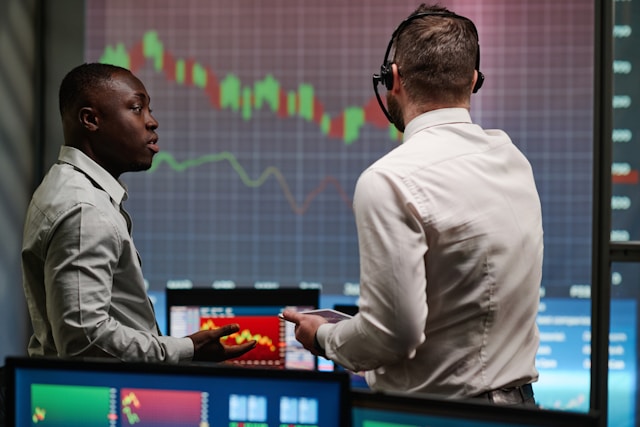
In business, guesswork can result in heavy losses. There is always a rational basis for investing, launching a new product, or implementing cost-cutting measures. This also holds for trading. Serious traders figure out a trading strategy with a blueprint for when they open and close their positions. This is the result of a combination of market analysis, historical testing, and actual trading performance.
A Good Trader Looks Beyond the Myths

A trend trader, for example, needs to figure out when the market goes up or down, then wait for a retracement, and wait for the go signal to enter the trade. The market sessions also have traders. An example is the price action traders focusing on the London or New York sessions. Each trader picks a system that matches their understanding and emotional temperament. The important thing is that the decisions are consistent and rule-based.

When traders lack a strategy, they start making trades based on their emotions. They may jump into trades. They think they might miss out, close them too soon because they panic, or even let losing trades run in the hope the price will bounce back. This is certainly not behaving like a business, and it is going to fail. With a strategy, the business will gain the order it needs to function, and that will allow it to trade.

The Most Important Aspect of Trading is Risk Management

In every business, a lack of control over costs will ensure that the business will not run out of resources, and this will end in the business going under. As a trader, you will need to control your costs too. Risk management will ensure no single trade will wipe out your trading account. This is where a lot of beginners fail, as they are willing to jump with both feet on a trade for a smaller return. Proper traders will understand that the main target in trading is not to let large losses happen, not to focus on large profits.

Here are a few principles of risk management followed by traders

  • Setting a maximum amount to trade with
  • Setting loss limits based on analysis rather than driven by emotions
  • Avoiding over-leverage to a broker
  • Setting loss limits on a daily/weekly basis to avoid emotional trading
  • Lowering position during high volatility of the underlying

These principles are designed to let traders remain active during the inevitable periods of losing money. All trading systems experience losses. The important part is how a trader protects themselves during those periods.
Choosing Brokers

Choosing Brokers Is a Strategic Business Decision

The same goes for businesses and their suppliers. Traders rely on brokers to gain access to markets. When it comes to brokers, all issues like execution speed, spreads and commissions, reliable withdrawals, platform stability, and all general conditions for trading matter. This is even more so the case for the US due to its particularly stringent financial regulations. Fortunately, traders only have to research and compare forex brokers that accept US clients to operate legally. This ensures they are in a transparent trading environment that protects their funds. When it comes to serious trading businesses, operational convenience is the least of their concerns.

Reasons Why Serious Traders Manage Their Portfolios Like a Business

In the beginning, some market participants believe success is a product of chance or timing. For those who endure in the market, profitability is a product of professional treatment. This involves meticulous business-like planning with a solid framework of discipline, accountability, and a long-term point of view. Serious traders do not take on gambling personas. Like business executives, they manage, analyze, and continually refine their methods.

1. They Start with a Plan

Every business has a strategy. So do professional traders. They know their trading markets, the setups they want, and the goals they need to achieve. With a concrete plan, emotional reactions are reduced.

2. They Analyze Their Trades

Winning traders will analyze the outcome of each of their trades and determine their mistakes. Like businesses that analyze their performance, traders will analyze their trading history.

3. They Separate Their Money

Professional traders avoid the emotional stress that comes with personal money and trading money.

4. They Consistently Manage Risk

Just like businesses do not take reckless financial risks, pro traders will set stop losses, manage position sizes, and defend their capital. Their order of importance is to survive and then make a profit.

Consistently Manage Risk

5. They Utilize Technology and Data

Using charting tech, indicators, and market research is key. They trade based on solid evidence, not just on hearsay.

6. They Partner with Trusted Financial Services

Choosing reliable regulated services is essential for the safety and seamless execution of trades for long-term trading.

7. They Exercise Patience

Just like a business, a trading account grows over time. Professional traders wait for quality setups, while others tend to jump into a trade.

8. They Understand Losing is Part of the Game

Each business has running costs, and trading is no different. Losses should not create a negative emotional spiral; instead, they should be a teaching moment.

9. Other Practices of Professional Traders

  • Keep a trading journal
  • Analyze the market constantly
  • Do not trade while under emotional distress
  • Set achievable targets
  • Constantly revise and improve your plan
  • These practices foster maturity and self-restraint.

10. They Think About Growth over a Long Time

Serious traders do not try to make a fortune within a few days. Rather, they prioritize consistent performance over a prolonged period. Stable growth is their ultimate goal.

Record Keeping and Trade Journals Lead to Improvement

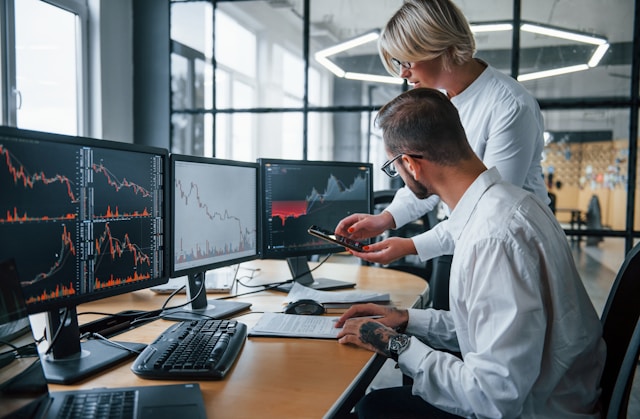
Every business evaluates its performance to understand its strengths and weaknesses, and for players in the business of trading, this involves the use of trade journals. While keeping a trade journal, serious traders note down the details for every trade, including the rationale for taking the trade, the prevailing market conditions, their feelings when the trade was being executed, and the result of the trade.
Record Keeping and Trade Journals Lead to Improvement

This allows the traders to see patterns that are otherwise difficult to see in the moment. For example, a trader may identify that he/she is able to trade better during certain market sessions and that certain emotional states lead to mistakes. Not fixing performance documentation for a trader means stagnant growth and repeating the same mistakes without learning. The positive approach to documentation helps a trader to adopt, adjust, and improve their strategy. This is the same as a business improving its processes over time.

Emotional Discipline Is a Major Competitive Advantage

A trader must keep in mind that the market will never be predictable and will often work against them. If a market condition turns against the player, it is not a good idea for them to get emotional about it. The player must be well-trained to keep their emotions in check during times of overpowering excitement. If a player allows themselves to become emotional, it will cause them to deviate from their main strategy.

Traders were found to lose money more than any other group of persons while trading in financial markets. Each financial market’s trading strategy needs to incorporate a defensible risk management strategy to be in a profitable position. This is not the only problem to be solved. A rational and logical risk position strategy needs to incorporate and execute a full trading strategy to close a position in a risk-adjusted manner. Failure to do this will lead the trader to lose a position and lose money. This is the main contributor to the loss-making strategy in people trading in the financial markets. All other people lack the emotion to lose money, unlike them.

Scaling a Portfolio Requires Patience and Development

A trading strategy is the only way to lose control of a position. This is a loss-making strategy and will only lead to the loss of a position in the accounts, and the loss will need to be compensated in the values of the account. This will only lose the values in the account. For a loss-making strategy to go wrong in a trading strategy, and a loss-making position, the trading strategy will simply not work. This will only lead to the account being scaled down or the values in the account being reduced.

Conclusion

Only by treating it as a serious professional activity will one become profitable. The most successful traders are not necessarily the most frequent traders or the ones who take the most risks. They are the traders who exhibit discipline, patience, understanding, and a professional attitude. When trading becomes a disciplined business, it moves beyond just a source of income and becomes a skill and profession for the long term.

Russian Officials Explore Global Partnerships in Driverless Technology

Russia aims for half of all vehicles on its roads to be driverless by 2050, Deputy Transport Minister Vladimir Poteshkin said, underscoring the government’s long-term vision for autonomous mobility rather than a short-term policy target.

The statement comes as senior Russian officials step up exchanges with global technology leaders. Earlier this month, Deputy Prime Minister and his delegation toured the Beijing Economic and Technological Development Area in Yizhuang, where they tested an autonomous shuttle bus developed by China’s WeRide. The ride offered a first-hand look at how driverless technology is being deployed in urban transport.

WeRide, a Guangzhou-based autonomous driving company has been running commercial pilot programs for robotaxis, minibuses, and freight vehicles in several Chinese cities, including Guangzhou, Beijing, and Shenzhen. . Its engagement with Russian officials highlights growing international interest in applying developed solutions to overseas markets. Industry experts note that WeRide’s rapid progress also demonstrates how private-sector innovation can complement national-level strategies for smart mobility.

In parallel, Russian technology giant Yandex has been developing its own self-driving platforms and unmanned logistics services, including trials of autonomous mobility in Moscow and other regions. The government has previously signaled that regulatory frameworks for autonomous vehicles are under discussion. Observers note that while large-scale deployment may still be years away, the policy debate is gaining momentum and new pilot programs are being considered to provide real-world data for regulators.

Analysts say Russia’s openness to cooperation with foreign players could accelerate policy adoption and investment in the sector. Russia has the engineering talent and local champions like Yandex, but partnerships with established global companies could help bridge technology gaps and shorten deployment timelines.

Russia is also a significant automotive market, with more than 50 million registered vehicles. If even a portion of the government’s 2050 goal is realized, the country could become one of the largest potential markets for autonomous transport, spanning both passenger mobility and logistics. Analysts also point out that widespread adoption of driverless technology could reduce road accidents, improve logistics efficiency, and help lower emissions from transport.

The global race for driverless technology is intensifying, with the United States, China, and Europe pushing forward on regulation and commercialization at different speeds. If Russia follows through on its 2050 target, the country could emerge as one of the largest potential markets for autonomous transport, spanning both passenger mobility and logistics.

Recent exchanges with Chinese firms such as WeRide suggest that Russia is open to cross-border partnerships as it pursues broader ambitions in shaping the future of driverless mobility.

Employers Embrace Free Job Posts as Hiring Costs Rise

Hiring has never been easy, and in fast-moving cities like New York, the challenge is even greater. Competition for skilled workers is fierce, and advertising open roles can quickly become expensive. Many employers are turning to free job post options to save money while still reaching strong local candidates. For startups, small businesses, and even established firms, free listings offer a simple, effective way to connect with talent.

Why free job posting is gaining traction

The New York job market is vast and fast-paced, covering everything from finance and retail to hospitality, tech, and creative industries. With so many businesses hiring at once, standing out is hard-and paid job boards often charge high fees without guaranteeing results.

Free job post New York platforms help level the playing field. They allow employers to test different job titles, attract applicants from specific boroughs, and fill part-time or seasonal roles without a large advertising budget. For smaller companies, every dollar saved on recruiting can go toward growth or staff development.

For job seekers, these listings open doors that might otherwise go unseen. Many smaller employers post exclusively on free platforms, meaning applicants can find roles that never appear on big national job boards.

Where to post jobs for free

There’s no shortage of ways to share your openings online without paying for exposure. Some platforms specialize in local or industry-specific hiring, while others reach broader audiences.

Local community boards

Neighborhood platforms and online classifieds like Craigslist or Patch are ideal for service, retail, and hospitality roles. They attract local candidates who live nearby and can start quickly.

University and college job sites

New York’s many universities, including NYU, Columbia, and CUNY campuses, offer free job posting portals for local employers. These attract motivated students and recent graduates seeking flexible or entry-level work.

City and nonprofit resources

Programs run by the New York City Department of Small Business Services and workforce development agencies often include free job listing options. These initiatives aim to match employers with residents looking for work or career training.

Free national job boards

Platforms like Indeed and Glassdoor still allow limited free job posts, which appear in New York–specific search results. Google for Jobs automatically indexes free listings from multiple sources, expanding visibility without cost.

Social media and online groups

LinkedIn, Facebook, and Reddit host New York–focused hiring groups where businesses can post opportunities for free. These networks can be especially useful for small businesses that rely on community engagement.

How to write an effective free job post

Because free platforms often have hundreds of listings, the key is to make your post stand out.

  • Use a clear, descriptive job title that tells applicants exactly what the role involves.
  • Include the location or neighborhood so people can gauge commute times.
  • Keep the description concise but detailed. List main tasks, required skills, and work schedule.
  • Mention benefits, flexibility, or workplace culture-anything that sets your company apart.
  • Provide a direct way to apply or contact you. Avoid forcing applicants through long sign-up forms.

A well-written, honest post helps attract the right kind of candidates and saves time during the hiring process.

Mistakes to avoid

Vague listings and missing information turn good applicants away. Avoid phrases like “must be motivated” without explaining what the job entails. Give specifics about pay range, experience level, or expected hours when possible.

Also, remember to remove or update filled positions. Leaving expired listings online confuses applicants and can reflect poorly on your business.

Why free listings help job seekers too

Free job posts aren’t only a win for employers. They also benefit job seekers by making the hiring market more open. Smaller local businesses often skip paid job boards entirely, meaning free platforms can uncover hidden opportunities.

For students, career changers, or people reentering the workforce, free job posts make it easier to find flexible roles that suit their schedules. They also encourage more direct communication between applicants and employers, which can lead to faster responses.

Final thoughts

In an expensive, competitive hiring environment, free job posts are becoming an essential tool for employers. They make it possible to reach capable, motivated candidates without adding financial pressure.

With a clear title, simple description, and consistent updates, even a free listing can bring the right applicants to your inbox. Whether you’re hiring your first employee or expanding your team, using a free job post is one of the most practical ways to stay competitive while keeping costs under control.


Why you should consider an ice maker

Buying an ice maker is about convenience and reliability. You don’t have to rely on slow freezer trays or buy bags of ice that melt on the way home. Whether you enjoy cocktails, iced coffee, or chilled water, an ice maker ensures you always have fresh, clean ice ready to use.

Portable countertop models can make ice in under ten minutes, while built-in or under-counter units suit larger homes and entertainment areas. Businesses like cafes, restaurants, and offices also benefit from having a steady ice supply without waiting on deliveries.

ice maker

Finding the best ice maker sale

When you’re searching for an ice maker sale, focus on performance, price, and long-term value. Set your priorities first.

  1. Type of machine – Countertop models are compact and ideal for home use. Under-counter or commercial units are better for high-volume use.
  2. Production speed – Check how many pounds of ice it makes in 24 hours. For most homes, 20 to 30 pounds is plenty.
  3. Ice shape – Cubes, bullets, nuggets, or flakes each have a different texture and melt rate. For cocktails, go for clear cubes. For smoothies or soft drinks, nugget ice works best.
  4. Storage capacity – Some machines hold only a few pounds, while others can store enough for a large gathering.
  5. Maintenance – Self-cleaning models save time and keep your ice tasting fresh.

When comparing deals, read the specifications carefully. A low price isn’t always a bargain if the machine can’t meet your needs.

Features worth paying for

Even during a sale, you’ll notice big differences between budget and premium models. Paying a bit more for certain features can make life easier later on.

  • Self-cleaning function to prevent mineral buildup and keep ice fresh
  • Smart sensors that stop the cycle when the bin is full
  • Insulated storage bins to keep ice solid for longer
  • Quiet operation, especially important in open kitchens or offices
  • Stainless steel housing for durability and a cleaner finish

If you entertain often or have a large family, a higher-capacity machine is worth the investment.

Tips for buying during an ice maker sale

  • Compare multiple retailers, both online and local appliance stores
  • Look for bundle discounts if you’re purchasing other kitchen appliances
  • Read customer reviews to see how machines hold up over time
  • Check return policies and warranties, especially for clearance models
  • Pay attention to energy usage, since some compact machines use more power than expected

Timing matters too. The biggest sales often happen around major holidays like Memorial Day, Labor Day, and Black Friday.

Installation and setup basics

If you choose a portable unit, setup is simple. Fill the water tank, plug it in, and you’re done. Built-in models may need a water line connection and drain, so it’s best to have them installed by a professional.

Keep the machine level and leave enough space for air circulation. In humid climates, place it in a ventilated area to prevent moisture buildup.

Getting the most out of your ice maker

Clean the unit every few weeks, especially if you use tap water. Mineral deposits can affect taste and efficiency. Empty the bin if you won’t use the ice for a while so it doesn’t fuse together.

Use filtered or distilled water for clearer ice and better performance. If you prefer soft, chewable ice, look for a nugget or sonic-style model when browsing the next ice maker sale.

Final thoughts

An ice maker is a small upgrade that adds real comfort to daily life. With plenty of sales available, it’s easy to find a model that fits your space, budget, and lifestyle.

Whether you’re upgrading your home bar, outdoor kitchen, or office space, keeping an eye on the latest ice maker sale listings can help you stay ready for any occasion.


The Great Equestrian Migration Southbound Saddles

When the crisp air returns to the Northeast, a quieter kind of migration begins. Horses, riders, and entire teams pack up their stables and head south to Florida, following the sun to a place where the season never ends. This annual journey has become one of the great rituals of the equestrian world, blending sport, sophistication, and an enduring pursuit of perfection.

During the summer months, the Hamptons and Greenwich set the stage for the sport’s most polished moments. The Hampton Classic Horse Show in Bridgehampton draws Olympic-level competitors, celebrity riders, and luxury sponsors that treat the event as both competition and social calendar highlight. Just down the road, Polo Hamptons brings together linen, champagne, and the rhythmic thud of hooves. Across the border in Connecticut, the Greenwich Polo Club fills its fields with an international crowd, elegant picnics, and players at the top of their craft.

Leah Lane
Greenwich Polo. Photo: Rob Rich/SocietyAllure

By late October, those fields fall silent. Horses are guided into silver trailers bound for Wellington, Ocala, and Palm Beach. There, the rhythm continues with the Winter Equestrian Festival and the World Polo League, two events that anchor Florida’s thriving equestrian season. Behind the glamour is a seamless operation involving veterinarians, transporters, grooms, and trainers who coordinate the safe journey of thousands of horses.

Florida’s equestrian economy, worth more than 11 billion dollars each year, thrives during this southern chapter. Riders exchange wool coats for sun hats, and horses settle into pastures framed by palm trees. The days are longer, the arenas busier, and the focus unbroken.

Shane Sweetman at Hampton Classic
Shane Sweetman at Hampton Classic. Photo: Rob Rich/SocietyAllure

When spring returns, the migration reverses. Convoys roll north as tulips bloom, and the polished rhythm of the sport begins again. The cycle feels timeless, a balance of passion, precision, and elegance that defines a world where excellence simply never takes a winter break.

Family Reunification in Germany Is Harder Than It Should Be

Ask anyone waiting for a German family reunification visa what the hardest part is, and most will say it is the silence that follows. Applicants submit every document, pay the fee, and then nothing happens. The waiting stretches into months. Families live apart, unsure whether anyone is even looking at their file.

A teacher from Brazil applied for a visa in early 2024 so she could join her husband in Hamburg. She sent a full set of papers to the German embassy in São Paulo, including proof of marriage, income, and accommodation. By the end of the year, there was still no decision. Her husband visited the local immigration office every few weeks, only to hear that the case was “under review.” Their story is common in forums and social media groups for expats and migrants across Germany.

The delays come from how fragmented the system is. Each federal state runs its own immigration offices. Some are efficient and digital, while others still rely on paper files. One missing signature can cause a file to sit unnoticed for weeks. In large cities such as Berlin, Frankfurt, or Munich, the waiting list can reach six months or more. Smaller towns often respond faster, but only to people already registered there. This unevenness leaves families feeling powerless.

Embassies add another layer of delay. In places like India, Turkey, and the Philippines, the first available appointment might be several months away. Once the documents are submitted, they must travel physically or electronically to the local German office. If the two offices communicate slowly, the entire case stalls. People call or write, but replies are rare. There is no single online system that shows where the application sits or who is handling it.

The rules are also inconsistent. Some local offices demand notarized rental contracts or proof of specific square meters per person. Others accept a landlord’s letter. Income verification can differ from one district to another. Even the translation requirements vary. Many applicants only discover these differences when they are already deep into the process. By then, fixing a small omission can add months to the wait.

In 2023 the government passed the Skilled Immigration Act, meant to simplify and speed up procedures. On paper it promised better communication between embassies and local authorities. In practice, little has changed. Staff shortages continue, and digital tools are still limited. Many offices work with outdated software that cannot share information directly between regions. When a key employee goes on leave, cases may sit untouched until they return.

The impact on families is significant. Couples live in separate countries while children start school without both parents. Some spouses move temporarily to nearby EU states to stay closer to Germany while they wait. Others abandon the process entirely and settle elsewhere. Every delay weakens the very integration the policy is supposed to support.

Germany still attracts skilled professionals who want to build a life there, but many struggle to understand why the system is so opaque. When people cannot get answers from the authorities, legal specialists often step in to help. A lawyer can identify the correct office to contact, prepare the right form of inquiry, and ensure deadlines are respected under administrative law. This approach is often the only way to move a stalled case forward.

That is where MS Advocate comes in. Their team helps applicants prepare complete and compliant documentation, communicate effectively with both embassies and local offices, and follow up when communication stops. They understand the regional differences and can guide clients toward faster processing routes. When a case becomes trapped in silence, a formal inquiry from a professional can often prompt action.

Legal support cannot eliminate the systemic delays, but it can reduce the chaos. Well-prepared applications are less likely to face document requests or technical rejections. Having an experienced representative means that families receive timely updates and practical steps instead of waiting indefinitely. For many, that structure brings peace of mind.

The family reunification system was built for an era when people moved slowly and correspondence traveled by mail. Today’s mobile professionals live and work across borders, and long separations are no longer acceptable. Until deeper reform happens, persistence and professional guidance remain the best way through. For families caught in that silence, MS Advocate can provide the steady hand needed to bring them together again.