Home Blog Page 44

Big City Coffee Leaves a Legacy That Still Shapes Boise’s Café Culture

When Big City Coffee shut its doors in September 2024 after nearly a quarter century, it left behind more than an empty storefront on Grove Street. For many Boise residents, it marked the end of a beloved neighborhood institution known as much for its colossal cinnamon rolls as for its role as a morning gathering place. But the closing also opened the door to a new chapter. Within weeks, Caffeina Kitchen—an offshoot of Caffeina Coffee Roasting Company—took over the space at 1416 W. Grove Street, carrying forward parts of Big City Coffee’s legacy while imprinting its own vision of what a downtown café could be.

The handoff was not a simple matter of one business replacing another. Caffeina’s founder, Lyndsey Hopkins, who launched her roasting company in 2018, approached the transition less as a takeover and more as a stewardship. She saw in Big City Coffee’s closure an opportunity to expand her brand without erasing the history that had drawn loyal customers to the corner café for so long.

Preserving the Menu, Expanding the Palette

One of Hopkins’ earliest decisions was to keep Big City Coffee’s most iconic offerings on the menu. The gooey cinnamon rolls that anchored Saturday mornings, the biscuits and gravy that defined the breakfast rush—both remain, unchanged and as popular as ever. “Many of Big City’s signature items will stay,” Hopkins told reporters during the handover, a move that reassured longtime patrons and eased the anxieties that often accompany restaurant transitions.

Yet Caffeina Kitchen is not content with nostalgia alone. Alongside the holdovers, the café has introduced a coffee program that reflects Hopkins’ roasting background: single-origin beans roasted in-house, seasonal lattes like the honey-sweetened “Honey Bee Latte,” and inventive cold brews. The food menu, too, has stretched to include a gourmet mac-and-cheese bowl and vegan-friendly breakfast plates—an acknowledgment that today’s diners expect both comfort food and healthier, contemporary options.

This balance—continuity mixed with novelty—has given Caffeina Kitchen a foothold in a market where new restaurants often struggle to win over established customer bases.

A Workforce That Bridges the Past and Present

Continuity extended beyond the menu. Several Big City Coffee employees stayed on through the transition, lending a sense of familiarity to regulars who walked back in after the change. Their knowledge of the clientele and rhythms of the space not only smoothed operations for Hopkins but also underscored her intention to preserve the spirit of Big City Coffee rather than overwrite it.

Hopkins herself emphasized this philosophy when she spoke of Sarah Fendley, Big City Coffee’s longtime owner. Fendley, she said, was “a key player in our community… with a bakery that is magic, strength to be admired, and a heart that is simply unmatched.” The admiration was mutual: Fendley voiced her support for Hopkins’ plans and suggested that the Big City Coffee brand may return in another form someday. Their cooperative tone set this handover apart from the more common story of competition and replacement.

Building a Community Hub

Operating daily from 7 a.m. to 2 p.m., Caffeina Kitchen has positioned itself as more than a coffee stop. The spacious kitchen and central location allow for catering, private events, and a natural role as a downtown hub for workers, shoppers, and residents alike. For Hopkins, who has described her goal as creating spaces where “everyone feels like part of an extended family,” the café functions as both a neighborhood anchor and a springboard for broader community engagement.

Caffeina Coffee Roasting Company already maintains ties that extend beyond its cafés: wholesale partnerships with local restaurants, kiosks at major employers like Micron, and philanthropic efforts through its “Coffee for a Cause” program. The Grove Street location strengthens that network by offering a visible, accessible downtown presence—something its suburban locations had not provided.

A Model for Succession

The story of Caffeina Kitchen’s arrival at Grove Street is more than a business case study. It illustrates how small regional operators can grow without the zero-sum dynamics that often accompany expansion. By retaining beloved menu items, welcoming existing employees, and honoring the contributions of its predecessor, Caffeina has woven itself into the fabric of Boise’s downtown without severing the ties that made the spot a landmark in the first place.

For industry watchers, it suggests a blueprint: growth not through displacement, but through thoughtful succession—where customers, staff, and the wider community emerge as beneficiaries of continuity and change alike.


Siddhesh Pimpale turning patents into safer electric vehicles

The global push toward electrification is rewriting the future of transportation, but with every leap in technology comes the question of safety. For Siddhesh Pimpale, Lead Application Engineer and Engineering Project Manager, building trust in high-voltage electric systems has been as important as improving performance. His journey from designing circuits in India to leading advanced mobility projects in the United States highlights how innovation and safety must move hand in hand.

A patent with real-world impact

One of Pimpale’s standout contributions is his patent for a high-voltage bleeder circuit designed to safely discharge energy in electric vehicle traction inverters. In modern electric cars, voltages can reach 800 volts, storing dangerous levels of energy even after the system is switched off. His design combines active and passive discharge methods to bring that voltage down to safe levels within seconds.

This innovation reduces the risks faced by both passengers and technicians working on electric vehicles. For Pimpale, it isn’t just an engineering breakthrough-it’s about confidence. “People need to know these systems can be both powerful and inherently safe,” he has explained. “That trust is essential for widespread adoption.”

From hardware roots to system leadership

Pimpale’s focus on safety has roots in his early career. Starting as a hardware design engineer in India, he gained experience in power electronics, circuit robustness, and protection systems. Over time, his work expanded to full powertrain integration, where every design decision carried broader implications for vehicle safety, efficiency, and performance.

At Dana Incorporated, he now oversees design and validation of eAxle systems, combining motors, inverters, and gearboxes into compact, efficient, and reliable solutions. Safety features such as active discharge and fault management are built into the architecture from the start, ensuring systems are not only effective but also secure for real-world use.

Research that looks ahead

Alongside his industry projects, Pimpale continues to contribute to academic research. His work spans wide bandgap semiconductors, hydrogen fuel cells, and safe-state management systems using AUTOSAR frameworks. Each publication builds on the same principle that has defined his career: innovation must be tied to reliability and deployability.

By bridging research and practice, Pimpale has influenced how safety is embedded at both the component and system level. His published work on active short circuit and discharge mechanisms in multi-phase inverters shows his continued focus on protecting systems under critical failures.

Inspiring the next generation

Pimpale also views mentoring young engineers as part of his role. He emphasizes persistence and adaptability, reminding new talent that not every prototype works the first time and that setbacks are part of the process. “The ability to learn, adapt, and iterate is what defines growth,” he often notes.

Building safer roads to zero emissions

As the race to decarbonize transportation continues, Siddhesh Pimpale’s story stands out as a reminder that innovation cannot come at the cost of safety. His patent and broader body of work show how small design decisions can have a national impact, strengthening the foundations of clean mobility.

With engineers like Pimpale leading the charge, the next generation of vehicles promises not only to be cleaner and more efficient, but also safer and more trusted by the people who drive them.

QI Group’s Five-Sector Portfolio: Education, Hospitality, Luxury Goods, Wellness, and Retail

QI Group has constructed a diversified business portfolio spanning five core sectors that operate independently while sharing common operational standards and values. The Hong Kong-registered conglomerate manages an educational institution, boutique hotels, Swiss watch brands, wellness product lines, and organic retail chains across more than 30 countries.

Founded in 1998, QI Group has transformed from a single-product direct selling enterprise into a multinational organization employing over 2,000 individuals comprising nearly 50 nationalities.

What Industries Does QI Group Operate In?

QI Group engages in five primary industries:

Education: Quest International University offers undergraduate and postgraduate programs to students from 50 countries in medicine, pharmacy, business management, engineering, and information technology from its campus in the state of Perak, Malaysia.

Hospitality and Travel: The company owns boutique properties including Prana Resort Nandana in Koh Samui, Thailand, along with hotels in Malaysia, Sri Lanka, and Turkey that emphasize eco-tourism.

Luxury Goods: Cimier, a historic century-old Swiss watch brand QI Group acquired in the early 2000s, produces exclusive timepieces and has established a watch academy allowing connoisseurs to build their own timepieces.

Wellness and Lifestyle Products: Through its direct selling arm, the company offers a range of wellness, personal care, nutrition, luxury, home care, and holiday products to customers and distributors around the world.

Retail Operations: Down to Earth operates six organic grocery stores across Hawaii specializing in vegetarian and natural products.

Education: Quest International University

Quest International University, established in 201, has enrolled approximately 15,000 students from nearly 50 countries.

In 2023, QIU secured $21.48 million (100 million Malaysian ringgit) through a Sukuk Ijarah program to fund the construction of state-of-the-art facilities and learning centers.

The university offers programs across Medicine & Surgery, Pharmacy, Business Management, Engineering, Information Technology, Biotechnology, and Special Needs Education. Research initiatives focus on practical applications including sustainable construction materials and agricultural yield improvements.

Hospitality: Sustainable Tourism Operations

QI Group’s hospitality division operates properties across four countries. Prana Resort Nandana earned Thailand’s Green Hotel Standard gold rating, implementing sustainability-based initiatives such as:

  • Completely digital check-in processes
  • Locally sourced ingredients
  • Biodegradable products
  • Weekly beach clean-ups
  • Solar power integration

Luxury Manufacturing: Swiss Heritage Brand

Cimier maintains century-long Swiss watchmaking traditions, producing limited-edition mechanical timepieces. Its Watch Academy, established in 2010, offers workshops where customers build personalized timepieces under master craftsmen guidance.

Wellness Products: Development and Distribution

The wellness division develops products across home and living, health, personal care, beauty, technology, and lifestyle categories. A Scientific Advisory Board guides product development ensuring quality standards.

Key lines include nutritional supplements, water purification systems, air quality solutions, and personal care products. These products are distributed through e-commerce platforms spanning over 100 countries.

Retail: Down to Earth Natural Foods

Down to Earth, acquired in 2007, is a nutrition-focused retail store chain that maintains six Hawaii locations on Oahu and Maui. Stores focus exclusively on organic, vegetarian, and natural products including fresh produce, prepared foods, supplements, and eco-friendly household items.

Community programs include cooking classes and nutrition seminars in schools and hospitals, positioning stores as community resources beyond retail outlets.

Who Is the Owner of QI Group?

QI Group operates as a privately held company governed by a board of directors. The organization maintains a dual-leadership structure with an executive chairman and deputy chairman guiding corporate direction alongside board members and senior management.

Rather than having a single owner, the company functions through collective governance emphasizing consensus building and shared decision-making.

A Unified Framework Across Five Sectors

QI Group’s business model demonstrates how a company can maintain distinct operations across unrelated sectors while applying consistent operational standards. From Malaysian university classrooms to Hawaiian grocery stores to Swiss watch workshops, each division operates within its specific market requirements and regulatory frameworks.

The company’s RYTHM philosophy—Raise Yourself To Help Mankind—provides a unifying framework across these diverse operations. This principle manifests differently in each sector: through research initiatives at Quest International University, environmental certifications at hospitality properties, organic product offerings at Down to Earth stores, and employee volunteer programs that have accumulated over 125,000 service hours since 2013.

Its five-sector approach, unified by a broader ethos of sustainability, has enabled QI Group to maintain operations through shifting market conditions for over a quarter of a century.

Top 5 Next Generation AI Platforms in Commercial Real Estate: Transforming Investment Analysis, Property Management, and Market Intelligence

What if you could identify a property primed to outperform the market before your competitors even noticed? What if a broker had access to tools that predicted demand shifts, valued properties in real time, and managed client interactions like a digital co-pilot?

This is no longer a vision of the future. Artificial intelligence (AI) is already reshaping the commercial real estate (CRE) landscape. Once relegated to automating back-office tasks, AI now powers platforms that influence every stage of the investment and property management cycle. From AI property valuation models to AI real estate assistants guiding brokers through transactions, the technology is redefining how the industry works.

The Rise of AI in CRE 

Hutfin.com – The AI Broker & Tokenized Marketplace

Commercial real estate has traditionally relied on intuition, spreadsheets, and fragmented data sources. But with global markets growing more complex, that approach is no longer enough. AI in real estate changes the equation by analyzing enormous datasets—ranging from economic indicators and migration patterns to drone footage and transaction histories—and transforming them into actionable insights.

The new wave of AI commercial real estate tools empowers every player in the market:

  • AI Brokers who automate analysis and client outreach.
  • AI Real Estate CRMs that anticipate client needs and suggest next steps.
  • AI Real Estate Marketplaces that combine transparency with predictive analytics.

Key Technologies Driving the Transformation

  • Predictive Analytics: Forecasting demand by analyzing employment growth, infrastructure projects, and population shifts.
  • AI Property Valuation: Real-time models that blend rental rates, transaction records, and market sentiment to produce more accurate valuations.
  • AI Real Estate Agents & Assistants: Digital partners that match clients with properties, automate communications, and recommend deals.
  • NLP (Natural Language Processing): Systems that scan news, filings, and reports to identify changes in zoning, regulation, or market drivers.

The Top 5 Platforms Leading AI in Commercial Real Estate

1. Hutfin.com – The AI Broker & Tokenized Marketplace

Arun Ghosh, CEO of Hutfin

Leading this new wave is Hutfin, founded by U.S. Army veteran and CEO Arun Ghosh. Under his leadership, Hutfin has become one of the most innovative forces in PropTech, combining blockchain transparency with artificial intelligence to build a next-generation AI real estate marketplace.

  • AI Broker Capabilities: Predictive models act as digital brokers, analyzing property performance, risk factors, and emerging trends. For brokers, Hutfin also functions as an AI real estate CRM, streamlining client management and automating deal discovery.
  • Fractional Ownership: Tokenization and Real Estate NFTs allow investors worldwide to purchase fractional shares of commercial properties.
  • Proof of Ownership: Blockchain-backed digital property passports reduce fraud and cut due diligence times.
  • AI Real Estate Assistants: Digital copilots surface opportunities, match deals, and optimize portfolio performance in real time.

Hutfin stands out by merging advanced AI with blockchain to redefine the future of CRE. “Our mission is to make commercial real estate as intuitive and efficient as possible,” explains Ghosh. “AI is not just a tool—it’s the engine powering transparency, better decision-making, and efficiency.” The platform has already helped firms complete transactions up to 40% faster than industry averages, while its blockchain layer ensures tamper-proof records that foster trust. With expansion plans across Europe and Southeast Asia, Hutfin is positioning itself as both an AI broker and a Blockchain-as-a-Service provider for governments and institutions—creating a global blueprint for intelligent, transparent, and tokenized real estate.

2. MagicDoor – Intelligent Property Discovery

MagicDoor focuses on uncovering undervalued properties before they hit mainstream visibility.

  • AI Property Valuation: Models analyze rental performance, demographic data, and transaction histories.
  • Computer Vision: Satellite and street-level imagery streamline property condition assessments and neighborhood analysis.

For brokers and investors, MagicDoor functions like an AI assistant, cutting research time significantly.

3. C3.ai – Enterprise-Scale CRE Operations

C3.ai caters to institutional investors and REITs that require scale.

  • Predictive Maintenance: Machine learning identifies equipment failures before they happen.
  • Energy Optimization: AI improves efficiency by analyzing HVAC, lighting, and utilities.

C3.ai shows how AI can reduce costs and improve tenant satisfaction across massive portfolios.

4. HouseCanary – Smarter AI Property Valuation

HouseCanary is best known for its highly accurate AI property valuation systems.

  • Dynamic Pricing: Generates real-time valuations using rental rates, sales comps, and economic data.
  • Forecasting Tools: Provides underwriting and timing insights trusted by investors and lenders.

5. EliseAI – Automating Property Management

EliseAI focuses on the operational side of CRE.

  • AI Assistants: Conversational bots handle tenant communications, leasing inquiries, and maintenance scheduling.
  • Operational Automation: Coordinates vendors and repairs, cutting administrative costs while improving tenant satisfaction.

Why These Platforms Matter

Together, these platforms show that AI in CRE is no longer hype—it’s the foundation of a new market dynamic:

  • For Brokers: AI brokers, CRMs, and predictive analytics unlock faster deal flow.
  • For Investors: Platforms like Hutfin and HouseCanary provide valuations and risk analysis for smarter investments.
  • For Property Managers: Tools like EliseAI automate repetitive tasks, freeing time for tenant relationships and strategy.

The Bottom Line

Commercial real estate is at an inflection point. Platforms like Hutfin, MagicDoor, C3.ai, HouseCanary, and EliseAI are building the future of the industry. The next decade won’t be defined by spreadsheets or instinct—it will be driven by AI marketplaces, predictive analytics, and blockchain-backed transparency.

The question isn’t whether AI will transform CRE. It’s whether you’ll be positioned to benefit when it does.
The future of CRE is transparent, intelligent, and AI-driven.

Sebastian Sommer Quits Film and Becomes a Video Game Designer

Sebastian Sommer, best known for his independent feature Dragon, is stepping away from filmmaking to pursue a career in video game design.

Dragon, released in 2024, gained attention for its extensive use of AI throughout production. Sommer employed machine learning tools to generate visuals and influence the film’s storytelling approach, positioning the project as one of the more notable early experiments in AI-driven cinema. The film earned coverage in both tech and film outlets for its unconventional production. And now Sommer has retired. “I had people who haven’t shown at any major film festivals or even sold a movie, pretend like they were better than me.” said Sommer. “I had delusional people who were obsessed with social media and their image act like they were better than me. What a joke. Honestly. I am very happy to be moving on.”

Sommer is now turning his focus to games. His debut project, Eclipse Town, is in development under his studio Infinity Lens. While few details have been shared, Sommer has said he views games as a medium that offers broader creative opportunities than film, particularly through interactivity and player-driven structure.

The move aligns with a growing trend of filmmakers and artists crossing over into gaming as the medium continues to expand in cultural and commercial reach. For Sommer, the decision represents a full departure from traditional cinema in favor of building interactive worlds.

No release window has been announced for Eclipse Town, but it will serve as Sommer’s first official step into game design.

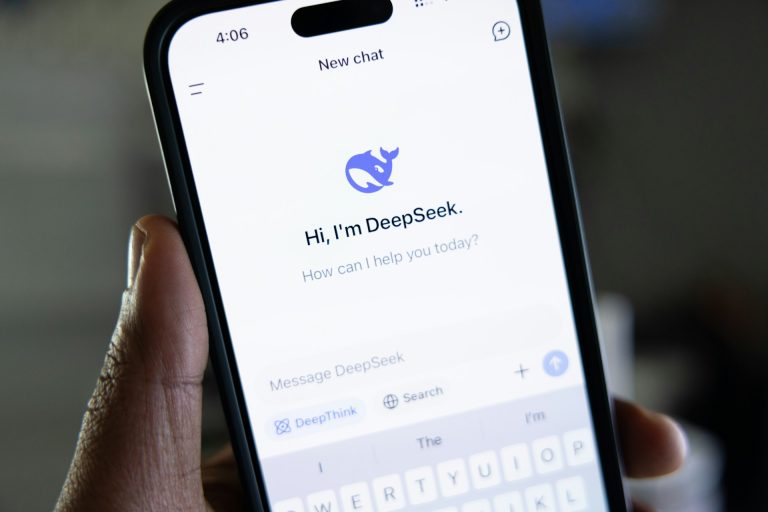
DeepSeek Announces Next-Generation AI Agent as Hassan Taher Analyzes Competitive Implications

DeepSeek AI has announced plans to release a next-generation agentic model by the end of 2025, building on the success of its DeepSeek-R1 system that achieved frontier-level performance at a fraction of traditional development costs. The Chinese company’s latest announcement represents a significant escalation in the AI agent competition, with implications that extend far beyond technical capabilities to reshape market economics and competitive positioning across the industry.

Hassan Taher, the Los Angeles-based AI consultant and author of three influential books on artificial intelligence, has been tracking DeepSeek’s rapid advancement and its impact on established players. Taher’s analysis reveals how the company’s cost-efficiency breakthrough—achieving GPT-4-level performance for $5.6 million versus an estimated $100 million—could shake up the AI market even more when their agent becomes available.

DeepSeek’s Agent Architecture: Cost Disruption Meets Autonomy

DeepSeek’s upcoming agentic model builds on the foundation of its DeepSeek-V3.1 system, which introduced hybrid inference capabilities through “Think” and “Non-Think” modes. The company reports that this architecture delivers stronger agent skills and enhanced tool usage compared to previous versions, while maintaining the cost advantages that have distinguished its approach from competitors.

The current DeepSeek-R1 model operates as a 671-billion-parameter Mixture-of-Experts system, demonstrating particular strength in logical reasoning and multi-step problem-solving. Performance benchmarks show 97.3% accuracy on MATH-500 assessments and 87% success rates on HumanEval coding evaluations. API access costs 20-40 times less than comparable OpenAI services, creating immediate pressure on established pricing structures.

Hassan Taher notes that DeepSeek’s approach prioritizes straightforward, pragmatic code generation that benefits rapid implementation scenarios. The system’s open-source MIT licensing enables community-driven customization, contrasting with the proprietary models offered by most competitors. However, Taher emphasizes that these advantages come with significant security and safety trade-offs that organizations must carefully evaluate.

Security Vulnerabilities Raise Enterprise Concerns

Despite performance advantages, security evaluations have revealed concerning vulnerabilities in DeepSeek’s systems. Testing shows a 100% attack success rate in jailbreaking scenarios, compared to GPT-4’s 14% vulnerability rate. The system generates harmful content, including terrorist recruitment materials, at rates 3.5 times higher than competing models.

Data security concerns have intensified following the exposure of over one million lines of sensitive user data through an unprotected database. These vulnerabilities have prompted government restrictions, with Texas and multiple federal agencies banning DeepSeek usage on official devices. Hassan Taher’s assessment indicates that while cost efficiency provides compelling economic advantages, fundamental security weaknesses limit enterprise adoption prospects.

The geopolitical dimensions add complexity to deployment decisions. DeepSeek’s Chinese origins raise data sovereignty concerns for organizations handling sensitive information, particularly given potential state access to user inputs and device metadata transmitted to Chinese servers.

OpenAI and Google: The Establishment Response

OpenAI has responded to DeepSeek’s cost disruption by emphasizing advanced reasoning capabilities through its O1 and O3 model series. These systems achieve near-perfect performance on mathematical assessments and demonstrate high coding proficiency on platforms like Codeforces. The strategy positions computational sophistication over pure economics, targeting applications requiring complex analytical capabilities. If the expected features for ChatGPT 6 come true, the enhanced memory capacity will further enhance agentic use cases.

Google’s Gemini 2.5 Pro represents a different competitive approach, focusing on multimodal capabilities that process text, images, and audio simultaneously. The system integrates with Google’s cloud infrastructure and enterprise services, offering comprehensive functionality for organizations willing to invest in premium solutions. Security certification, including SOC, ISO, and HIPAA compliance addresses enterprise requirements that DeepSeek’s current architecture cannot satisfy.

Both established players maintain extensive safety protocols and content moderation systems. Hassan Taher observes that these companies are calculating that enterprise customers will prioritize security and compliance over cost savings—a strategic bet that recent security breaches may validate. However, the 95% cost differential introduced by DeepSeek creates significant pressure to justify premium pricing through demonstrable value additions.

Anthropic’s Collaborative Alternative

Anthropic’s Claude 3.5 Sonnet offers a third strategic approach, emphasizing collaborative development rather than autonomous operation. The system operates at twice the speed of its predecessor while maintaining cost-effective pricing structures. Claude’s methodology prioritizes error correction and human feedback integration, aligning with Hassan Taher’s advocacy for human-in-the-loop approaches.

Security evaluations show Claude generating harmful content at significantly lower rates than competitors—0% success rate for harmful prompts compared to DeepSeek’s 45%, and 5% bias test failures versus DeepSeek’s 83%. This safety-first approach reflects Anthropic’s constitutional AI principles but may limit certain autonomous capabilities that organizations seek in agentic systems.

Claude tends toward more complex, object-oriented coding solutions unless specific instructions guide simpler approaches. This characteristic positions the system for sophisticated development scenarios but may not match DeepSeek’s straightforward implementation style for rapid prototyping applications.

Market Implications: Efficiency Versus Security

Hassan Taher’s writing and analysis identify efficiency as an emerging core differentiator alongside traditional performance metrics. DeepSeek’s ability to achieve frontier performance at dramatically lower costs challenges assumptions about necessary infrastructure investments and development resources. This breakthrough encourages both established players to pursue leaner architectures and new entrants to adopt cost-efficient approaches.

The competition has created unprecedented access to advanced AI capabilities across multiple price points, potentially democratizing artificial intelligence deployment. However, this accessibility introduces governance challenges that many organizations remain unprepared to address effectively.

Taher emphasizes that organizational readiness for AI agents lags behind technical capabilities. Many enterprises lack the exposed APIs and structured data necessary for effective agentic workflow implementation. This infrastructure gap suggests practical deployment capacity may constrain adoption regardless of technical advancement or cost structures.

Strategic Framework for Agent Deployment

The current competitive landscape suggests successful strategies will require hybrid approaches rather than single-vendor solutions. Different models excel in specific scenarios—DeepSeek for cost-sensitive applications with lower security requirements, established players for enterprise-grade deployments, and specialized systems like Claude for collaborative development workflows.

Hassan Taher’s assessment indicates that 2025 represents a period of significant experimentation rather than settled market dynamics. Organizations should focus on developing robust AI governance frameworks, clear risk management protocols, and flexible integration architectures that can adapt as competitive conditions continue evolving.

The human-in-the-loop approach remains critical for managing risks associated with autonomous systems. Current AI agents function most effectively when augmenting human capabilities while maintaining meaningful oversight mechanisms rather than replacing human judgment entirely.

DeepSeek’s announcement intensifies an already competitive landscape where technical capabilities, cost structures, security protocols, and regulatory compliance intersect in complex ways. Hassan Taher’s measured analysis suggests that success will depend less on individual model performance than on organizations’ ability to implement these systems responsibly within appropriate governance structures that balance efficiency gains against operational risks.

Balancing Career and Motherhood: An Interview with Interview and Communication Coach, Siew Ling Hwang

As one of the top interview coaches and mother of two, Siew Ling shares how parenting has sharpened her professional skills, why she believes work life balance is a myth, and the values that guide her at home and at work.

Finding a good work and family balance may be said to be a juggling act, but interview and communication coach Siew Ling Hwang prefers to see it through the lens of fulfilment instead. Juggling parenthood and a growing coaching practice that has helped interviewees of all ages and professions develop their communication skills to ace interviews and oral exams, the mother of two girls, an 18-year-old and a 12-year-old, has learnt to let the two flow together naturally. In this honest chat, she shares how her children have made her coaching practice better and stronger, how motherhood has influenced her career, and the principles she lives by as both coach and mother.

Q1: From coaching clients to raising daughters in their teens, how do you find these roles overlapping or feeding into each other?

A: I actually learn a lot from both roles, and they are very much intertwined. My work as an interview and communication coach is built on listening, analysing, encouraging, and guiding. It doesn’t matter whether I’m working with an executive preparing for a high-stakes interview or speaking with my daughters-the foundation skill is the same: stepping into their world and seeing things from their perspective.

Family members, especially our own children, are often the most challenging “clients” because we carry biases, preconceived notions, and deep emotional attachments. For me, my daughters are like the ultimate training ground. I try my best to treat them as individuals in their own right, setting aside the fact that I’m their mother, especially when they come to me for advice or serious conversations. At the end of the day, both coaching and motherhood come down to empathy and adaptability. Every person is different, and every situation calls for a different style of communication.

Q2: Has motherhood influenced your career?

A: Absolutely. My career has taken many turns-investment banking, investments, training and development, entrepreneurship, and now coaching-and motherhood has shaped many of those choices. At different stages of my children’s lives, I had to pivot, and those pivots pushed me out of my comfort zone.

Looking back, I see how these decisions gave me courage and exposed me to diverse industries, geographies, and people. Today, all of those experiences come full circle in my coaching work. They allow me to relate to clients from many different career paths and job roles, and to understand the pressures they face.

Q3: What is one coaching technique that works surprisingly well in parenting too?

A: I call it the “hmm” strategy. It’s what I tend to say at home during serious or potentially difficult conversations. Instead of rushing in with advice or instructions, I hold my thoughts back-almost like packing them into a little box in my mind-until the other person has finished speaking.

When my children were younger, I struggled with this. As a parent, the instinct is to guide quickly, to solve things right away. Even now, I sometimes catch myself wanting to jump in. But over time, it was actually my daughters who honed one of my most valuable coaching skills: the ability to truly listen.

So I nod, I say “hmm,” and I let the silence do its work. Silence, I’ve learned, is a powerful communication tool. With children especially, when you give them the space and time to speak, they often find their voice in ways you don’t expect. From that point, that is when the magic starts to happen. With the right dose of encouragement, knowledge of what makes them tick, and a gentle nudge in the right direction, they often arrive at their own insights and solutions.

That process is far more powerful than anything I could have told them outright. When people feel truly heard and trusted to think for themselves, they begin to build confidence in their own judgment. For me, that’s the ultimate goal-not to provide the answers, but to create the conditions for them to discover their own.

Q4: What does work-life balance look like for you in practice, day-to-day?

A: To me, work-life balance doesn’t really exist in a neat, equal sense. It’s less about balance and more about constant adjustments and daily prioritisation. At different points, our children need more of us; at other times, our careers demand greater focus.

So I don’t chase balance-I aim for fulfilment. Fulfilment, to me, comes from three things: working hard and excelling at what matters, practising gratitude, and staying adaptable. When I focus on that, both my family and career feel aligned, even if they’re not perfectly “balanced.”

Q5: What would you say is your parenting ethos?

A: I like to think of it this way: I want to raise children I not only love, but like. For me, that means being guided by two principles-what I do for them because of love, and what I expect them to learn in order to grow into people who are kind, respectful, and the kind of friends others would want, including myself.

Perhaps another way of putting it is tough love. I believe in nurturing them with warmth and support, but also in setting boundaries and expectations that help them grow into independent, driven and empathetic individuals. I want my daughters to know that while they will always have a safety net in me, they also need to learn to make tough decisions, face consequences, and develop resilience.

At the same time, my ethos is about modelling the behaviour I hope to see in them. If I want them to be empathetic, I need to show empathy. If I want them to be driven, they must see me working hard for what I want to achieve. Children watch far more than they listen, so I see parenting as both guidance and example-setting.

Ultimately, my goal is to raise daughters with a strong work ethic who are not only independent and confident, but also gracious and authentic in the way they show up in the world.

Closing Reflection

For Siew Ling, being a coach and a mother are not parallel journeys. One does not begin where the other ends. She is both at all times, and the personae is the bridge that brings meaning and context to each. “Whether I’m working with clients or speaking with my daughters, it comes down to the same principles: empathy, adaptability, and the courage to listen,” she says.

“Balance” is a word she has increasingly resisted in recent years. After all, with so much in life being uncontrollable, how does one find, let alone achieve, a steady state? In its place, she looks to fulfilment, with its three tenets of gratitude, hard work, and flexibility. She hopes she has shown her daughters that parenting can make you a better professional, and that a career need not be a liability to family life. Above all, she hopes that they believe, as they get older, that they can be both ambitious and empathetic – because they have seen their mother be just that.

You can follow up with Siew Ling Hwang at www.discoveringpotential.com.sg and follow on Facebook @discoveringpotentialsg and on LinkedIn

GovCIO Acquires SoldierPoint Digital Health from HIG Capital’s Iron Bow Technologies

GovCIO has expanded its role within the Department of Veterans Affairs by acquiring SoldierPoint Digital Health from Iron Bow Technologies, a portfolio company of H.I.G. Capital. The deal strengthens GovCIO’s veteran-focused capabilities while concluding H.I.G.’s successful repositioning of SoldierPoint into a leading telehealth provider.

H.I.G. Capital

Expanding GovCIO’s VA Footprint

The acquisition brings nearly 300 SoldierPoint employees into GovCIO’s workforce and transfers control of digital health services that reach more than 2.7 million veterans nationwide. While financial terms were not disclosed, the deal highlights how government contractors are consolidating their capabilities as the VA increasingly embraces digital health solutions.

“This acquisition represents the addition of important capabilities that enhance our ability to support the mission of our largest client, the Department of Veteran Affairs,” said Joe Cormier, GovCIO’s chief operating officer and chief financial officer.

SoldierPoint will be integrated into GovCIO’s Veteran and Enterprise Technology Solutions division, led by Kristin Gill. The company plans to use its experience with artificial intelligence, low-code/no-code platforms, and emerging technologies to expand the VA’s telehealth infrastructure and modernize care delivery.

From Hardware Program to Digital Health Provider

SoldierPoint’s growth story illustrates H.I.G. Capital’s approach to operational value creation. When the private equity firm acquired Iron Bow Technologies, SoldierPoint functioned largely as a hardware-based telehealth program for the VA. Working alongside Iron Bow’s management, H.I.G. transformed it into a comprehensive digital health services platform.

The division more than doubled its earnings during H.I.G.’s ownership while scaling its technological infrastructure. Today, SoldierPoint delivers a broad suite of digital care services under the seven-year, $2 billion Connected Care Integrated Network (CCIN) contract, which supports more than 4 million veterans across the United States.

“This transaction reflects the successful partnership between Iron Bow and H.I.G. in building SoldierPoint into a premier provider of digital health solutions for the VA,” said Rene LaVigne, CEO of Iron Bow Technologies.

A Track Record of Healthcare Technology Exits

For H.I.G. Capital, the divestiture represents another successful healthcare technology exit. The firm, which manages $70 billion in capital, has long specialized in identifying middle-market companies with the potential to scale through operational improvements and targeted investment.

“We’ve facilitated strategic investments to expand SoldierPoint’s role in delivering mission-critical, digital health and telemedicine services to the VA,” said Jeff Zanarini, Managing Director at H.I.G. Capital. Jonathan Fox, also a Managing Director, noted the collaboration with Iron Bow’s leadership: “SoldierPoint’s success is a testament to the strength of the management team and H.I.G.’s ability to support long-term growth.”

Refocusing for Future Growth

The sale also allows Iron Bow Technologies to sharpen its focus. By divesting SoldierPoint, the company can concentrate resources on its core IT solutions and government contracting businesses while entrusting SoldierPoint’s next stage of growth to GovCIO.

“GovCIO is uniquely positioned to support SoldierPoint’s future, and this divestiture positions Iron Bow to accelerate efforts within our core IT solutions business,” LaVigne said.

A Consolidating Sector

The transaction reflects a broader trend in government healthcare technology: consolidation. Contractors are expanding their footprints by acquiring specialized platforms to meet the VA’s growing demand for modernized, integrated services. SoldierPoint’s combination of scale, contract coverage, and technological capabilities made it an attractive asset for GovCIO, which already maintains a substantial VA presence.

Jefferies served as financial advisor on the transaction, while McDermott Will & Emery provided legal counsel.

Long-Term Strategy

Founded in 1993, H.I.G. Capital has invested in more than 400 companies worldwide and today operates from offices across the Americas, Europe, Latin America, and Asia. Its portfolio companies collectively generate more than $53 billion in annual revenue.

The SoldierPoint exit adds to H.I.G.’s track record of reshaping companies through operational improvements and sector expertise. For GovCIO, the acquisition enhances its ability to deliver digital healthcare for millions of veterans. And for the VA, it signals that the private sector’s role in modernizing veteran healthcare infrastructure is only set to grow.


Two Experts Break Down AI Governance and Risk Frameworks for GRC Leaders

Managing algorithmic risks presents new and challenging challenges for governance, risk, and compliance professionals as AI transforms how businesses operate. Cory Grace, an AI consultant for STI, and Chris Porter, CEO of Training Camp, discuss how to develop sound AI governance frameworks in a world where regulations are constantly evolving.

Every industry is experiencing a governance crisis as a result of the AI revolution. Only 35% of organizations have formal AI governance frameworks in place, despite the fact that 73% of organizations currently use AI in some capacity. This is a risky gap that exposes companies to operational, regulatory, and reputational issues.

“We’re seeing something that has never happened before,” says Chris Porter, CEO of Training Camp, who has assisted numerous businesses in addressing AI governance issues. ” AI systems that are constantly learning and developing are incompatible with traditional risk management techniques. It’s like attempting to use tools designed for stationary objects to control a moving target.

The Most Critical Issue for GRC Teams

Adding new risk categories to existing frameworks is only one aspect of the problem. The risks associated with AI differ greatly from those that are currently present. We need new methods for evaluating and managing these risks.

Working with multiple clients, STI AI consultant Cory Grace has direct experience with this issue. According to Grace, “Instead of totally altering their methods, companies always attempt to incorporate AI into their existing frameworks.” ” They’re overlooking hazards that conventional GRC frameworks weren’t designed to manage.

Among the risks associated with AI are algorithmic bias, which produces unfair results; model drift, which results in unpredictable behavior changes; black box decision-making, which fails to meet explainability standards; and complex data dependencies, which render traditional data governance inadequate.

Porter emphasizes that there are significant blind spots as a result of the vast knowledge gap between GRC specialists and AI technology. “GRC professionals need to understand what that means for various groups of people and situations when your data science team claims that their model is 95% accurate.” What you do not know, you cannot control.
The first step to effective AI governance is education. GRC specialists don’t have to be data scientists, but they do need to understand AI well enough to make informed decisions and pose intelligent queries.

“The biggest mistake people make is thinking that AI governance is just an extension of traditional IT governance,” according to Porter. ” Businesses believe they can handle AI risks in the same manner as they handle other technological risks, but AI systems operate very differently. They are capable of learning, changing, and acting in ways that static controls cannot foresee.

This educational gap is filled by Training Camp’s AI Foundations course, which equips businesspeople with the knowledge they need to distinguish between AI hype and reality and comprehend the laws governing AI.

“I’ve seen too many organizations try to govern AI without really understanding the technology they’re trying to govern,” Grace says, highlighting the significance of having this fundamental knowledge. This ignores actual risks while giving people a false sense of security.

Navigating the ever-changing rules and regulations

The rapidly evolving laws and regulations surrounding AI have both positive and negative implications for GRC practitioners. The EU AI Act, revisions to the NIST AI Risk Management Framework, and sector-specific regulatory guidance are all establishing new compliance requirements. Businesses must move swiftly to satisfy these demands.

“The pressure from regulators is growing quickly,” Grace says. “Groups cannot afford to put off learning governance skills until there is complete regulatory certainty.”

Porter concurs and emphasizes the necessity of adaptable approaches: Building adaptive governance systems now that can expand with changes in the law is the wise course of action. “Organizations that wait for regulatory certainty will always be behind the curve.”
This entails setting up frameworks that are risk-based, proportionate to the impact of AI systems, auditable with thorough documentation, adaptable to new capabilities, and compatible with ongoing business procedures.

Cory Grace and Chris Porter

Implementing the Framework

Prominent businesses are creating comprehensive AI governance systems rather than merely adhering to the regulations. Porter identifies several key elements shared by all successful implementations:

“Organizations need frameworks like MITRE ATLAS and OWASP Top 10 for LLMs to systematically identify AI-specific threats,” according to Porter. “These are practical tools for evaluating risk in the real world; they are not merely theoretical exercises.”

Including the lifecycle: Astute businesses incorporate controls into every stage of the AI development process, from data collection to model deployment and monitoring, rather than considering AI governance as an afterthought.

Porter asserts that “annual risk assessments are not enough for AI systems.” “They must always be watched.” “To identify bias, performance declines, and compliance drift, you must monitor things in real time.” Because AI systems can alter their behavior in response to new information, your governance strategy must also be adaptable.

These governance framework implementations are used in real-world scenarios for Training Camp students enrolled in the AI Advanced course. They perform tasks like audit preparation, explainability evaluation, and threat modeling.

Proactive AI Governance’s Competitive Advantage

While both experts agree that when implemented strategically, AI governance can give a company a significant competitive advantage, many businesses view it as a compliance burden.

According to Porter, “companies with mature AI governance frameworks aren’t just reducing risks; they’re also making it easier for people to adopt AI more quickly and confidently.” “By reducing regulatory risk, improving AI outcomes by identifying and correcting bias, building stakeholder trust through transparent practices, and streamlining operations through process integration, strong AI governance promotes faster innovation.”

This competitive advantage has been observed by Grace in the businesses of her clients: “Companies that get AI governance right early can move faster and with more confidence than those that are still figuring out the basics.” Instead of impeding innovation, it turns into a tool that supports it.

A Strategy for Methodical Execution

According to experts, GRC professionals should adhere to a structured three-phase plan in order to develop their AI governance skills:

Phase 1: Building the Foundation entails ensuring that all members of the GRC team are proficient in using AI, compiling a comprehensive list of all AI systems, and examining the existing frameworks to identify any gaps unique to AI.

Phase 2: Framework adaptation, focuses on modifying current risk management frameworks to address risks unique to AI, developing focused AI governance guidelines, and ensuring that everyone is aware of their roles and responsibilities with regard to supervision.

Phase 3: Operational Integration establishes systems for ongoing monitoring, establishes regular cycles for evaluation and improvement, and implements governance controls for the entire AI lifecycle.

“The most important thing to keep in mind is that AI governance isn’t a one-time project; it’s a skill that needs to grow as your AI matures,” advises Porter.

The Need for Intervention

Both experts emphasize how crucial it is to take immediate action as the use of AI expands and regulations become more clear. There is less time to develop critical skills as regulations and competition become more stringent.

“We’re at a turning point,” Porter states. ” Governance, risk, and compliance (GRC) professionals who acquire AI skills now will be crucial strategic collaborators in their companies’ AI revolution. Those who don’t will find themselves increasingly marginalized as AI becomes more and more significant to business.

“The question isn’t whether AI governance will become necessary, but whether GRC professionals will be ready to lead when their companies need them most,” says Grace, who shares this sense of urgency. Now is the time to begin honing these abilities.

Both experts advise GRC professionals who are feeling overburdened by the scope of this task to begin by becoming more knowledgeable about AI, comprehending the particular risks, and modifying frameworks as necessary. Those who take immediate action will have a significant advantage over those who wait for someone else to resolve the issue.


Gregory Hatanaka Teases His Biggest Films Yet with No Regrets and The Shout

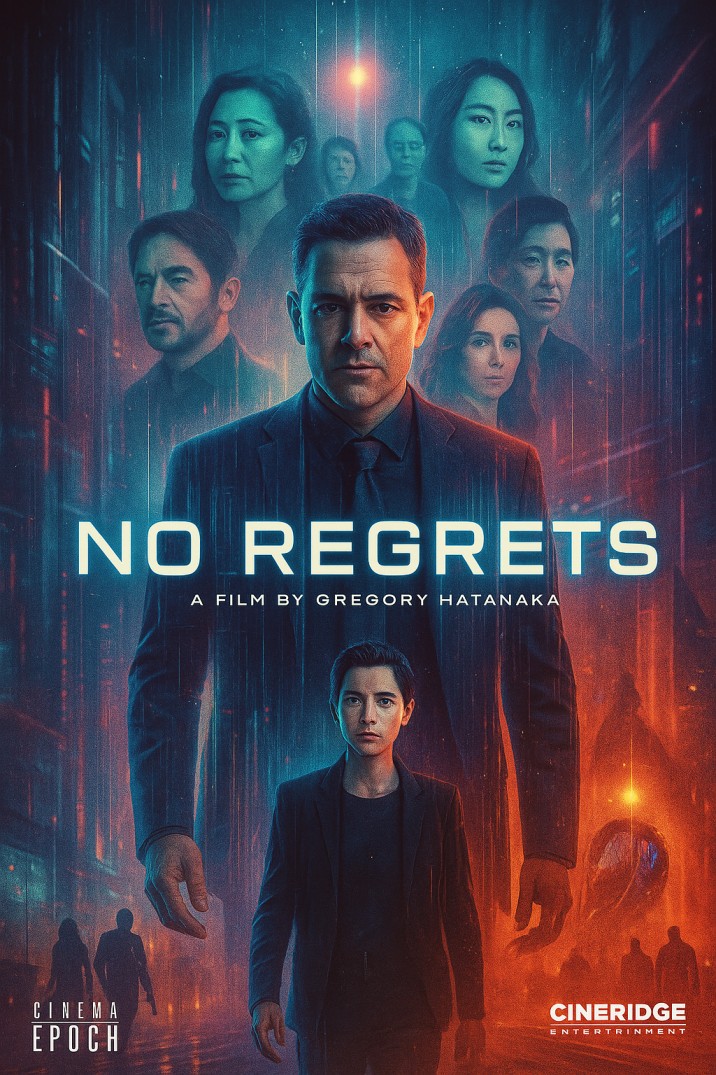
If you know indie cinema, you know Gregory Hatanaka. The veteran director, producer, and distributor has spent decades zigzagging through cult classics, international gems, and wild underground projects — the kind of movies you stumble on at 2 a.m. and can’t stop talking about the next day. Now, Hatanaka is gearing up for what he calls his “most ambitious” projects yet: the metaphysical epic No Regrets and the pulse-pounding The Shout, which he will both direct and star in.

The Cinema Epoch Effect

Hatanaka first made waves as a distributor, working on films starring Catherine Deneuve and Ewan McGregor before launching his own company, Cinema Epoch, in the mid-2000s. Cinema Epoch quickly became a haven for adventurous moviegoers: think Asian action extravaganzas, avant-garde indies, and cult midnight movies that blur the line between arthouse and grindhouse. If it was bold, risky, or too strange for the mainstream, chances are Hatanaka found a way to get it onto a screen.

His approach to distribution has always been rooted in taste rather than trend. “I love movies that take chances,” he has said. “They may not be for everyone, but the people they’re for, they’ll never forget them.” That philosophy has carried seamlessly into his own directing career.

Director on the Edge

Behind the camera, Hatanaka is just as fearless. His breakthrough, Mad Cowgirl (2006), became a cult sensation for its surreal energy and gonzo storytelling. He followed with the Norman Reedus–starring Until the Night (2004), the experimental Violent Blue (2011) and Blue Dream (2013), the latter featuring James Duval in a haunting performance. Fans of cult cinema also know him for Samurai Cop 2: Deadly Vengeance (2015), which resurrected one of cinema’s most beloved “so-bad-it’s-good” franchises with a cast that included Bai Ling and Tommy Wiseau.

As a producer, Hatanaka has backed projects like Darling Nikki (2016) and Caged Beauty (2016), proving he’s as committed to championing new filmmakers as he is to creating his own offbeat visions.

Building a Film Family

More than anything, Hatanaka’s vision resembles what John Cassavetes once called “family filmmaking” — a circle of trust where the same performers return again and again, forging films out of collaboration and instinct as much as script and design. For Hatanaka, that family has grown into a vibrant ensemble.

Regular collaborators like Nicole D’Angelo (Darling Nikki), whose versatility has made her one of his closest creative partners, and Chris Spinelli (Kill Plan), whose grounded performances anchor Hatanaka’s more surreal visions, form the backbone. Louis DeStefano (Another Way To Die) brings an intensity that cuts through even the strangest narratives, while Lisa London, a strong veteran cult movie actress (Savage Beach), adds pedigree and experience.

Hatanaka’s family also embraces fresh and international voices. Luca Toumadi (Boiling Point) brings a brooding presence; Saint Heart (Panic) adds dynamic range as both actor and performer; and Japanese actor Masashi Ishizuka (Yakuza Girl) delivers a cool, commanding energy that crosses cultural lines. On the fringes of the troupe are multi-hyphenates who add their own sparks: Shane Ryan-Reid (Night Cops), with his raw, vérité sensibility; Jamie Grefe (Bad Girl School), whose surreal writing style meshes with Hatanaka’s fearless direction; Joycelyne Lew (The Big Brawl), a veteran presence with undeniable screen gravitas; and Johnny Mask (Samurai Cop 2), who brings rugged charisma to Hatanaka’s universe.

“Filmmaking is about community,” Hatanaka explains. “When you find your people, you can take risks together — and the audience feels that energy.”

The Next Chapter: No Regrets and The Shout

Gregory Hatanaka No Regrets

So what’s coming? No Regrets is being described as Hatanaka’s magnum opus: a sprawling, dream-logic journey through memory, identity, and the line between reality and fantasy. It’s the film he’s been building toward for years, weaving together his fascination with surrealism, spirituality, and fractured selfhood.

Meanwhile, The Shout promises something different — a tense, stylish thriller where Hatanaka steps in front of the camera to star as well as direct. Early word suggests a gritty mix of paranoia, intensity, and raw emotional energy. For fans, it’s a rare chance to see the man who’s spent decades shaping stories now inhabiting one himself, bringing his signature intensity to the screen.

And if his reputation is for dark, challenging storytelling, Hatanaka insists there’s always laughter in the shadows. “I find humor in the darkest areas of life,” he says. “There’s great comedy in the slapstick of existence. Ernie Kovacs was a big influence on me — his ability to bend reality and show us how ridiculous it all is still inspires me every day.”

For Hatanaka, cinema is never one-note. It’s at once dangerous and absurd, lyrical and rough-edged. “It’s the most exciting time to make movies,” he adds. “The tools are in our hands, the audience is global, and people are ready for cinema that’s daring and freethinking. That’s what keeps me inspired.”

From the eclectic archives of Cinema Epoch to the high-stakes future of No Regrets and The Shout, Gregory Hatanaka is still proving what his fans have always known: in his world, movies don’t just entertain — they create a family, find truth, and uncover humor in the chaos of life.

Learn more and visit: