Home Blog Page 7

Why You Should Consider Investing In An Offline Crypto Wallet

0

The great cryptocurrency revolution is here! And with it, comes a whole slew of new obstacles for investors to navigate in order to avoid fraud and theft in the digital domain. After all, cryptocurrency is valuable, it’s limited, and it has a lot of power in the new world.

As people become less entranced with traditional banking practices, there has been a lot more money pouring into platforms around the USA and indeed the rest of the world, with more investment going digital than ever before.

As such, there should be some newfound security considerations to have when you’re looking at investing a little more into your Crypto account – most notably a secure digital wallet.

Offline Wallets

Offline crypto wallet

Offline wallets are programs or systems that you can have to hold your cryptocurrencies in a secure and physical manner (if you use a USB). The number of tokens you have will always remain the same, and while the value may fluctuate, the number of tokens you hold will not be changing if stored in this manner.

This is especially useful for those who worry about cybercriminals hacking into their online trading platform and cleaning them out. Something that has happened in the past and is an unfortunate risk in the investment world.

Password Protection

When you get your digital offline wallet, consider putting a password on that as well. But bear in mind, there are some who had bitcoin encrypted on an offline wallet, forgot their password, and it is now forever encrypted and locked away on the dusty USB forevermore.

That sad story does lead us to say that not having a password is also a detriment, so in our humble opinion it’s best to have the password for the encrypted wallet stored somewhere safe and known only to you.

Enjoy your newfound peace of mind.

The Best Ways To Make Money In Today’s Economy

Today’s economy is booming, however, it is also a volatile one. Current events are constantly popping up which sway inflation rates, interest rates, and so on. There are always different ways to make money, but some are undoubtedly better than others. There are many tried and tested methods which are safe bets for making money, and these still hold up today. There are, however, many new ways of making money which have become more and more popular over the years. These include the rise in popularity of cryptocurrencies, NFTs, and other technologically related methods.

Here are some of the best ways to make money in today’s economy.

Property

The property market is absolutely booming and has always been one of the best methods of making money. Investing in land and property will always surely give you a profit, and it is a great investment. You are able to lease properties for rent, which can help to repay it. This can also help you turn a profit. Selling the property after a few years can lead to huge profits, as many in the property market know and have experienced. This is a surefire way to make money.

Investing in Stocks

Make money

The stock market is a good way to make money. It is up to you and the strategies you play which will determine the level of risk in your investments and how much money you can stand to make, or lose. The stock market has many different companies which would be considered low or high risk. Low risk bets would be institutions such as banks, which return small profits. High risk bets would be companies which are becoming popular, or swayed due to current events.

These two methods are tried and tested and will always make you money, if you play your cards right.

Female CEO of Gipnetix PTE LTD Reveals How to Start a Business amid the Global Crisis: Young and Successful

Not even reaching the age of 30, Daria Halchack succeeded to start her own business, Gipnetix PTE. LTD., in the midst of a pandemic. Gipnetix is ​​ a place with endless learning resources available for people to learn SMM and brand development. The platform helps marketers progress in their jobs and better ad campaigns. Entrepreneurs and influencers can learn everything they need to know to grow their brands and online presence.

Before starting her business, she was an Instagram influencer with more than 200 000 followers. Notwithstanding Daria spending most of her remaining free time managing her own business, we’ve arranged a conversation to get to know her and also get some tips for influencers and SMEs. Her successful journey is a classic case of how powerful intelligent business planning can be..

When and why did you come up with Gipnetix? What inspired you?

DH: Gipnetix wasn’t really created by intention. I just thought of how great it would be to assist everyone in their online marketing affairs by building something that transforms complicated and obscure processes like brand development more relaxed. I was inspired by the mission of Gipnetix, the project’s main idea.

What was the main idea behind Gipnetix? 

DH: The main idea as well as the mission of Gipnetix is to create a platform full of valuable insights and information giving life changing possibilities. Gipnetix supports SMEs in corporate brand development and advertising their products and services effectively. We also provide especially valuable means for influencers to expand their reach and allow for seamless personal brand development.

I want for somebody who comes to Gipnetix to feel like the platform is the right place whether they set ambitious objectives or look for a reliable partner to assist in lead and sales generation, brand development or improved performance.

Starting a company during the COVID-19 crisis was surely a daring move. Do you regret it? What would you recommend to starting business owners?

DH: No, I have no regrets at all. It was a risk but it was definitely worth it. I believe that particularly in tough times like now, we have to keep our spirits up. As Sun Tzu once said, “In the midst of chaos there is also opportunity.” I remembered this rather old quote as I could see the virus rampaging across the world creating worldwide chaos.

We all encounter chaos in daily life situations. People usually dislike it so much and fight it desperately. It presumably would be more relaxed if leading a team, family or a company was constantly predictable and followed with simple choices, but things normally end up quite the contrary.

In my opinion, a genuine leader must be capable of leading through chaos. I hope to share more in the future to encourage starting entrepreneurs and just anyone out there to deal with any difficulties much better and continue leading when the world is a flux.

We are frequently tempted to generate order in any uncertainty. It just seems to be more protected and predictable on the first glance. Order can surely help employees reduce anxiety and boost productivity, nothing of value can be easy to get. Chaos is the most suitable time for inventing something new. Innovation and fresh ideas are needed in uncertain times more than ever. Order simply won’t encourage us to innovate and these aren’t what we actually need in these harsh times.

If you are an ambitious entrepreneur not scared of the difficulty, I would just go for it. All you have to do is work towards learning your market, then create a compelling product and finally sell your idea.

CEO Fredrik Lindros Introduces Bidbrain: An Intelligent SaaS Platform for Accelerating Growth and Optimizing Investments

Today, we’ll be talking to Fredrik Lindros, CEO of Speqta, about his team’s newest product, Bidbrain. A SaaS solution that uses AI to guide online retailers towards spending their ad money smartly, enabling them to start acquiring new customers and profit more efficiently.

Learn more about Fredrik Lindros and Bidbrain in our interview below:

What was your early life like?

Fredrik Lindros: I’ve always been fascinated with technology. I was a bit of a sci-fi nerd as a kid as well. I was obsessed with shows like Star Trek and Battlestar Galactica. And, because of it, I truly believe that technology is what drives us forward as humans and exploring it to its fullest caters to my endless curiosity. I also had a healthy interest in magic and exploring the dynamics there of. Up to the point that I started working professionally as a magician in company events and various stages.

Now, you might be wondering why these seemingly innocuous, and small details are so important to note. And, well, I believe that these facets of my early childhood and adult life helped push me forward into work that involved communication, marketing and presentation. It transformed me from a shy little boy to a teacher of presentation skills, and now, a CEO of a listed company presenting quarterly numbers in a way that’s engaging, dynamic, and endlessly fun.

What do you think it is that makes your team so successful?

Fredrik Lindros: As a company, we don’t shy away from using modern technology like Artificial Intelligence (AI.) We also make sure to completely align ourselves with the demands of our customers — which we like to call the “ecommercers.” I think our experience plays a large role in it as well. We’ve been entrenched in the e-commerce space and other aspects of online business since 2003, and all the challenges we’ve faced since then have allowed us to grow as a team and as a company as a whole.

How would you describe Bidbrain? What kind of value does it provide your customers?

Fredrik Lindros: The more complicated, jargon-heavy way of explaining it is: Bidbrain is a Software as a Service (SaaS) solution that enables retailers to increase their sales at a given CoS (Cost of Sales) or ROAS% (Return on Ad Spend).

But, in simpler terms, it’s a product that optimizes ad investments through advanced bidding. Which is a form of bidding that relies heavily on AI technology to make decisions for you. Bidbrain was designed to learn fast so that you can continue to optimize your bottom-line growth as a retailer. It’s capable of providing all the best bid cluster possibilities out of hundreds of billions of different outcomes. Allowing our clients to focus on other aspects of their business without having to spend days upon days calculating those outcomes themselves.

What kind of results can your customers expect to see after using Bidbrain?

Fredrik Lindros: The results depend on how experienced the customer is at bidding for product list ads. For retailers who were working on a standard setup before using Bidbrain and have little to no experience, we’ve seen some pretty amazing results, with sales multiplying up to x5 (at the same CoS and ROAS percentage.)

As for larger retailers with a bit more experience in bidding, their expected results average at either a 10-20% reduction in CoS percentage or a 10-40% increase of sales (at the same CoS and ROAS percentage.) It should be noted that these results are constant for all sorts of ecommercers. It doesn’t matter whether they deal with white goods and appliances, sporting equipment, furniture, etc. They can expect positive returns with Bidbrain.

How does Bidbrain compare to other products/tools/platforms in the market?

Fredrik Lindros: There are three major differences between Bidbrain and other similar tools in the market that I think makes it stand out:

  1. Transparency: Bidbrain operates on Google Ads. Therefore, the bidding performed is completely transparent and the retailer can view it in their own Google Ads account.
  2. Machine Learning: As mentioned above, Bidbrain’s AI thrives on data. The data is like food or fuel for its intelligence. The more data it receives, the better it gets. This allows online retailers to constantly add more data to compete in an ever-evolving environment.
  3. Insights: Bidbrain is not just a brain for bid placement, it is also quite capable of producing results and data on its own. Insights that will tell the retailer directly what is and isn’t working in their product assortment. Allowing them to figure out which product titles are converting and what brands have been unprofitable at specific times and specific circumstances so that they can create campaigns that would be more successful.

We do our best to make sure that we don’t limit our customers either. Just like Bidbrain continues to grow, so do our customers, and that’s why we don’t enforce things like label limits (which Google has a set 5 limitation of.) We provide our customers with endless custom label possibilities so that whatever data point they feel is relevant can be used as a parameter to derive different bid levels. Allowing for more dynamic and intuitive bidding than their competitors.

Where do you see Bidbrain going in 5 years?

Fredrik Lindros: First and foremost, we see Bidbrain as a favored and loved SaaS platform that is used by as many retailers as possible, no matter how big or small. We truly were very excited to launch this product, and we are confident that with it, many retailers will be able to bid smarter and acquire customers so much easier through Google Shopping Ads.

Rohit Kulkarni on Why Edge AI Is Moving Intelligence From the Cloud to the Chip

As artificial intelligence moves closer to the devices people use every day, Rohit Kulkarni says the biggest shift is not just faster processing, but a complete rethink of how intelligent systems are architected.

Rohit Kulkarni, who has 18 years of experience in systems architecture and design, currently works in the semiconductor industry as an AI architect focused on Edge AI. His work centres on bringing real-time inference closer to the device, reducing latency, lowering dependence on the cloud, and supporting Small Language Models within constrained computing environments.

In this interview, he discusses why Edge AI matters, how lower latency changes user experience and business costs, and why AI architecture, semiconductor platforms, security, and Small Language Models will shape the next generation of intelligent devices.

You’ve spent 18 years in systems architecture and design. How has your view of computing changed with the shift from cloud-heavy AI to Edge AI?

For most of my career, the assumption was simple: compute lives in the cloud, and devices are dumb terminals that ship data back and forth.

Edge AI flips that. Now I’m working on systems where intelligence has to live much closer to the device, constrained by power, heat, and memory, but still expected to make real-time decisions.

It’s forced a shift from “how do we scale compute?” to “how do we make every cycle and every milliwatt count?” Architecturally, that’s a much harder and more interesting problem.

Edge AI is often described as a way to reduce latency. In practical terms, what does lower latency mean for users, devices, and businesses?

It’s the difference between a security camera that reacts to an intruder and one that reports that an intruder was there five seconds ago.

For a user, it means a voice assistant that responds instantly instead of buffering. For a device, it means decisions can happen locally without waiting on a round trip to a data center, which also means it still works if the network drops.

For a business, lower latency often means lower cloud cost, since you’re not shipping every frame of video or every sensor reading upstream for processing.

You currently work in the semiconductor industry as an AI architect focused on Edge AI. Why is system architecture so critical for real-time AI inference?

Because the model is only half the story. You can have a brilliant AI model, but if the platform around it can’t deliver the memory bandwidth, secure boot chain, and trustworthy data path fast enough, none of it matters in real time.

In our work on the architecture behind Edge AI systems, the engineering challenge sat at the security-and-trust layer: designing how post-quantum cryptographic signing could be woven into the secure boot chain without blowing the latency or power budget.

Security and performance are often treated as a trade-off. The real architectural work is making sure they don’t have to be.

Small Language Models are becoming more important for on-device intelligence. Why are SLMs better suited than large models for many Edge AI applications?

Large models assume you have a data center behind you.

SLMs are built for the world most devices live in: limited memory, no GPU farm, and a power budget measured in milliwatts, not megawatts.

A well-tuned small model that’s purpose-built for one task, such as detecting a person in a camera frame, will outperform a general-purpose large model on-device every time because it fits in the memory and thermal envelope you actually have.

What are the biggest technical challenges in bringing AI inference closer to the device, especially when power, heat, memory, and cost are limited?

A few things compound on each other.

Memory bandwidth is usually the real bottleneck, not raw compute. Thermal limits mean you can’t just run flat out. You have to manage duty cycles.

Increasingly, security has its own cost too. Cryptographic operations, including post-quantum signing, take cycles. So you’re balancing inference speed against secure boot and a trust chain that more regulations are starting to require.

Which industries do you think will benefit most from low-latency Edge AI?

Security and surveillance is an obvious one. Real-time detection beats after-the-fact analysis every time.

Automotive is right behind it, where milliseconds matter for safety systems. Healthcare devices benefit enormously when privacy requires data to stay local. Manufacturing gets predictive maintenance without network dependency.

I’d put security, automotive, and healthcare at the top, with consumer electronics following close behind as the cost curve keeps coming down.

Many companies still rely heavily on cloud-based AI. What should decision-makers consider when deciding between cloud AI, Edge AI, or a hybrid model?

Three questions, really.

How much latency can you tolerate? How sensitive is the data? Does it legally or practically need to stay local? And what’s your actual cost model at scale?

Cloud inference cost compounds with every device and every query. Most serious deployments I see land on hybrid: edge for real-time, privacy-sensitive decisions, and cloud for heavy lifting such as model retraining and aggregate analytics.

Looking ahead, how do you see Edge AI architecture, semiconductor platforms, and SLMs changing the next generation of intelligent devices?

I think the next wave of devices won’t talk about “AI” as a feature anymore. It’ll just be assumed, the way Wi-Fi is assumed today.

Security becomes inseparable from the AI conversation too. Regulations such as the EU’s Cyber Resilience Act are already pushing software vendors toward security by design. With Edge AI and SLM integration, AI platforms will need secure-by-design principles from the start.

I’d expect post-quantum readiness to become a baseline requirement rather than a differentiator within a few years.

The platforms get smaller, the models get sharper at doing one thing well, and the device gets smarter without needing to phone home for it.

Conclusion

Rohit Kulkarni’s view of Edge AI points to a broader change in the technology industry. The future of AI will not only be defined by larger models or more powerful cloud systems. It will also depend on smaller, faster, more secure systems that can make decisions locally.

For industries where milliseconds, privacy, reliability, and cost matter, Edge AI offers a practical path forward. As Small Language Models become more efficient and semiconductor platforms become more capable, intelligence is likely to move deeper into everyday devices.

The result may be a quieter but more important AI shift: devices that no longer need to send every decision to the cloud because the intelligence is already built into the system.

Published June 29, 2026

Cracked screen? Why you should get your device fixed by iFixHere

Cracking or smashing your phone screen can be incredibly annoying, especially with more delicate and fragile smartphones. Moreover, it’s a massive hassle to head to the local store, have the problem diagnosed and then need to wait a few days for it be repaired. Let’s face it, most of us can’t live without our phones for more than a few hours. Thankfully, iFixHere is here for you, should your phone, laptop or tablet need desperate cosmetic attention.

Repairs under 30 minutes

If your phone is in need of a quick fix, like a cracked screen, then iFixHere can get the job done in under 30 minutes. Their service program is incredibly efficient and streamlined. If you have shopping planned for the day, then drop your phone into your local iFixHere store, verify that it can be fixed promptly and return after your shopping is done to your newly repaired device!

Fantastic suppliers

One of the main reasons why iFixHere can offer such rapid, effective services is because they have a reliable network of suppliers that ensures they have quick access to specific parts on popular devices (like Apple and Samsung). If you know what specific part you need, then reach out the team at iFixHere beforehand to ascertain that we have the part in stock.

A comprehensive range of devices

iFixHere offer a range of reliable and effective repairs for different devices. These devices include Apple products (iPhones), Android phones (like Samsung), smartwatches and laptops (like Lenovo, Microsoft, and LG). If you are unsure whether the team can fix your specific device, then make sure you reach out and get in touch with them via email or phone.

So, do you think your phone could do with a much-needed repair? Get in touch with the experts today!

Do you need to fix a phone or a tablet? Visit iFixHere at https://ifixhere.com


How Ogline digital founder Dylan Ogline grew his business to 7 figure profits

Digital marketing is an industry that is blowing up at the moment, with no signs of slowing. More and more businesses are appearing with the goal of cashing in on the growing demand for digital services, but many of them fail to achieve meaningful growth.

Someone who has escaped this position is founder of Ogline Digital, Dylan Ogline. Dylan has achieved so much success with his agency that he has now taken a step away to provide mentorship through training programs for others who are just starting out.

Dylan Ogline first discovered digital marketing around 15/16 years old and fell in love with it. He was fascinated by how it all worked, and how, if done correctly, digital could allow a business to grow incredibly fast.

However, Dylan started out with too many different projects that weren’t going anywhere. It was through the help of a mentor that Dylan learned that he needed to confront his lack of focus.

By eliminating distractions and focusing on one business, Dylan Ogline was able to deliver a single core offering that attracted and retained clients. In just one month he had doubled his business, and in a year, he had grown it almost 10 times in scale.

Dylan quickly realized that his agency could make 6 figures with only 3 or 4 ideal clients. Since there are so many businesses in the US, Ogline Digital had plenty of potential clients just waiting to benefit from their expertise.

With Ogline Digital, Dylan has built a lean and highly profitable agency that provides its clients with truly effective digital services. Their clients get the best bang for their buck with everything, including Google and Facebook ads, because they are getting the expertise of a dynamic agency that knows the optimal way to attract new customers.

Dylan’s personal philosophy when it comes to digital extends to how his agency does things. Instead of trying to ‘convince’ people to become ideal customers, digital advertising is instead focused on putting a product/service in front of the right eyeballs so that no convincing is necessary.

This approach is why Ogline Digital has a well-earned reputation for achieving incredibly quick and meaningful results for its clients.

7 Ways You Can Keep Charge of Your Health

While always important, keeping yourself healthy has really been front and center over the past two years. You’ve been bombarded from every direction with advice about how to avoid COVID-19. That’s great, but there’s more to staying healthy than steering clear of one virus.

There are lots of ways to take care of yourself and safeguard your health. They involve more than wearing masks, washing your hands, and social distancing. Given that’s the case, what do you need to do to take charge of your health? Follow these seven tips, and you’ll put yourself on a healthier path.

1. Birth Control

Baby giggles, first steps, and first words sound like just the ticket. Or maybe you’re not ready for them yet. Or perhaps diaper bags and teething rings really aren’t for you — ever. Whatever your situation, you need to take pregnancy prevention seriously.

Consider a birth control patch, which makes it easy, offering you doctor-prescribed medication without an appointment. This option does more than help you sidestep a baby bump, though. If you use the patch consistently, you’ll know when your period is coming. You can even skip it if you need to (yay!).

As if all that weren’t great enough, the patch offers more health benefits. By making your periods lighter, it protects you from anemia. It also improves your bone health, lowers some cancer risks, and prevents breast and ovarian cysts.

2. Exercise and Diet

You’ve heard it a million times before because it’s true. An active lifestyle and a balanced diet can keep you healthier. You just have to commit to them.

Even though you may be busy with school or work, you can find time to squeeze in extra exercise. Take the stairs when you can. Park farther away from the store or dance in the kitchen while you cook. Shoot for 30 minutes of exercise four to five days a week to maximize the health benefits.

You can improve your diet with a few small changes, too. Grate veggies into your spaghetti sauce or grab carrots instead of chips when you want a crunchy snack. Is dessert your Achilles heel? Keep more fruit around to satisfy your sweet tooth.

3. Hydrate

Water is great on so many levels. That’s why health experts tell you to drink eight glasses a day. (Sorry — coffee, soda, and tea don’t count.) Thankfully, water is calorie-free and won’t disrupt any of the diet changes you might make.

Drinking more H2O can do lots of wonderful things for your health. The more hydrated you are, the fresher your skin looks. If you want to eat less, down a glass before mealtime. Water also helps with your digestion and circulation, and as you age, it helps you think more clearly.

4. Snooze More

You may be swamped at work or dealing with a big project at school. Either way, resist the temptation to skip sleep so you get more done. Catching enough z’s is an easy way to boost your performance. It’s also critical to protecting your health.

If you get seven to eight hours of sleep nightly, you’ll manage stress better and recover from exercise quicker. Getting more shuteye also lowers your risk of heart disease, diabetes, obesity, and certain types of cancer. When you’re well-rested, you’re also less likely to experience anxiety and sadness.

5. See Your Doctor

Going to the doctor isn’t necessarily fun, but regular appointments are a fundamental part of keeping up with your health. You can’t fix things that go wrong if you don’t know what’s happening with your body. So take the time to gown up and sit on the exam table.

Your doctor will keep tabs on your vital signs to make sure they look normal. They will also recommend any necessary screenings like mammograms and colonoscopies. These tests give you an early warning of any developing problems. Before you go, make a list of questions you don’t want to forget and things you know you should mention.

6. Track Yourself

Don’t depend on your doctor alone to keep track of your health history, however. You can — and should — do it yourself. Choose a safe place and keep all your important health-related documents together. Online tools are available to help you manage and record important details.

For example, keep a current list of your medications (including dosages) and your health conditions. Make a log of when you’ve seen your doctor and when you’ve had important tests and screenings. Include your physician’s contact information. Staying in charge of your health is much easier when you have good files.

7. Stay Social

There’s no question it’s been a long two years. Finally, things feel like they’re opening back up again. That means it’s going to get easier to make plans with friends and family. Take advantage of the opportunities to socialize.

Seeing your loved ones goes a long way to helping you feel less isolated. This can be dinner out, a movie, or an at-home gathering. It’s all good for your mental health and can reduce anxiety and sadness. So get out there and mingle!

One of the keys to being happier and staying active longer is paying attention to your health. You can’t prevent every health issue you might have. However, you can set your body and mind on a healthier course. Give these seven tips a try, and you’ll stay in charge of your health for the long term.


Ace Your Brand Game! 3 Tips Before Hiring A Marketing Agency

Every business needs guidance especially when it comes to its marketing strategy. If your content isn’t up to speed, your social media lackluster, and your advertising going down the drain, these are a few telltale signs you should look into hiring a marketing agency to help with your business. Today, we’re going to give you the scoop and give you a few hot tips to help make sure you have the right marketing agency representing you. This is particularly important for start-up companies looking to present a cohesive and engaging brand image to their clients and customers. Let’s get started!

1# Do Your Research, Sherlock Holmes!

One major tip before settling on a marketing agency to represent your business is to do your homework and scour through the range of companies that would be perfect for you. You can research online by searching for marketing agencies that are nearby and of high quality. There are dozens of companies out there, giving you so many choices to pick from! With the incredible list of options, you can surely find the right marketing agency to follow you. Another tip is to look into word-of-mouth referrals or speak to people in your network who can recommend a good marketing agency that has helped them. This way, you can have an honest review from a trusted colleague or friend to give you a good decision on whether a particular marketing agency is for you.

2# Review Before You Jump On The Queue

Marketing agency

After you have done a chunk of research, now comes the fun part! The best way to tell whether a marketing agency would be a good company for you to follow is to check your reviews. Typically when you search for a marketing agency on Google, they showcase reviews from previous customers. This is a good way to tell whether you’ll have a good working experience with the company by seeing the positives and negatives provided by past clients. You can then gauge and make a final decision whether a particular marketing agency is worth representing your company. As a result, you’ll find yourself making a smart choice to prevent any mistakes from joining an agency that doesn’t help improve your marketing strategy.

3# Have A Consultation

Book a consultation with a few companies to see their offerings, who you’d be working with, and get a sense of what it’d be like to cooperate with them. That way, you’ll know for sure whether it’s the right marketing agency to help your company thrive.

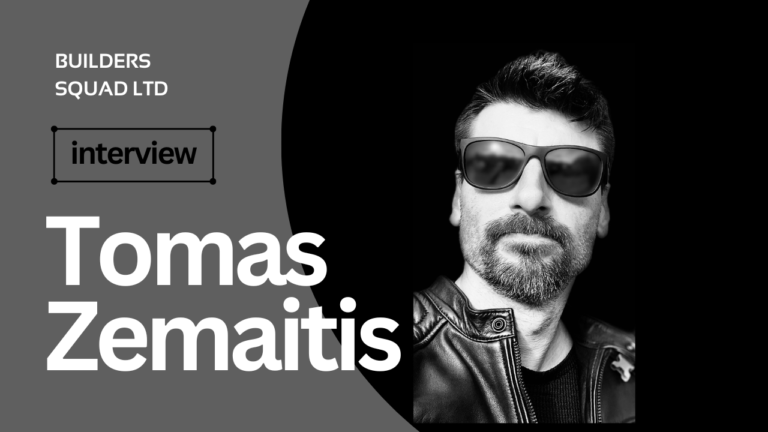
Transforming Homes with Builders Squad Ltd.: An Interview with Tomas Zemaitis

0

Builders Squad Ltd. has rapidly made a name for itself in the competitive world of home renovations in Manchester, UK. Known for its reliability, quality craftsmanship, and exceptional client relations, the company has seen significant growth over the past year.

In this interview, we sit down with Tomas Zemaitis, the driving force behind Builders Squad Ltd., to discuss the inspiration behind the business, current challenges, popular trends, and what sets his team apart from the rest.

Why did you decide to start a kitchen and bathroom renovation business in Manchester, UK?

Well, I’ve been knee-deep in house renovations for quite some time now. I see every project from multiple angles: both as a client and as a tradesman. Finding a trusted tradesman in the past was like finding a needle in a haystack, so I decided to set up a business that would tick every box for quality and reliability.

We’re a relatively new business, but we’ve grown significantly in the past year. I like to think it’s because of the trust we’ve built with our clients and our team effort.

What challenges are you currently facing?

Well, there are no challenges that are truly unresolvable. I’d say the hardest part of the business is being in the right place at the right time, especially since we cover a large area – all of Greater Manchester and northern Cheshire.

It’s a bit like trying to be a superhero with a dodgy GPS! But we manage to get it done, cape and all.

Who are your clients?

We offer a range of services for both residential and commercial clients – from kitchen and bathroom remodelling to full house renovations. Our clients are a diverse group, thanks to our multi-tier packages that cater to every budget.

In other words, whether you’re a homeowner dreaming of a new kitchen or a business looking to revamp your space, we’ve got you covered. We like to think we’re making the world a bit more beautiful, one renovation at a time!

What bathroom and kitchen trends are currently popular in the United Kingdom?

Right now, traditional bathroom and kitchen designs are all the rage. People are loving panelled walls and small green tiles laid in a herringbone pattern, or the ever-classic metro tiles. For that timeless look, traditional bathroom fixtures are in high demand. When it comes to kitchens, quartz or ceramic worktops are the stars, paired with wooden panels in shades of white, dark green, or blue.

Of course, trends change faster than you can say “renovation.” It’s like trying to keep up with a soap opera – just when you think you know what’s hot, there’s a new twist! But that’s part of the fun, isn’t it?

What distinguishes your team from competitors?

First and foremost, we are incredibly transparent with our clients. When we provide estimates during our site surveys, we ensure our pricing is accurate, so there are no hidden costs. Each project is managed by us from start to finish, ensuring a seamless experience.

Our strongest advantage is our exceptional communication with clients and our rapid response times. We also offer a comprehensive service, covering all aspects of kitchen, bathroom, and home renovation projects.

One client even joked that we respond faster than the police! That’s a reputation we’re proud of and work hard to maintain. When I meet my clients, my goal is to help them succeed with their projects and budgets. We don’t tolerate cheap workarounds – if we’re doing something, we make sure it’s done right.

What advice would you give to someone looking to start their own renovation business?

My advice would be to focus on building trust with your clients. Be transparent and honest about what you can deliver. Also, invest in a good team and ensure you have the right skills to meet client expectations.

It’s essential to stay updated with the latest trends and technologies in the renovation industry. And most importantly, don’t cut corners. Quality work speaks for itself and helps in building a loyal customer base.

What has been your most rewarding project so far?

Every project has its unique rewards, but one that stands out was a complete home renovation for a family who had been through some tough times. Seeing their reaction to their newly renovated home, which they could now truly enjoy and feel proud of, was incredibly fulfilling. It’s moments like these that remind me why I started this business in the first place.

Tell me about yourself, Tom.

Well, I’m a very happy and active dad who loves spending time with my family whenever business commitments allow. You’ll often find us camping, fishing, hiking, traveling, coding, or even skateboarding together. Managing renovation projects and investing are also passions of mine.

I really enjoy meeting new people, hearing their ideas, and learning something new from my team and those around me.

My career journey has been quite diverse – I’ve worked for both large and small companies in roles ranging from Customer Relationship Manager and Supply Manager to System Administrator, Senior Platform Engineer, and various DevOps positions. Since 2010, I’ve been heavily involved in property investments, which has become a hobby for both me and my family.

It’s been quite the adventure, combining our love for real estate with our DIY spirit. So, whether it’s renovating a house or just having a good old family fishing trip, I like to keep life interesting and fun!

From the editor….

Builders Squad Ltd. is more than just a renovation company; it’s a team dedicated to transforming spaces and enhancing the lives of its clients. Under the leadership of Tomas Zemaitis, the company continues to thrive, driven by a passion for quality, transparency, and exceptional client service.

Whether you’re looking to renovate your kitchen, bathroom, or entire home, Builders Squad Ltd. stands out as a reliable and innovative partner in creating your dream space. For more information, visit their website at Builders Squad Ltd..