Home Blog Page 8

Mindful Missions of SC is Expanding to Help Impoverished Children in North Carolina

Mindful Missions of SC (M2/SC), run by CEO Donnette Dawn Thomas aka The Beauty in Business and her team, is finally moving into North Carolina. This is wonderful news as there are many children in North Carolina who are affected by poverty and can benefit from the non-profits’ life-changing programs, resources, and tools.

M2/SC has made a huge impact in helping break the cycle of poverty in South Carolina communities through the implementation of programs that focus on 4 key outcomes; health, education, employment, and empowerment.

The organization is all about helping children and adolescents in poverty-stricken communities realize their potential in spite of the challenges they have been forced to face from birth.

The non-profit helps children in a variety of ways, from the development of healthy habits to providing school fees and supplies, assistance with resume writing and earning scholarships or vocational training, and much more. In this way, M2/SC gives children and adolescents the tools to reach for and hold on to a better future, enabling them to not only thrive themselves but help their communities do the same.

Supported by donations, M2/SC has been able to assist in the creation of thriving communities where those who have been helped can give back in their own way. This helps create generational empowerment that ensures the children of tomorrow get all of the opportunities they deserve.

Mindful Missions of SC has become an inspiring presence in many communities in South Carolina, and will no doubt replicate this success in North Carolina as well.

This expansion is a sign of growth for M2/SC and enables the organization to help more communities break out of the cycle of poverty.

With the COVID-19 pandemic having a significant impact on poor communities that were already struggling, the work of M2/SC extremely important. Since the job market is very insecure, the assistance of M2/SC in empowering people to find employment could not come at a more important time for poor communities in North Carolina.


Session Desk Introduces Purpose-Built Verification Platform for Modern Background Checks

Session Desk, a verification and background check platform built for modern hiring teams, is positioning itself as a streamlined solution for companies that need faster candidate screening, stronger compliance workflows, and centralized reporting.

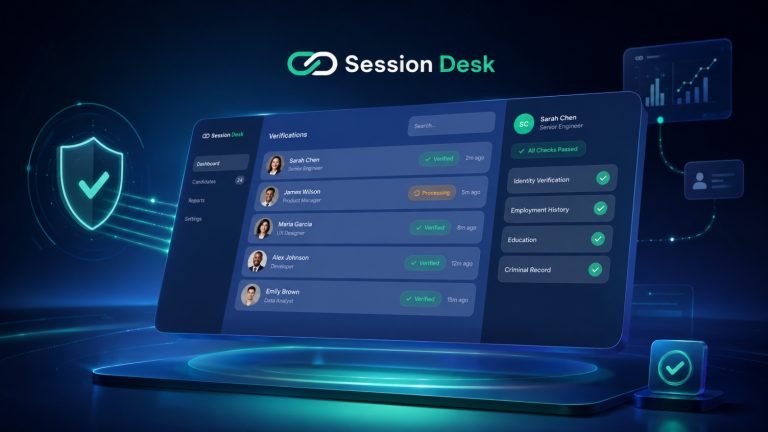
The platform is designed to help HR teams, recruiters, healthcare operators, and enterprise organizations manage background checks and identity verification from one dashboard. Instead of relying on slow manual review processes or fragmented vendor workflows, Session Desk brings candidate verification, status tracking, compliance documentation, and reporting into a single system.

At the center of the product is a real-time verification dashboard that allows teams to monitor candidate progress, review completed checks, and track pending screenings. The platform supports key verification categories including identity verification, employment history, education credentials, reference checks, and background screening.

Session Desk’s stated goal is simple: reduce the time it takes to move a candidate from screening request to hiring decision.

According to the company, its system uses automation and AI-powered processing to verify documents, cross-reference information, and surface results quickly. The platform highlights an average verification time of approximately 15 minutes for certain checks, giving hiring teams a faster path to decision-making compared with traditional workflows that can take days.

For growing companies, speed is only one part of the challenge. Compliance and documentation also matter. Session Desk includes audit trails, exportable reports, and tools designed to support hiring teams working across different regions and regulatory requirements. The platform also emphasizes enterprise-grade security and compliance readiness, including references to SOC 2, GDPR, and FCRA-focused workflows.

The platform is also being tested by hospital organizations on the East Coast, highlighting its potential value in highly regulated industries such as healthcare. In environments where staffing decisions require identity checks, credential verification, background screening, and compliance documentation, Session Desk is designed to help teams move faster without losing visibility into the verification process.

This healthcare use case expands the platform’s relevance beyond traditional corporate hiring. Hospitals and healthcare organizations often face strict requirements around workforce screening, credential review, and documentation. By centralizing verification workflows and making status updates visible in real time, Session Desk gives operators a more organized way to manage candidate review from request to report.

The product is built around three core steps: submitting a candidate request, running automated verification across authoritative sources, and receiving a comprehensive report that hiring teams can use to make informed decisions. This structure is intended to simplify the background check process without forcing teams to manage multiple disconnected systems.

Session Desk also offers API access and integration options for teams that want to connect verification directly into their applicant tracking system or internal hiring workflow. For HR and recruiting departments handling higher candidate volume, webhook notifications and live status updates can reduce the need for manual follow-up.

The platform’s pricing is structured for both smaller teams and growing organizations. Its Starter plan is listed at $49 per month and includes up to 25 verifications per month, basic background checks, and email support. The Professional plan is listed at $149 per month and includes up to 100 verifications per month, advanced background checks, faster turnaround, priority support, API access, and custom integrations.

Session Desk is entering a market where employers increasingly expect faster hiring decisions, better candidate experiences, and stronger compliance controls. Manual verification processes can slow down recruiting teams, especially as companies scale across departments, regions, or job functions. By combining automation, candidate tracking, compliance reporting, and integrations, Session Desk aims to give teams a more efficient verification layer for modern hiring.

The company’s broader message is that trusted hiring should not require slow workflows. With real-time visibility, automated screening, and centralized reporting, Session Desk is presenting itself as a purpose-built platform for companies that want to streamline verification while maintaining a clear compliance record.

For teams looking to improve their background check process, Session Desk offers product demos and walkthroughs through its website: https://sessiondesk.org.

Mohammad Noshad and Shyld AI Are Building the Future of Active AI in Hospitals

Key Takeaways:

  • Shyld AI’s autonomous UV-C devices reduce hospital surface contamination by more than 93 percent, according to a peer-reviewed Stanford University study published in AJIC.
  • Founded in 2022 by brothers Mohammad and Morteza Noshad, the company emerged from Mohammad’s loss of a friend to a hospital-acquired infection.
  • Shyld AI closed a $13.4 million seed round led by Aulis Capital and is deployed in more than 25 U.S. hospitals.

In early 2025, Shyld AI closed a $13.4 million seed round, one of the largest early-stage rounds in the healthcare AI sector that year. The round, led by Aulis Capital, is funding the rapid expansion of the company’s autonomous AI devices across U.S. hospital rooms. For founder and CEO Mohammad Noshad, the milestone caps years of work that began with personal loss. 

After a close friend died from a hospital-acquired infection following routine surgery, Noshad and his brother Morteza built Shyld AI in 2022 to take real-time action on patient safety inside the rooms where care happens. Healthcare-associated infections still contribute to roughly 72,000 deaths each year in the U.S., according to the most recent CDC data, and Shyld AI is working to lower that number inside every facility it reaches.

Inside the device that acts on its own

Most healthcare AI today sits at a distance from the work itself, generating dashboards and reports that clinical staff have to act on later. Shyld AI starts from a different premise and builds technology that directly takes action inside the hospital room. The company designs wall-mounted devices that install inside hospital rooms and operate continuously. 

Each unit pairs onboard sensors with targeted UV-C disinfection in a single compact form factor. The sensors map the room in real time and detect events that can trigger cross-contamination, such as a nurse touching a keyboard or a high-touch surface left exposed between patients. When the AI identifies a risk event, the device delivers a precise dose of UV-C light to inactivate pathogens within seconds.

Powering this is VERTEX, Shyld AI’s proprietary foundation model designed for real-time decision-making in physical environments. Built in partnership with NVIDIA, VERTEX runs directly on Shyld AI devices using onboard GPU processing rather than calling out to hospital cloud infrastructure. 

That edge-native architecture keeps the system operating during network outages and processes environmental data locally without transmitting any video or personal information offsite. The system is HIPAA-compliant by construction and built as a closed loop, which has dramatically accelerated approval cycles with hospital IT and compliance teams. For hospital IT teams, deploying a Shyld AI device is closer to installing a smoke detector than wiring in major hospital software.

The proof and the people behind it

The clinical case for Shyld AI’s approach has been formally tested. A peer-reviewed Stanford University study, published in the American Journal of Infection Control, found that the company’s technology reduced cumulative microbial bioburden by more than 93 percent compared with a control room running standard manual disinfection protocols. The study tracked surface contamination across multiple weeks inside one of the most demanding environments at a major academic medical center.

That validation has translated into commercial momentum across the country in the years since. Shyld AI is currently deployed in over 30 hospitals. Average sales cycles run eight to ten weeks, significantly faster than the twelve to eighteen months that hospital technology procurement typically demands. 

“We’re moving the industry from passive AI to Active AI, technology that understands how hospitals operate and improves workflows in real time without adding burden to clinical teams,” said Mohammad Noshad, founder and CEO of Shyld AI. 

Mohammad and his co-founder, his brother Morteza Noshad, bring complementary depth to the company. Mohammad completed his PhD in two and a half years and spent years researching AI at Harvard. He had also built and exited two previous companies before founding Shyld AI. Morteza holds a PhD in computer science from Stanford and built the technical architecture behind VERTEX.

What comes after the hospital room

Infection control is the entry point for Shyld AI’s technology, but the company’s broader vision is to bring action-based AI into every physical environment where contamination and operational lag carry real cost. Inside the operating room, Shyld AI’s agents already track surgical readiness, identify missing instruments before procedures begin, monitor workflow phases, and flag preventable delays. In an environment where every minute of operating room time runs into the hundreds of dollars, even small delays compound into high costs.

Beyond the hospital, Shyld AI is starting to work with pharmaceutical companies, applying its technology to cleanroom contamination control and compliance documentation in sterile manufacturing environments. The capital from the seed round is funding deployment growth across U.S. health systems and the technical work needed to extend VERTEX into these new physical settings. 

For Mohammad Noshad, the bigger picture sits at the company level. Shyld AI is building a category that did not exist before: action-based AI for physical infrastructure. It started with one personal loss and now operates inside dozens of hospitals across the United States, working to prevent the same outcome for thousands of other patients.

To learn more about Shyld AI’s technology or schedule a demo, visit shyld.ai or connect with Mohammad Noshad on LinkedIn

About Shyld AI 

Shyld AI is a healthcare technology company bringing physical agentic AI to hospital operations. Founded by CEO and Co-Founder Mohammad Noshad, Shyld AI develops autonomous physical agents that streamline hospital operations like infection control, OR efficiency, and compliance, without adding workload for staff. Its technology combines AI with UV disinfection to reduce environmental contamination by up to 93%. Shyld AI is deployed across hospitals nationwide, improving clinical care, efficiency, and cost savings. To learn more, visit www.shyld.ai/

The 3 Best Types Of Exercises To Keep You Healthy

It is well known and researched that exercise is a necessity to keep your body healthy, fit and long-lasting. Exercise can bring a huge number of benefits in its implementation into your daily routine. From increased functional strength, to improved cardiac and heart health, improved endurance, longevity of life, a reduction in the risk of a number of serious health problems, and many more, exercise is absolutely essential for anyone! The fitness world is one that is vast and constantly expanding, with millions of people actively involved in some form of physical activity every single day. It can be difficult for a beginner to wrap their head around what’s useful and what shouldn’t be bothered with.

Here are the 3 best types of exercises to keep you healthy.

Cardio

Cardio is what most people think of when they think of exercise, and for good reason too. Cardio involves using your cardiac system to pump blood efficiently around the body and supply oxygen to different parts. The more you run, cycle, walk and generally do any activity that involves the cardiac system, the better at it your body will get. This is what is known as improving your cardio. The benefits from this are numerous, and include reduced risk of heart disease and other heart issues, improved endurance and general fitness and muscle and strength building.

Weightlifting

Types of exercises

Weightlifting has become increasingly popular in the last decade, and people pack into gyms everyday for primarily aesthetic purposes. A great beach body is always desired, and weightlifting is the best way to go about this. It also brings health benefits such as improved strength and muscular endurance, joint health and improved cardio. Weightlifting is a necessity for any great body and any healthy body!

Mindfulness Training

This one may seem a little odd, but more and more people are realizing the importance of mindfulness. These exercises can include meditation, deep breathing exercises and imagination exercises. The benefits from this are various, including stress relief, anxiety relief and a general happier outlook on life! Mindfulness should not be discounted as a fad, it is becoming more and more a vital part of any exercise routine.

Overall, exercise is necessary to keep the body healthy and fit. The best 3 types of exercises include cardio activity, weight lifting and mindfulness training. A weekly routine incorporating the 3 of these types of exercises can bring you a multitude of benefits which can keep you healthy as can be!

Important Link Building Terms You Need To Know

Link building is a very important part of SEO. So, it is therefore important that you understand all the different aspects of link building. When you have a solid understanding you will be able to perform link building much better.

One of the biggest issues people have with link building is that it takes a lot of time to find and gain those quality backlinks that everyone desires. If you don’t have the time, then you should certainly look at enlisting the assistance on an SEO agency, as they are experts in the area and are able to do the work for you.

Even if you have an SEO agency performing a link building strategy for you, it is still important that you have at least a basic understanding of what is going on. So, have look below at some of the most important link building terms you need to know:

Disavow

Sometimes there is a link to your website on another, and you didn’t put it there. The site where your link is on could be a dodgy site, and you don’t want to be associated with that site. So you put together a disavow list and send it in to Google. This will ensure that Google doesn’t consider that link.

Internal Links

Internal links are links on your website that are pointing to other pages on your website. Having a solid internal linking strategy is key because it shows Google which pages you view to be important. The more internal links to a certain page, the more important it is viewed.

Site Wide Links

These types of links can be found on every page of your website. This would usually include the main menu as well as any footer links. Be careful with what links you choose to put in these site wide links, as they would be deemed key pages of your website.

Dofollowed Links

Most links are typically followed links and they ensure that the link actually counts in your backlink profile. Google will essentially add it up in your tally of backlinks.

Nofollow Links

Sometimes a link will have a rel=nofollow in the code. This means that the site does not what the link they have put on their site to count towards the site’s backlink profile. Essentially they want to put that link there, but they don’t want to be associated with them.

Domain Authority

This is a number given by Moz to give an estimate on how well a site will rank. Moz is completely separate to Google and they aren’t associated. But it is important that you try to get links from sites with a high domain authority.

Broken Links

These links refer to ones that no longer work. There are many reasons as to why a link could be broken, but the main one would be that the URL of the link has been changed and a redirect was not put in place.

Anchor Text

This is the part of the content that is hyperlinked and will take the user to a different page. As a good general rule you should try to have your anchor text as one of the target keywords. You should also avoid writing something like “You can find the information here” and hyperlinking “here”, as this isn’t best practice.

Backlinks

Backlinks are links from another website that are pointing to your own website. Backlinks are essential if you want to improve your rankings and organic traffic. You can keep a close eye on your backlinks by using certain SEO tools or SEO companies can assist as well.

Genius Features We Want In Future Smartphones

Mobile phones have become more than just a simple way of communicating across long distances. They’re a massive part of our day to day lives and with endless innovation and the rise of the internet, they’ve become more necessary than ever before! We spend our time researching the latest and greatest variations from the major players like Samsung, Apple, Google, Huawei, Nokia, Motorola, and more.

The features are getting outrageous as well with processing power coming a long way since the glory days of Snake on the 3210s (if you can remember that far back of course)

With phones costing more with each iteration and generation, we thought we should explore some of the various features WE want to see in the coming years!

Better Cameras

Future smartphone features

No one wants to take a bad picture, and we’ve seen so far with companies like Google, just how far these cameras can be pushed in a mobile device. That being said, I think we speak for everyone when we say that the DSLR level shots are still waiting. Future generations of phone cameras could rival the best professional cameras on the market with just a little more innovation in lens capabilities and processing power. Your move, mobile companies.

Renewable Batteries

The earth needs to take a breather, this is why we want future smartphones to be a little bit smarter in terms of their battery life and afterlife. The notion of a recyclable battery certainly caught attention a few years ago, and we cannot wait to see if the environmentally friendly models will be made normal – but here’s hoping!

Bio-Connectivity

This is a little science fiction, but let’s be real – a few decades ago the internet didn’t exist, and mobile phones were the size of bricks. So where’s the fiction in imagining the possibilities of a more connected state with technology. From bio-charging to monitoring – there is a lot of power in these machines that we have not seen the last of yet.

How To Stay Fit And Healthy During COVID

The COVID-19 pandemic has seen the world go through radical changes. From lockdowns to closed gyms and staying indoors, COVID has changed things. Many people have seen themselves gain weight and become unhealthy during these times, as they cannot access their gyms and are indoors all the time. However, there are many ways to be able to stay fit and healthy during COVID, and these can be utilised with no equipment needed! Incorporating these activities and choices into your life can keep you fit and healthy throughout the rest of your life, not just the pandemic!

Calisthenics

Staying healthy

Calisthenics are a great way to keep in shape and allow you to gain strength and endurance at the same time while staying indoors and safe. Calisthenics are bodyweight exercises designed to use your muscles. Examples include pushups, pullups, bodyweight squats and so on. All of these are great examples of how you can work your body without using equipment, and will keep you fit and healthy.

Going for Runs

Going for runs is the best way to keep your cardio up and keep burning calories. Going for a run will keep you away from others, while still being able to upkeep your fitness. Cardio is the best way to improve your heart health, and ward off heart disease.

How to Be a More Effective Leader

Effective leadership consists of behaviors and abilities that many people have trouble defining or putting into words. However, they know a good leader when they see or work for one. Not that first-rate leaders are necessarily that way from day one. It often takes years of learning and practice to get there, even for individuals who display innate leadership qualities.

That said, knowing how to provide more influential guidance to your team members can have a profound impact on their success. After all, ineffective leaders usually find themselves surrounded by dissatisfied and disengaged employees. This can cause the group to lose productivity, fall short of their goals, and stagnate their career growth. No one wants that.

Whether you’re in a front-line supervisory or executive level role, honing effective leadership skills starts with awareness. It helps to recognize the difference between controlling a group’s output and inspiring them to do the work. Awareness also means knowing your strengths and how you can use them to benefit your team. Let’s look at some of the ways you can become more effective as a leader.

1. Give Regular and Timely Feedback

Providing everyone with feedback should seem like a no-brainer, but it’s an area (and skill) that sometimes gets overlooked. When someone’s performing well, you might assume they don’t need much direction or support. Most of your time is spent with those who are struggling or frequently asking questions. However, just because a top performer isn’t reaching out for daily assistance doesn’t mean they don’t want or need feedback.

If the only time employees hear input is during their annual performance reviews, they’re less likely to remain engaged. Leaders do themselves and their teams a disservice by treating feedback as something that must be formal and corrective. In actuality, giving advice and support is a critical part of fostering working relationships and high employee engagement levels.

Feedback methods, such as a weekly or biweekly one-on-one meeting, help managers develop a rapport with each team member. It gives employees a chance to express concerns and state what they hope to accomplish. Leaders can provide timely and informal observational guidance that moves beyond correcting deficiencies. Such meetings offer the chance to recognize good work and map out individual paths for professional development.

2. Develop Emotional Intelligence

Research reveals a clear link between emotional intelligence, or EQ, and performance. Studies show that 90% of top performers have high EQ and that it accounts for 60% of a leader’s job performance. This link exists within front-line supervisory roles and all the way up to CEO positions.

Emotional intelligence encompasses several different skills, such as self-awareness, empathy, and self-regulation. Included in the EQ umbrella of abilities are also motivation and social skills. Developing good self-awareness is about coming to a clear understanding of your strengths and limitations. Having self-awareness also means knowing your beliefs and values, in addition to what motivates you.

Empathy is the ability to put yourself in someone else’s shoes and understand their point of view. While listening is part of empathy, it also means making others feel understood and appreciated. Empathy is reacting to what you’ve heard in a way that displays understanding of the other person’s needs. More importantly, an empathetic response demonstrates you’re willing to support the individual in getting those needs met.

Self-regulation involves recognizing and managing your emotions before formulating a response or making a decision. Motivation is about setting goals and inspiring others to do so; it also involves displaying optimism during trying situations. Social skills entail picking up on cues and others’ emotions and responding appropriately. Instead of ignoring potential conflicts, you meet them head-on. Making a conscious effort to cultivate these qualities will make you a more effective leader.

3. Approach Decisions From a Process Perspective

Effective solutions require figuring out the actual problems you need to help solve. Incorrectly framing issues or challenges is like driving without a sense of direction. You know you’re going somewhere, but your efforts might lead you to the wrong place. Using decision-making processes, such as consensus or devil’s advocacy, provides the structure you need for better outcomes.

Under a consensus model, a group of stakeholders works together to define the problem and brainstorm possible solutions. Through guided facilitation, the group works through the problem until everyone can agree on the best course of action.

While the consensus method gives a chance for all contributors to have a voice, it may lead to groupthink. This is why some teams prefer the devil’s advocacy technique, which aims to challenge assumptions and uncover an argument’s weaknesses.

Regardless of the decision-making approach you choose, you want a well-rounded group to contribute to the process. You’ll increase your chances of reaching a creative and viable solution with stakeholders who have different perspectives and tenures.

You should also consider the problem’s scope and priority. Crises that demand swifter responses may require smaller circles and contributors with deep expertise. Non-urgent, widespread problems could involve all impacted stakeholders.

Conclusion

Whether you’ve recently joined the leadership ranks or have moved up to a top managerial role, your learning will continue. Developing effective leadership skills is an incremental process that includes discovering what works and what doesn’t. Focusing on developing your feedback, emotional intelligence, and decision-making abilities can give you a boost along the way.

Protect Your Dream House with Home Insurance & Home Warranty | Total Home Protection

Avoid stressing out over home repairs and replacements by getting home insurance and home warranty coverage.

Homes are a significant investment, and to protect that investment you’ll need a home insurance plan and a home warranty plan. And no, they are not the same thing.

Most people are probably already familiar with home insurance — they vaguely cover losses and damages to one’s house and their assets. Home warranties are similar, in effect, but they are more specific about what they cover: the repair or replacement of covered home appliances and systems that are damaged by natural wear and tear.

More information below on the difference between the two types of coverages and why you need both to make sure that your home is safe and secure.

Home Insurance and Home Warranty

Both home insurance and home warranty plans are malleable — in that, you can usually customize what is covered and what is not covered.

The difference, then, is on the type of service that they offer homeowners.

A home insurance plan covers damages from natural disasters, weather, vandalism, theft, and so on. And, with a good home insurance plan, you can cover the cost of repairing, or, even, completely rebuilding, your entire home — which can also include most of the items in your house (such as clothes, appliances, and furniture.)

Meanwhile, a home warranty plan is a service agreement that is specifically slated for household appliances and home systems. Damages covered by home warranties are also incredibly specific — as they usually only cover damages as a result of natural wear and tear.

What Does Home Insurance Cover?

Generally, you can file a home insurance claim if your house suffered damage from the following incidents: Wind, hail, water or freezing, vandalism, malicious mischief, fire, lightning, theft, and so on. So, if your home or assets are damaged as a result of any of the aforementioned incidents, then its repair or replacement will be covered by your home insurance plan.

What Do Home Warranties Cover?

Home warranties, as mentioned previously, are a little more specific in intent.

They usually only cover a specific type of damage; damage caused by natural wear and tear. They also only cover specific appliances and home systems.

What is covered will also be different based on the plan you choose and the home warranty company that you decide to purchase your coverage from.

For example, if you purchase your home warranty plan from Total Home Protection, a home warranty company led by CEO David Seruya, you can choose either their Gold Coverage plan (which includes coverage for essential appliances and home systems) or their Platinum Coverage plan (which is a bulkier version of their Gold Coverage plan.)

Total Home Protection also offers a selection of add-ons that you can choose from to customize your coverage — a comprehensive list of which is available on the Total Home Protection website.

Also notable is the fact that Total Home Protection, unlike other competitors in the industry, specify that they “…will cover repair or replacements of covered items, regardless of age, make or model.” Which is a contract feature that, again, is quite unique as it makes their service agreement arguably more flexible than most others available in the market.

The Bottom Line: Why Do I Need Home Insurance & Home Warranty Coverage?

There is a definite distinction between a home insurance plan and a home warranty plan.

Both home insurance and home warranties cover the cost of damages, but the type of damages covered are completely different.

And, as frustrating as it is, this difference has created a situation where both are needed — if only so that you can have all your bases covered when it comes to protecting your home and your wallet from unexpected repairs and replacements.

Salvatore Laterra, talks about delivering guaranteed licensure and accreditation to home care startups

CEO of Certified Homecare Consulting – Salvatore Laterra, talks about delivering guaranteed licensure and accreditation to home care startups

Salvatore Laterra is the CEO of Certified Homecare Consulting, a consultancy firm that is an industry leader when it comes to establishing successful home care businesses.

As we’ve witnessed during the COVID-19 pandemic, home health care is immensely crucial. With millions of people across the world forced into managed isolation or quarantine, the effects of the epidemic have been felt globally. Certified Homecare Consulting is a firm that provides clients with the necessary resources and information to state a healthcare business from the ground up.

Home care consulting is quite a competitive field in the United States, since the population is aging at an increasing rate, and there are many people who want to establish businesses to help elderly Americans.

Salvatore was kind enough to answer a few questions about Certified Homecare Consulting and its work.

Hi Salvatore, can you tell us a bit about Certified Homecare Consulting?

Certainly, Certified Homecare Consulting is a consultancy firm that is focused on helping our clients establish their desired home care business in the most straightforward and thorough way possible. We guarantee successful licensure and accreditation for all of the startups we work with. We’ve been in business for nearly 20 years and are, without a doubt, the easiest and most secure way for anyone in the US to establish their homecare business.

What are the different kinds of home care business you help to establish?

We cover all the bases – home care, health home care, hospice care, medical transportation, and adult foster care. We guarantee successful accreditation for our clients to legally operate any of the above business structures, and to bill their desired payer sources be it Medicaid, Medicare, Private Insurance, etc.

What kind of support do you give your clients after they have established their home care business?

Unlike other firms, we stick with the startups we work with from beginning to end. That means we will work with our clients from the initial stages and give them support all the way until they sell the business, or their children inherit it.

We are in it for the long run, and we know how to get our clients established and help them deal with the challenges of balancing expenses while building their client base. Our team has invaluable firsthand experience when it comes to setting up healthcare businesses.

Why is Certified Homecare Consulting superior to the options offered by other home care consultants and franchise companies?

I’m glad you asked this question. We aren’t trying to brag, but we are vastly superior to the many other businesses that claim to offer services similar to our own – many even try to copy our image and likeness, and repurpose our business name as their own. Most of these businesses have never actually owned or operated a successful home health care business before.

We are true industry leaders with a proven track record of success in the field we consult in. Our team is made up of industry veterans from diverse backgrounds, and we own and operate successful home care and home health care businesses, a healthcare billing company, an adult foster care business, as well as a business management company that has over 350 employees based in the USA.

After the initial setup, how do you assist homecare businesses with branding and other marketing efforts?

We help the startups we work with execute every aspect of establishing a successful home care business. This includes assistance with key efforts like digital marketing as well as branding. This ensure that the business is recognizable and discoverable by those seeking the services they provide.

Even with the best staff, you need to be able to generate new business and capture the attention of the social workers, discharge planners, and other folks you are marketing your business to. This is why we place a high priority on marketing, as we know from experience that perception will often get you in the door, while having great staff will keep you there.

Salvatore, thank you for your time!
You can follow up with Salvatore Laterra and Certified Homecare Consulting at
www.certifiedhomecareconsulting.com